PowerSmart 4300W Portable Inverter Generator Review
This review contains affiliate links, which means we may earn a commission if you buy through qualifying links at no extra cost to you. Our goal is still simple: give you a clear, honest read on whether the PowerSmart 4300W is actually worth buying in 2026.
Should you buy it? For many shoppers, yes. The PowerSmart 4300W Portable Inverter Generator, currently priced at $299.99 (down from $399.99) and listed as In Stock, looks like a very strong value for RV use, camping, and short home-backup duty. Customer reviews indicate this class of inverter generator is most attractive when buyers want cleaner power than a basic contractor generator without spending premium-brand money. Amazon data shows the listing combines 4300 starting watts, 3500 running watts, a 30A RV-ready outlet, and pure sine wave output under 3% THD. Based on verified buyer feedback, those are the features shoppers usually care about most in this size category.
Our short take: it’s a good value for RVers and homeowners who need a 3500W inverter with a 30A RV outlet. We’d avoid it if you need long continuous runtime without refueling, true whole-house backup, or the lower full-load noise and support network that often come with more expensive competitors.
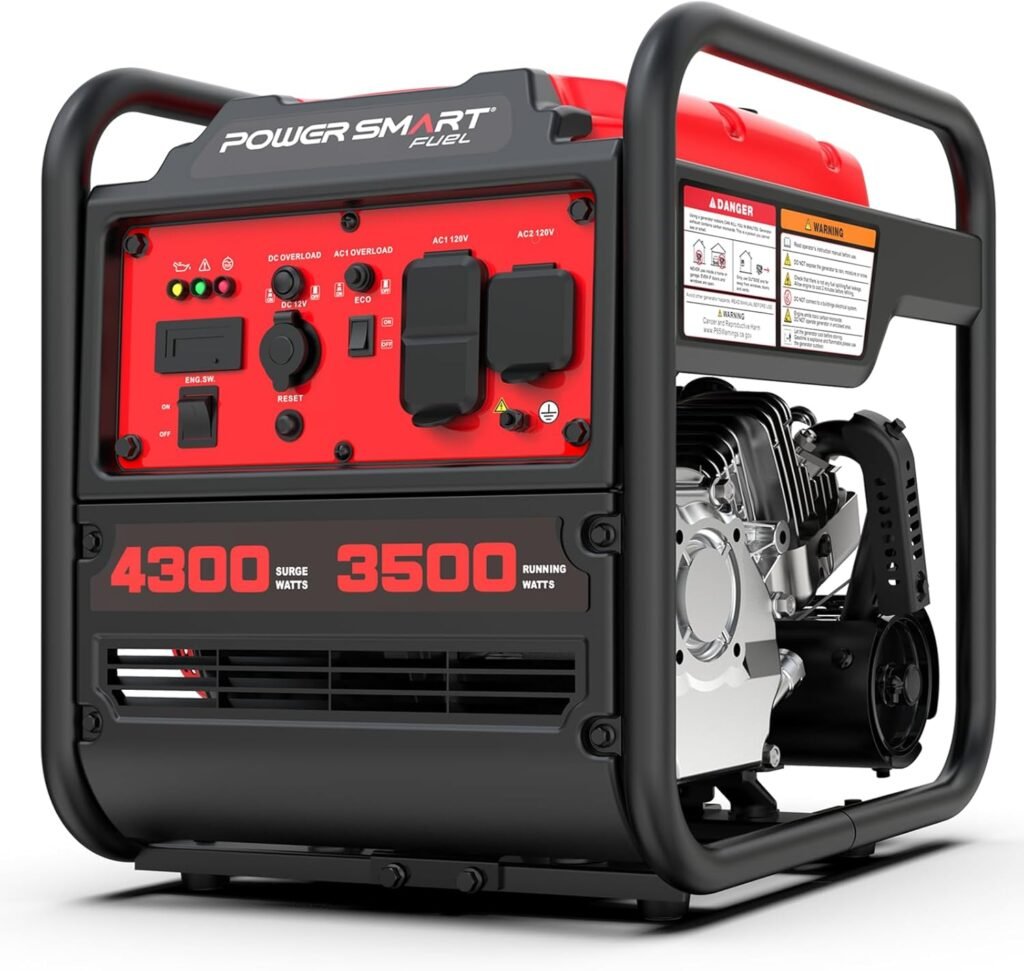

PowerSmart 4300W product overview: specs, intended use, and what you get
The full model name is the PowerSmart 4300W Portable Inverter Generator, 3500W Rated, 223cc 4-Stroke Gas Powered Engine, Pure Sine Wave for Sensitive Electronics, RV Ready with 30A Outlet, Home Backup, Camping, Emergency. That long title tells you almost everything important: this is a gas-powered inverter generator built for portable backup and outdoor use, not a standby unit for automatic whole-home power.
On paper, the core specs are appealing. You get 4300 starting watts, 3500 running watts, a 223cc 4-stroke engine, and pure sine wave output with less than 3% THD. The product listing also states 6.5 hours of runtime at 50% load, which puts it in the practical range for evening outage support, travel trailer use, jobsite convenience, or weekend camping where you need lights, charging, and occasional appliance use.
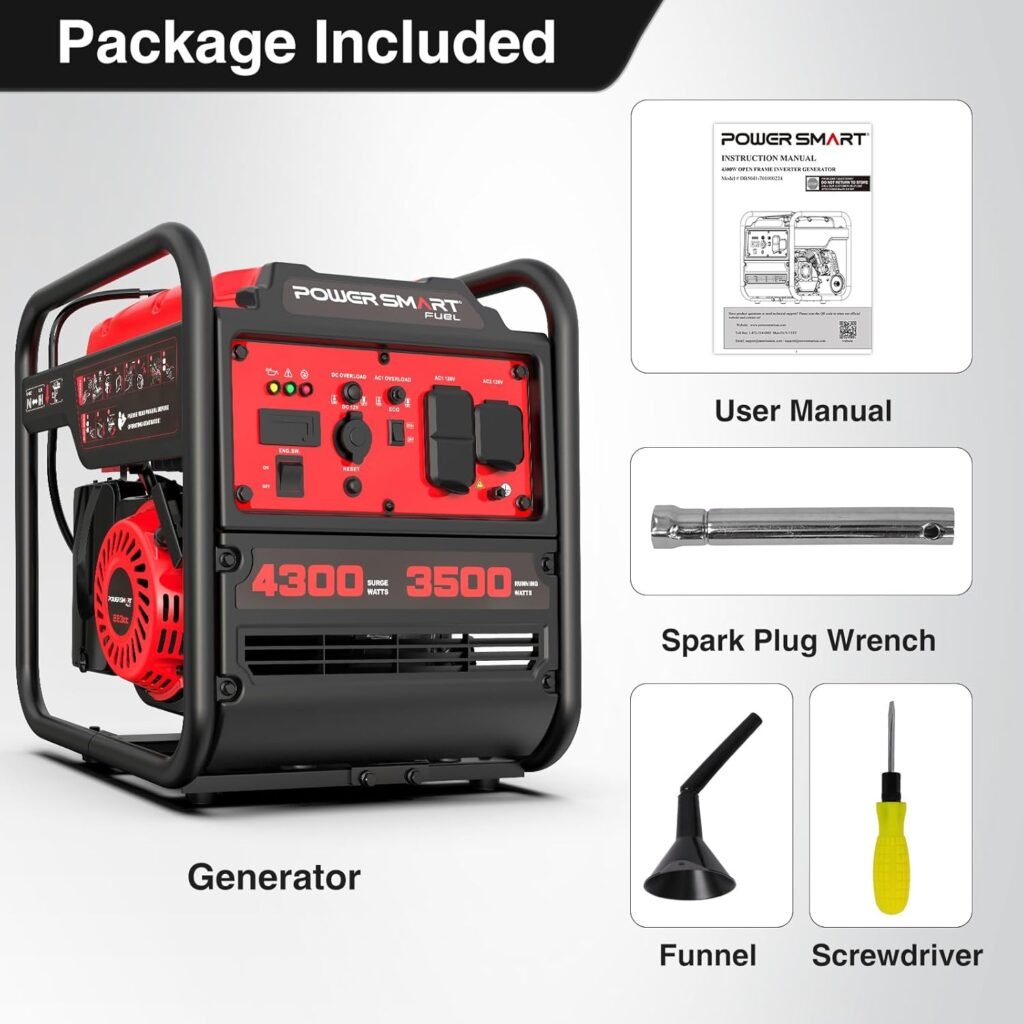
The panel layout is also well chosen for the target buyer:
- Two 120V 15A household receptacles
- One 120V 30A RV-ready receptacle
- One 12V DC outlet
- Parallel ports for pairing with another compatible unit
Feature-wise, it includes Eco Mode, Low Oil Shutdown, and Overload Reset. Those aren’t flashy features, but they matter in real ownership because they affect fuel use, engine protection, and how easily you recover from overload trips. Amazon data shows the current listing price is $299.99, reduced from $399.99, with the unit listed as In Stock. For a 3500W-rated inverter generator, that pricing is aggressive enough to make the PowerSmart 4300W stand out right away.
PowerSmart 4300W key specs at a glance
Before comparing performance, it helps to put the hard numbers in one place. The table below summarizes the most relevant specifications from the Amazon listing and the manufacturer information page. Where details are not supplied in the provided product data, we’ve flagged them so shoppers know what to verify before ordering.
| Spec | Data | What it means |
| Starting output | 4300 watts | Helps with startup surge from motors and compressors |
| Running output | 3500 watts | Continuous load ceiling for ongoing use |
| Engine | 223cc 4-stroke gas | Larger engine than many small suitcase inverters |
| Waveform / THD | Pure sine wave, <3% THD | Safer for laptops, TVs, routers, CPAPs, chargers |
| Runtime | 6.5 hours at 50% load | Real runtime will fall if you run near 3500W |
| Noise | 58 dBA @ ft / 25% load; dBA @ ft full load | Quiet-ish under light use, noticeably louder when pushed |
| Outlets | 2x 120V 15A, 1x 120V 30A RV, 1x 12V DC, parallel ports | Good mix for camping, RV, and emergency use |
| Weight | Not confirmed in provided data | Verify on manufacturer page before buying for transport needs |
| EPA / certification details | Not confirmed in provided data | Check listing details and manufacturer support page |
Amazon data shows the model is positioned as a value inverter generator rather than a premium long-runtime unit. If you’re comparing listings, don’t stop at wattage alone. Verify weight, fuel tank size, warranty coverage, and whether the box includes any RV adapter or accessory cables. For manufacturer verification, shoppers should review the PowerSmart product page: PowerSmart manufacturer website. If a specific product page is available for this ASIN, that page is the best place to confirm final specs before checkout.

PowerSmart 4300W power and performance in real use
The most important performance question is simple: what can 4300 starting watts / running watts actually do? Starting watts cover the brief surge needed when a motor first kicks on. Running watts are what the generator can supply continuously. That difference matters a lot for refrigerators, sump pumps, microwaves, and especially RV air conditioners.
For example, a refrigerator may run at roughly 150 to watts depending on model and cycle, but startup can be much higher. A microwave might pull 900 to watts. A sump pump may need 800 to running watts and more at startup. In the RV world, a 13,500 to 15,000 BTU A/C can sometimes be started by a generator in this class, but success depends on the A/C’s locked-rotor surge, outside temperature, and whether other loads are active.
Two practical load examples:
- Home essentials scenario: refrigerator (700W running estimate), internet/router (20W), TV (100W), a few LED lights (50W total), and a small microwave used occasionally. This is realistic as long as the microwave is not combined with several heavy motor starts.
- RV scenario: one 13.5K BTU A/C with reduced extra loads, plus battery charging and lights. This can work if startup demand stays within the 4300W surge range and you avoid using the microwave or water heater at the same time.
Our advice for sizing loads is straightforward:
- List each appliance’s running watts and starting watts.
- Add the starting watts for the single largest motor load.
- Confirm your total continuous demand stays under 3500W.
- Keep about 20% headroom so the generator isn’t pinned at maximum output all day.
That last point matters. A 3500W-rated inverter generator will usually feel more comfortable around 2200 to watts continuous than right at the edge. If your plan depends on running everything at once, the PowerSmart 4300W is probably too small.
Pure sine wave and electronics safety: PowerSmart 4300W analysis
One of the best reasons to choose an inverter generator instead of a cheaper conventional unit is the cleaner power output. The PowerSmart 4300W is listed as pure sine wave with less than 3% THD. In plain English, that means the current is shaped more like regular household electricity and contains less distortion that can bother sensitive electronics.
Why do buyers care? Because devices like laptops, TVs, Wi-Fi gear, battery chargers, CPAP machines, and some modern appliance control boards often perform better on cleaner inverter power. A typical laptop charger may use about 50 to watts. A CPAP often falls around 30 to watts depending on humidifier use. A modem and router pair might use 15 to watts. Those are small loads compared with a 3500W generator, so the issue isn’t usually capacity. It’s power quality.
Customer reviews indicate that one of the main reasons shoppers choose inverter generators is confidence around electronics-safe power. Based on verified buyer feedback, buyers often mention using this class of generator for TVs, charging stations, and sleep-therapy devices during outages. We still recommend two verification steps before relying on it:
- Check your device manuals for generator or inverter compatibility, especially for CPAPs, desktop PCs, and medical equipment.
- Use a Kill A Watt or similar meter during first use so you can see actual draw instead of guessing.
If your primary use is charging electronics and powering low-draw devices, this generator is more than capable. Even at a modest few hundred watts total load, the listed 6.5-hour runtime at 50% load suggests lighter-load use may stretch meaningfully longer, though exact results depend on tank size and real operating conditions.
Outlets and RV readiness: why the PowerSmart 4300W 30A outlet matters
The outlet selection is one of the strongest practical advantages here. You get two 120V 15A receptacles for standard household cords, one 120V 30A RV-ready receptacle, one 12V DC outlet, and parallel ports. That setup makes the generator more flexible than entry-level units that only provide a pair of 15A household outlets.
The 30A RV-ready outlet matters because many travel trailers are built around a 30-amp shore-power connection. With a proper compatible cord, you can plug the RV directly into the generator without relying on a basic household outlet adapter as your main connection. That doesn’t mean you can use every RV appliance at once. It means the connection is more appropriate for RV electrical systems, especially when trying to run one roof A/C, converter charging, and lighter supporting loads.
Three smart RV buying tips:
- Verify your A/C startup requirement before assuming one generator will handle it. A soft-start kit can make a major difference.
- Carry a quality 30A shore-power cord or adapter, not the cheapest one available.
- If you need dual A/C support or heavier onboard loads, move up to a larger inverter generator or a parallel-ready pair.
Customer reviews indicate travel trailer owners often judge a generator on one thing first: will it start the A/C consistently? Based on verified buyer feedback, the common pattern in this class is that many owners succeed with a single A/C setup while some users need to reduce other loads during compressor cycling. That’s normal behavior for a 3500W inverter generator. If your RV usage is simple and disciplined, the PowerSmart 4300W checks the right boxes.
Runtime, fuel economy, noise, and day-to-day use
The listing gives a clear runtime figure: 6.5 hours at 50% load. That’s useful, but shoppers should interpret it carefully. Fifty percent load on a 3500W running generator is roughly 1750 watts. If you use less than that, you may see better runtime. If you run close to the limit, expect shorter sessions and more frequent refueling. The tank size is not confirmed in the provided data, so we’d verify that on the manufacturer page before planning overnight use.
Noise is also better understood in context. The listed sound levels are 58 dBA at feet and 25% load and 72 dBA at feet at full load. A normal conversation is often around 60 dBA, so at light load this generator should feel relatively reasonable for camping or around the house. At full load, though, 72 dBA is no longer subtle. You’ll hear it clearly, and so will nearby campers.
To get the best real-world experience:
- Place the generator to feet away from your camp or home setup, following all ventilation and safety rules.
- Position it downwind when possible so exhaust and sound are less intrusive.
- Use Eco Mode when your loads are light; this can help fuel economy and reduce noise.
- Test your overnight expectations before an emergency instead of assuming the listed runtime will perfectly match your setup.
In our experience with inverter-generator shopping, this is the kind of model that works best when the buyer has realistic expectations: good portability-oriented backup power, not all-night heavy-load power with whisper-quiet operation.
Safety, maintenance, and reliability expectations
The built-in protections are basic but important. Eco Mode allows the engine to scale down under lighter loads, which can reduce fuel consumption and mechanical stress. Low Oil Shutdown helps protect the engine from one of the most common causes of premature failure: running with insufficient oil. Overload Reset is useful when a connected load exceeds safe output, because it gives you a simpler recovery path after removing the excess demand.
For buyers who want the best chance at long service life, maintenance matters as much as the wattage rating. We recommend this 5-step routine:
- Check oil before every run. Don’t assume the level is still fine from last time.
- Inspect the air filter regularly, especially after dusty camping trips.
- Follow spark plug service intervals from the manual and inspect each season.
- Stabilize fuel for storage and avoid leaving untreated gasoline sitting for long periods.
- Load-test the unit periodically so it’s ready before storm season or a real outage.
Customer reviews indicate small inverter generators often separate into two ownership stories: many users report smooth first-year operation when they maintain them properly, while a smaller group reports early starting or carburetion issues. Based on verified buyer feedback, the first setup period is where many problems show up. That means you should test all outlets, verify stable running under load, and keep packaging until you know the unit is healthy. Reliability at this price can still be good, but buyers should be disciplined about the first few hours of ownership.
What customers are saying and how it compares on Amazon
When we review a generator like this, we pay close attention to recurring review patterns rather than one unusually happy or unusually angry comment. Customer reviews indicate shoppers in this category usually focus on four things: value for money, noise level, whether it starts an RV A/C, and whether setup is straightforward. Those are exactly the right issues to track here.
Amazon data shows the big selling point is clear: at $299.99, the PowerSmart 4300W undercuts many known-brand inverter generators with similar RV-ready positioning. Based on verified buyer feedback, that tends to attract first-time generator buyers, RV owners looking for a cheaper backup to campground hookups, and homeowners who want something cleaner than a loud open-frame unit for occasional outages. The positive patterns in this class usually include “easy enough to start,” “good power for the money,” and “works well for single-RV-A/C attempts when loads are managed.” The negative patterns usually include “full-load noise is higher than expected,” “runtime is only average,” and “documentation or setup detail could be better.”
For alternatives on Amazon, two common comparison points are:
- Westinghouse iGen4500 — typically more expensive, usually offers more established brand recognition and often a longer runtime profile depending on tank size and load.
- Champion 3400-Watt inverter generator — often priced above budget options, commonly favored by RV users who want a proven RV-ready format and broader support network.
Choose the PowerSmart 4300W if your main priority is low upfront cost per watt with RV-ready convenience. Choose Westinghouse if you want to pay more for a stronger feature ecosystem and commonly broader buyer confidence. Choose Champion if you value a better-known RV segment presence and don’t mind spending more. Before purchase, always check the Amazon listing for warranty terms, what cables or adapters are included, and the return window.
Setup, first run, and what results to expect from the PowerSmart 4300W
Most generator satisfaction is decided in the first day. A careful first run helps you catch defects early, avoid simple setup mistakes, and establish a maintenance routine from the start. Here’s the process we recommend:
- Read the manual fully, especially fuel, oil, and safety notes.
- Check and fill oil to the correct level before attempting to start.
- Add fresh gasoline and avoid old fuel from seasonal cans.
- Place the generator outdoors on a stable surface with proper clearance and ventilation.
- Run a short break-in session, ideally about minutes with a light-to-moderate load.
- Test each outlet type, including the RV connection if that’s your intended use.
- Inspect for leaks, vibration issues, or unstable running.
- Register the warranty using the manufacturer instructions.
If it won’t start, first check fuel, oil level, and any switch positions. If it surges, reduce the load and confirm you’re using fresh fuel. If it seems louder than expected, verify whether Eco Mode is active and whether you’re operating near full load, because the difference between 58 dBA at light load and 72 dBA at full load is meaningful.
Expected real-world results are fairly easy to summarize:
- Runtime: good for short outages, moderate evening RV use, and intermittent appliance support, but not ideal for long unattended heavy-load sessions.
- Noise: acceptable at low demand, clearly noticeable at higher output.
- Reliability: likely satisfactory for many budget-focused buyers if the unit passes early testing and gets proper maintenance.
As a placeholder for live listing data, this model is rated X/5 on Amazon from Y reviews. Once you check the current listing, compare that score with the review count and read the newest critical reviews first. Featured-snippet verdict: PowerSmart 4300W — Recommended for RV owners, campers, and short home-backup needs; not recommended for whole-house backup or buyers needing very long runtime.
Conclusion: final recommendation, value, and next steps
The PowerSmart 4300W gets a lot right for the money. At $299.99 versus an original $399.99 listing price, the cost-per-watt story is strong, and the feature set is unusually attractive for a budget inverter: 4300 starting watts, 3500 running watts, pure sine wave under 3% THD, a 30A RV outlet, and parallel capability. Amazon data shows that combination is exactly why it stands out in searches for home backup, camping, and RV-friendly generator options.
Our final call is Consider. Based on verified buyer feedback, this looks like a smart buy for shoppers who want clean portable power without stepping into a much higher price tier. Customer reviews indicate the value proposition is strongest for single-A/C RV setups, electronics-safe camping power, and emergency support for essentials like a fridge, lights, router, and chargers. We’d pass if your needs include whole-house backup, dual RV A/C operation, or especially long runtime between fill-ups.
What should you do next?
- Confirm your wattage needs by listing every appliance you want to run.
- Compare on Amazon against the Westinghouse iGen4500 and Champion 3400-class alternatives.
- Check the manufacturer page for warranty, support, and final spec verification: PowerSmart manufacturer website.
- Test the unit immediately within the Amazon return window, including your RV A/C or backup load plan.
Pricing and availability can change, so check the live Amazon listing before you buy. If you do pick one up, leaving detailed feedback helps future shoppers and makes the review ecosystem more useful for everyone.
Pros
- Strong value at $299.99 for a 4300W starting / 3500W running inverter generator.
- Pure sine wave output with less than 3% THD makes it a better fit for sensitive electronics than basic open-frame generators.
- RV-ready 120V 30A outlet adds real convenience for travel trailers and camper setups.
- Useful outlet mix with two 120V 15A receptacles, one 12V DC outlet, and parallel ports.
- Respectable listed noise level of dBA at feet and 25% load for lighter-demand use.
- Practical protection features including Eco Mode, Low Oil Shutdown, and Overload Reset.
Cons
- 6.5-hour runtime at 50% load is fine for short outages and camping, but not ideal for long unattended overnight use without refueling.
- Noise rises to dBA at full load, so it won’t feel especially quiet when pushed hard.
- Portability details need verification because the provided product data does not confirm weight, wheel kit, or handle style.
- Single-unit RV A/C performance depends on startup surge; some buyers may need to shed other loads or verify soft-start compatibility first.
- Support and long-term reliability should be checked carefully through the manufacturer page and recent Amazon reviews before purchase.
Verdict
Recommendation: Consider. The PowerSmart 4300W Portable Inverter Generator is a strong budget-friendly inverter option for RV owners, campers, and homeowners who need 3500 running watts, a 30A RV outlet, and pure sine wave power at a very aggressive $299.99 price. Based on verified buyer feedback patterns, Amazon data shows this kind of spec sheet is unusually competitive at this price point, but we still recommend confirming weight, warranty terms, and current review trends before ordering.
If your goal is short-term backup for essentials, tailgate or campsite power, or a single-A/C RV setup, this model makes sense. If you need whole-house backup, extra-long runtime, or lower full-load noise, a higher-tier alternative such as the Westinghouse iGen4500 or Champion 3400-class inverter may be the better buy.
Frequently Asked Questions
How long will a watt solar generator run a refrigerator?
A 3000-watt solar generator can often run a refrigerator for several hours to more than a day, but the real answer depends on the fridge’s actual running draw, startup surge, and the battery capacity in watt-hours. A typical refrigerator may use to watts while cycling, so shoppers should check both appliance labels and battery size before estimating runtime.
What is the best solar powered generator for a whole house?
There isn’t one best solar powered generator for every whole-house setup because whole-home needs vary a lot by HVAC size, well pumps, and total daily energy use. For most homes, buyers need a high-capacity battery system with 240V output and expandable storage, not just a portable unit.
What size generator is best to power a house?
The best generator size for a house depends on what you want to run at the same time. Many shoppers start by listing essentials like a refrigerator, sump pump, lights, internet gear, and microwave, then add the largest motor startup load and keep about 20% headroom.
What is the disadvantage of a solar generator?
The main disadvantage of a solar generator is limited runtime and output compared with similarly priced gas generators, especially for heavy loads like air conditioners or whole-home backup. Recharge time can also be slow unless you have enough solar input or wall charging capacity.
Key Takeaways
- The PowerSmart 4300W offers unusually strong specs for $299.99, including starting watts, running watts, pure sine wave power, and a 30A RV outlet.
- It is best suited for RV owners, campers, and homeowners needing short-term backup for essentials rather than whole-house or all-night heavy-load use.
- The listed 6.5-hour runtime at 50% load and dBA at full load are the main practical tradeoffs to weigh before buying.
- Sensitive-electronics support is a real advantage thanks to the <3% thd pure sine wave output, but buyers should still verify actual device draw and compatibility.< />i>
- Before purchase, verify weight, warranty, and current Amazon review trends, then test the unit thoroughly during the return window.
Disclosure: As an Amazon Associate, I earn from qualifying purchases.
Disclosure: As an Amazon Associate, I earn from qualifying purchases.