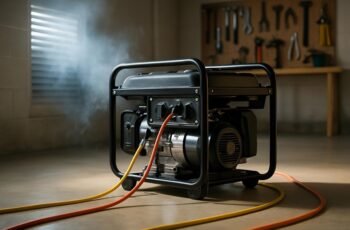
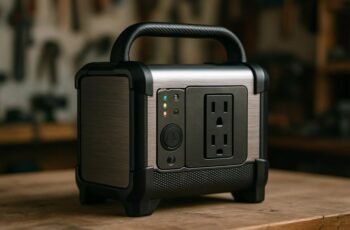
We compare manual and electric starts to illustrate what each requires and where failures commonly occur. We’ll outline the correct fuel, choke, and spark sequencing for manual cranks, alongside battery health, starter circuits, and key connections for electric starts, with emphasis on pre-start checks and gauge monitoring. Our aim is to identify reliability tradeoffs and the practical steps that minimize downtime, leaving you prepared to choose and diagnose without unnecessary uncertainty. There’s more to optimize here, and it may influence how you approach your next startup.
Key Takeaways
- Manual start uses recoil or lever to crank without electricity, relies on carburetor settings, choke, and spark for ignition.
- Electric start uses a starter motor and battery; ensure battery health, proper solenoid engagement, and stable voltage during cranking.
- Manual start offers independence from battery health but may require more effort and technique for reliable ignition.
- Electric start provides rapid, effortless startup but depends on battery condition, charging system, and electrical integrity.
- Safe startup essentials: check fuel, oil, ventilation, guards in place, listen for anomalies, and monitor gauges during and after cranking.
Manual vs Electric Start: Which Do You Need?
When choosing between manual and electric start, the decision hinges on reliability, convenience, and maintenance requirements. We compare control schemes, startup latency, and fault susceptibility to determine fit for intended use. Manual start advantages include independence from battery health, simplicity, and lower ongoing maintenance, which reduce failure points in harsh or remote environments. Electric start drawbacks center on battery aging, charging needs, and potential electronic fault conditions that can complicate troubleshooting. Our assessment considers startup consistency under load, required ancillary systems, and environmental exposure. For prolonged outages or reduced serviceability, manual start may deliver predictable operability. In contrast, electric start offers rapid, effortless initiation when batteries remain healthy. Ultimately, we align choice with user conditions, expected duty cycle, and maintenance capabilities.
How Manual Start Works and What It Requires
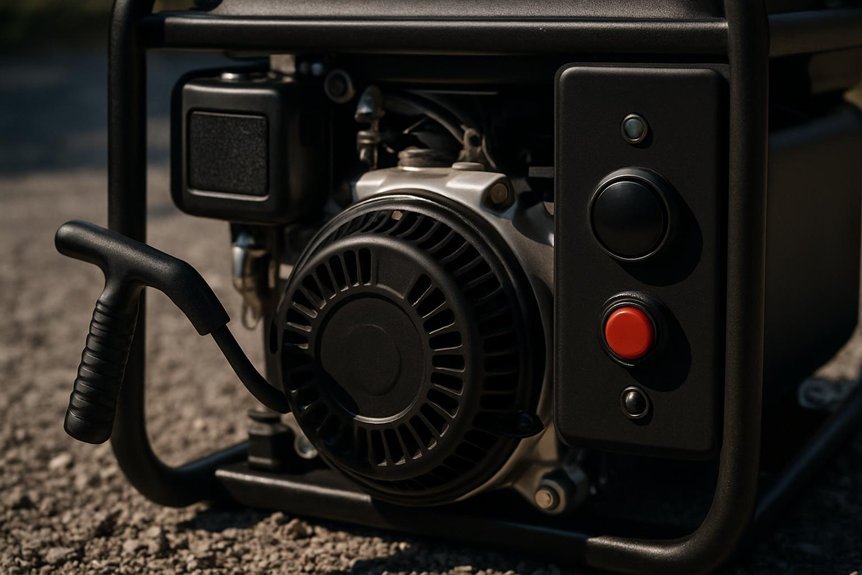
Manual start works by physically delivering a starter impulse to the engine without relying on an electrical system. We examine the sequence that translates user action into crank rotation, beginning with the recoil or manual lever engagement and ending with sustained combustion. Our focus is on the mechanical integrity of the starter mechanism, including return springs, pawls, and a properly tensioned rope or lever cord. We assess fuel delivery timing, compression, and the need for a consistent spark during initial rotation, recognizing that each step must align to achieve a reliable ignition cycle. For dependable manual startup, fuel stability matters: we verify the carburetor’s idle setting, choke position, and absence of flooding. We emphasize maintenance to minimize binding, wear, and friction losses.
How Electric Start Works and What It Requires
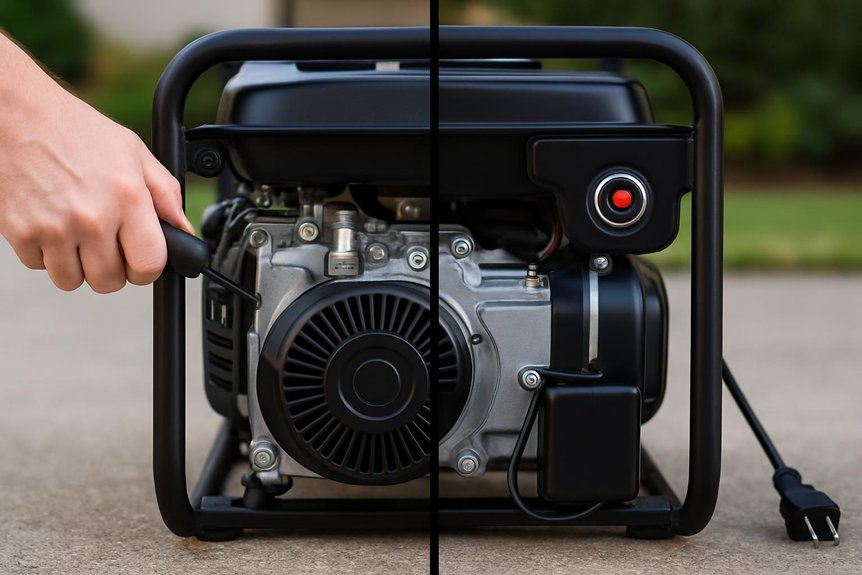
Electric start uses an onboard electrical system to crank the engine, replacing the manual pull with a starter motor and battery. We assess how the start mechanism engages the engine, including the solenoid actuation, pre-start checks, and load sequencing. The system relies on a dedicated DC battery formulated for repeated cranking, with a defined cold-cranking amp rating and proper electrolyte maintenance. We evaluate the battery requirements, noting that voltage stability, charging topology, and isolation from auxiliary loads influence reliability. The starter motor draws current through a controlled relay path, synchronized with the engine’s ignition timing to ensure a clean crank event. We also consider parasitic drains, fuse protection, and the implications of extended storage on battery health.
Safe Startup Steps for Any Starter
Before starting, we verify the generator’s condition and the environment to ensure a safe, reliable crank. We apply start safety protocols and follow maintenance basics to minimize risk. We perform a quick visual check, inspect fuel, oil, and wiring, and confirm ventilation. Once components are confirmed, we engage the starter only after guards and covers are in place. We listen for abnormal noises and monitor gauges during cranking. If the unit starts, we run it under no-load for a minute to stabilize. If not, we abort and reassess.
| Step | Purpose |
|---|---|
| Visual inspection | Detect obvious faults |
| Fluid levels | Ensure proper lubrication and combustion |
| Ventilation check | Prevent fumes buildup |
| Guard verification | Keep hands clear |
| Test run | Confirm reliability |
Troubleshooting Startup Issues and Quick Fixes
When startup hiccups occur, we start by ruling out common culprits and applying targeted fixes that get the unit back online quickly. In our startup troubleshooting approach, we verify fuel quality, line pitch, and choke position before advancing to ignition sequencing. We test for spark consistency, inspect the spark plug gap, and confirm the battery charge for electric-start models. If the generator remains stubborn, we assess load conditions, check for flooded carburetors, and evaluate air filtration and intake passages. Quick fixes include reseating connections, cleaning the air filter, and replacing a weak spark plug. We document results and iteratively repeat checks until performance stabilizes. Our goal is a reliable restart with minimal downtime, ensuring safe, repeatable operation across manual and electric-start variants.
Frequently Asked Questions
How Long Does a Portable Generator Manual Start Take?
Starting a manual start typically takes 5–15 seconds, depending on fuel, spark, and compression; cold weather impact can extend to 20–40 seconds. We assess start duration critically and adjust choke, priming, and battery status accordingly.
Can Electric Start Fail in Cold Weather Conditions?
Like a clockwork engine, we answer: yes, electric start can fail in cold weather. We assess electric start reliability, noting cold weather impact includes battery voltage drop, starter motor strain, and fuel system icing risks influencing performance.
Do Manual and Electric Starts Require the Same Fuel Type?
Yes—manual and electric starts generally use the same fuel type. We analyze start type differences and fuel compatibility, noting that most portable generators require unleaded gasoline; always consult the label for ethanol blends and octane specifics.
Is a Recoil Starter Safer Than an Electric Starter?
Recoil safety outperforms on safety, we believe, but not by a landslide—the risk difference is real. We find electric starter reliability higher, though occasional electric faults occur; we still stress proper grounding and maintenance for both systems.
What Maintenance Prevents Starter Motor Failures?
We maintain the starter by using proper maintenance lubricants and spark plug care; we check connections, clearn fuel paths, and replace worn components to prevent failures, ensuring reliable starts and accurate diagnostics for our equipment.
Conclusion
We’ve covered how manual and electric starts differ, and what each requires—from proper fuel and choke to a healthy battery and clean connections. When we start, we verify gauges, inspect safety guards, and ensure all pre-start checks are complete. If anything stalls, we methodically troubleshoot with targeted steps. Remember: consistency in procedure beats luck. Like a tight engineer’s clockwork, our startup approach keeps power ready and keeps us safe, confident, and in control.