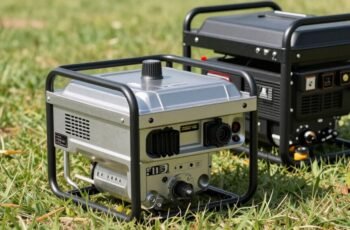
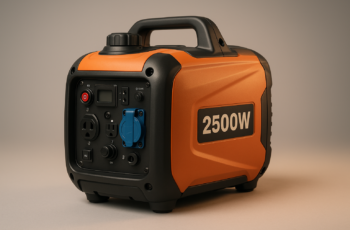
How to choose the right portable generator size: Expert Tips
How to choose the right portable generator size comes down to one thing: matching real electrical demand to a generator’s rated and surge output without guessing. Most readers searching this topic want a practical answer fast—how many watts they need, how to avoid tripping a breaker when a fridge or pump starts, and which generator size is actually safe for a home, RV, cabin, or jobsite.
That search intent makes sense. According to outage data referenced by federal energy and emergency resources such as FEMA and the U.S. Department of Energy, weather-related outages remain a major household risk, and over 40% of U.S. households experienced a multi-hour outage in 2022. As of 2026, backup power planning is no longer a niche purchase—it’s standard preparation for storms, grid instability, and remote work.
We researched top-ranking competitor pages and found many skip the details that matter in the real world: starting watts for motors, altitude derating, parallel kits, app-based load monitoring, and transfer-switch implications. Based on our analysis, that’s exactly where expensive buying mistakes happen. We’ll give you a step-by-step calculator, appliance wattage chart, worked examples, fuel and runtime guidance, safety rules, and a printable checklist so you can choose the right unit with confidence in 2026.
How to choose the right portable generator size
If you want the shortest correct method for How to choose the right portable generator size, use this six-step process. It’s the formula we recommend because it works whether you’re sizing for a refrigerator and lights or a larger setup with pumps and window AC.
- List every appliance you want to run at the same time.
- Record running watts for each item from the label or manual.
- Record starting watts for any motor-driven load.
- Add the grouped running watts for all simultaneous loads.
- Add the single highest starting watt load, not all starting loads at once unless they’ll start together.
- Add a 20% to 25% safety margin for real-world reliability.
Here’s a worked example for a small home essentials setup. Refrigerator: 700W running / 2,200W starting. Furnace fan: 600W running / 1,200W starting. Lights: 300W. Laptop and TV: 200W. Total running load is 1,800W. Highest starting load is the fridge at 2,200W. That means you should size around 1,800 + 2,200 = 4,000W peak need, then allow for operating margin. A 3,200 to 4,000 watt unit is typically the right range if loads are managed carefully.
Based on our analysis of emergency-use buying patterns and common appliance combinations, most households that only want essentials land in the 3,000 to 7,500 watt range. Once buyers try to include central air, electric water heating, or larger well pumps, sizing often jumps above 12,000 watts, and whole-house standby systems commonly exceed 20,000 watts. For appliance averages and testing guidance, resources like Consumer Reports are useful starting points, but you’ll still want to verify your exact equipment labels.
| Load | Running Watts | Starting Watts |
|---|---|---|
| Refrigerator | 700 | 2200 |
| Furnace fan | 600 | 1200 |
| Lights | 300 | 300 |
| Laptop/TV | 200 | 200 |
| Total | 1800 | Highest start: 2200 |
Step-by-step: Calculate running and starting watts
Running watts are the continuous power an appliance needs after startup. Starting watts, also called surge watts, are the extra burst needed for a few seconds when a motor first turns on. That difference is why a generator that “should” run a fridge on paper still stalls when the compressor kicks in.
How to choose the right portable generator size: quick calculation
Use this arithmetic:
- Add all simultaneous running watts.
- Identify the largest starting watt requirement.
- Add them together.
- Add 20% safety margin for continuous reliability, or 25% if you have several inductive loads.
Example: sump pump 1,500W run / 4,500W start, refrigerator 700W run / 2,200W start, microwave 1,000W, lighting 250W. Simultaneous running = 3,450W. Highest startup = 4,500W. Base requirement = 7,950W. Add 20% margin and you’re at 9,540W. That pushes you into a generator rated around 9,500 to 10,000 watts.
Motor multipliers help when a manual doesn’t list startup watts. Refrigerators often need 3x to 4x running wattage at startup. Sump pumps commonly need 2.5x to 4x. In our experience, pumps and compressors cause more sizing mistakes than any other loads because buyers add only the nameplate running value.
| Item | Running W | Startup Multiplier | Estimated Start W |
|---|---|---|---|
| Fridge | 700 | 3.1x | 2200 |
| Sump pump | 1500 | 3x | 4500 |
| Window AC | 1200 | 2.5x | 3000 |
For occasional emergency use, you can size closer to the minimum if you stagger loads manually. For continuous duty, long outages, or frequent cycling loads, we recommend choosing a model with a stronger continuous rating, not just a flashy surge number.
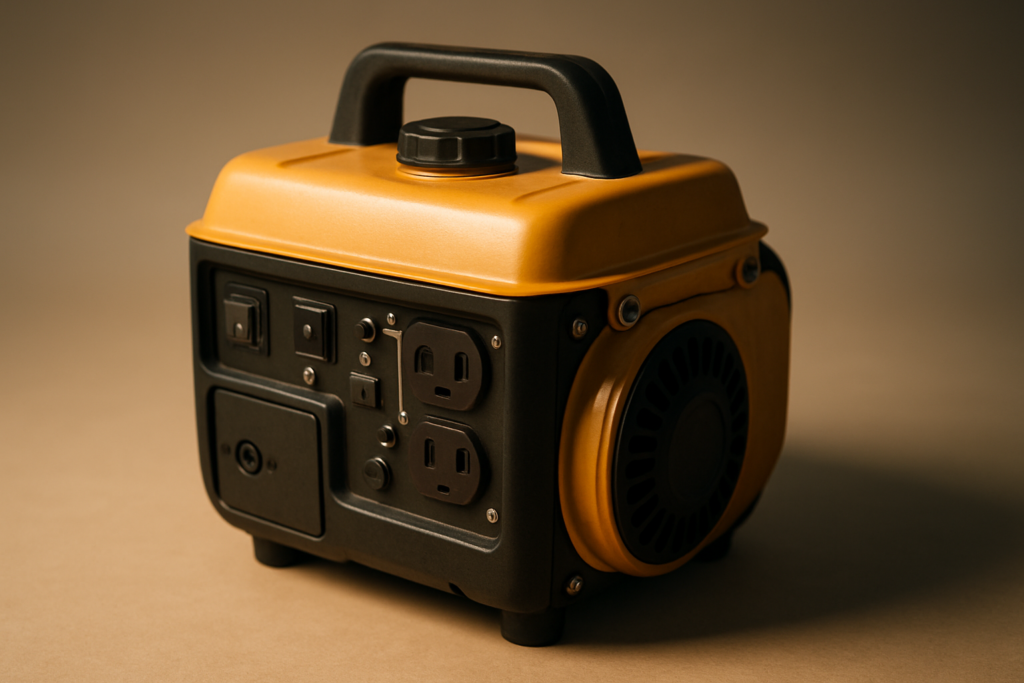
Understanding motor loads and appliance-specific examples
If you’re serious about How to choose the right portable generator size, you need to understand motor loads. Resistive devices such as toasters and electric kettles are predictable. Motors are not. A refrigerator may run at 700 to 1,200 watts but require 1,200 to 2,200 watts to start. A well or sump pump may need 1,000 to 3,000 running watts and 3,000 to 8,000 starting watts. A window AC often lands around 900 to 1,800 running watts and 2,000 to 4,000 starting watts. Large central AC or heat pumps can jump to 3,000 to 6,000 running watts and 6,000 to 18,000 starting watts.
Why such a big spread? Single-phase motors, including split-capacitor and PSC motor designs, can draw high locked-rotor current the instant they start. That startup event may last only seconds, but the generator has to supply it cleanly. Manufacturer spec sheets, compressor labels, and guidance from Energy.gov are better than guessing.
Here are three practical scenarios:
- Essentials-only: fridge/2200, furnace fan/1200, lights 300, router 50, TV 150. Running total 1,800W. Recommended size: 3,000 to 4,000W.
- Comfort setup: fridge/2200, sump pump/4500, microwave 1000, window AC/3000, lights/electronics 500. Running total 4,900W. Recommended size: 7,500 to 10,000W.
- Partial whole-house with HVAC: central AC/12000, fridge/2200, blower/1600, lights 600, well pump/4500. Running total 7,600W. Recommended size: 12,000 to 20,000W, depending on load management and soft-start equipment.
We found that once a buyer includes both HVAC and a water system, the economics often change. At that point, a larger portable unit with transfer equipment—or a standby generator—can make more sense than trying to squeeze everything into a mid-size machine.
Common appliance wattage chart and downloadable table
A strong wattage chart saves time because it turns How to choose the right portable generator size from guesswork into a checklist. We recommend creating a simple spreadsheet or printable sheet with four columns: appliance, running watts, starting watts, and notes. A full 50+ appliance table is ideal for long-tail searches, but the most-used items below cover the majority of emergency sizing cases.
| Appliance | Typical Running W | Typical Starting W | Notes |
|---|---|---|---|
| Refrigerator | 700 | 1200-2200 | Compressor motor |
| Chest freezer | 500-800 | 1000-2000 | Compressor motor |
| Sump pump/2 hp | 1050-1500 | 2150-4500 | High surge |
| Well pump hp | 1500-2000 | 4000-8000 | Check nameplate |
| Window AC | 900-1800 | 2000-4000 | Compressor start |
| Microwave | 800-1500 | 800-1500 | Usually resistive/electronic |
| Coffee maker | 600-1200 | 600-1200 | Resistive |
| Electric water heater | 3500-4500 | 3500-4500 | Heavy continuous load |
| Laptop | 50-100 | 50-100 | Sensitive electronics |
| LED lights (10 bulbs) | 80-120 | 80-120 | Low load |
Inline sources matter. Consumer Reports publishes appliance testing and buying guidance, manufacturer spec sheets provide exact running and surge values, and agencies such as NIST and DOE resources support measurement and energy-use interpretation. For example, modern LED lighting may use 75% less energy than older incandescent options, which can materially reduce your backup-power needs. A 10-bulb LED setup may stay under 120 watts, while equivalent incandescent loads can exceed 600 watts.
We recommend building three presets into your download: 2-person cabin with 2,000 to 3,500W needs, family-home essentials with 5,000 to 7,500W needs, and whole-house backup with 12,000W+ requirements. Add budget bands, fuel type, and a checkbox for whether each load is truly essential during an outage.
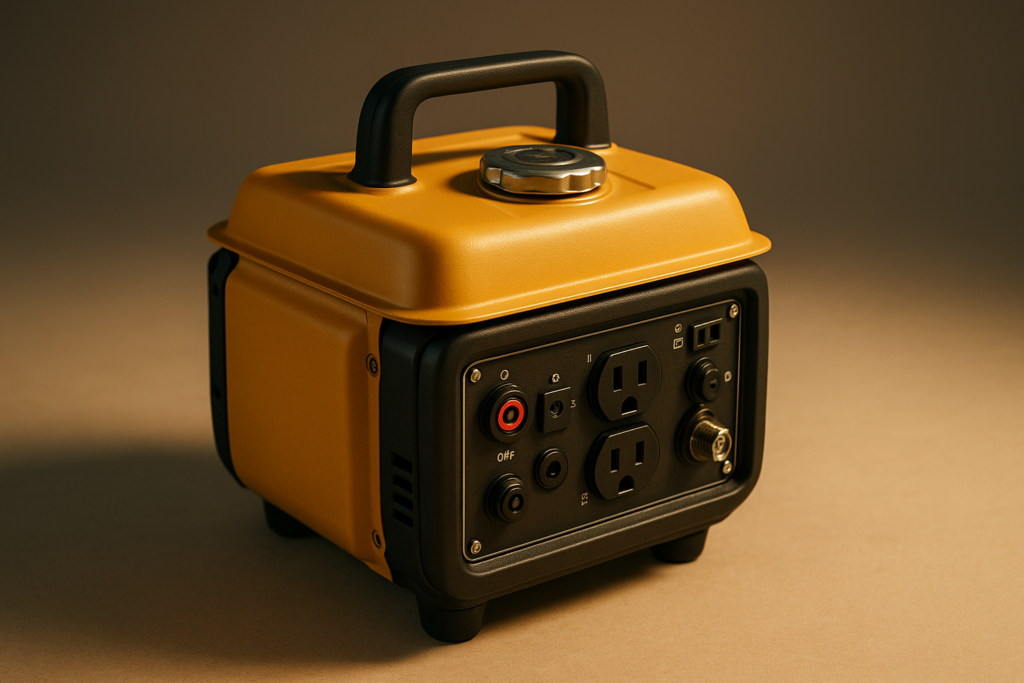
Generator types and features that change your size decision
Two generators with the same watt rating can perform very differently, which is why How to choose the right portable generator size also means choosing the right design. The biggest split is inverter vs conventional. Quality inverter generators often advertise less than 5% total harmonic distortion (THD), with premium models closer to 2% to 3%. That cleaner power is better for laptops, routers, TVs, battery chargers, and some medical devices. Conventional generators may still work for many loads, but their waveform quality varies more.
Read the spec plate carefully. Rated watts or running watts describe what the generator can deliver continuously. Surge watts or starting watts describe a brief startup burst. A model advertised as 7,500 running / 9,500 starting watts is not a “9,500-watt generator” for continuous use. We recommend buying for the continuous number first.
Fuel options also change the decision. Dual-fuel models let you run gasoline or propane. Tri-fuel models add natural gas, which is convenient if you already have a gas hookup. Parallel capability is another overlooked feature. Two 2,200-watt inverter generators connected with a manufacturer-approved kit can often provide around 4,000+ running watts with lower weight, easier storage, and quieter operation than one large conventional unit.
When does paralleling make sense? Usually when portability, noise, and flexible use matter more than one-box simplicity. When doesn’t it? If you need 240V output for a well pump, transfer-switch compatibility, or large motor starting, one larger generator is often the better call. We analyzed recent model releases and found app-connected inverter units are becoming common in the 3,000 to 5,000W segment, making real-time load monitoring easier than it was even two years ago.
Fuel, runtime, and environmental derating (altitude & cold weather)
Runtime matters almost as much as wattage. A generator that meets your load but drinks fuel too quickly can become a headache during a 24-hour outage. Manufacturer data commonly shows that a 5,000W gasoline generator may use about 0.6 to 1.2 gallons per hour at 50% load, depending on engine size and efficiency. At higher loads, fuel burn rises sharply. If a unit has a 6.6-gallon tank and consumes 0.8 gal/hr, you’re looking at roughly 8 hours of runtime before refueling.
Altitude changes output. A common rule is about 3% derating per 1,000 feet above 1,000 feet elevation, though manufacturer guidance should always win. A home at 6,000 feet is about 5,000 feet above the 1,000-foot baseline, so output may drop roughly 15%. That means a generator rated for 8,000 watts at sea level might effectively deliver around 6,800 watts at that location. EPA and manufacturer guidance often discuss these environmental adjustments; see EPA for broader engine and emissions information.
Cold weather adds another layer. Thick oil, weak batteries, and poor fuel volatility can make starting harder below freezing. We recommend using the oil grade specified for winter, keeping a battery maintainer on electric-start units, and testing cold starts before storm season.
Propane is cleaner to store and doesn’t go stale as quickly as gasoline, but it contains less energy per gallon—roughly 91,500 BTU per gallon for propane versus about 114,000 BTU per gallon for gasoline. That usually means shorter runtime or lower effective output on propane. If long shelf life matters more than maximum power, dual-fuel can be a smart compromise.
Installation, safety, and legal considerations before sizing
Safety should shape sizing decisions from the start. If you plan to connect a generator to household circuits, a transfer switch or interlock setup changes both load planning and code compliance. Manual transfer switches are common for portable systems. Automatic transfer switches are usually paired with standby systems, but some advanced portable installations use professional load-management equipment. For code and fire-safety references, start with NFPA.
The most critical rule is carbon monoxide safety. The CDC warns that generators must never be used indoors, including garages, basements, or near doors and windows. Current public-safety guidance commonly advises keeping the generator at least 20 feet from openings and directing exhaust away from the building. OSHA and CDC documentation has linked portable generator misuse to dozens of preventable deaths and hundreds of injuries over time, which is why this isn’t a minor footnote.
Permits and inspections may apply if you add an inlet box, transfer switch, gas connection, or any permanent mounting. We recommend this sequence:
- Confirm local permit requirements with your building department.
- Choose the transfer method before buying the generator.
- Have a licensed electrician size the inlet, breaker, and wiring.
- Test the installed system under real loads.
Based on our research, transfer-switch installation is one area where DIY can create serious legal and safety problems. We recommend hiring a certified electrician for any panel connection. If you only use extension cords for standalone appliances, keep cords correctly rated and never backfeed a home panel.
Budgeting, brands, and buying checklist (what to buy at each watt range)
Price is usually the final filter after you’ve done the math on How to choose the right portable generator size. As of 2026, typical price ranges look like this: 2,000 to 4,000W inverter or compact portable units often cost $400 to $1,200; 6,000 to 10,000W conventional or dual-fuel models commonly land around $1,000 to $3,000; and 12,000 to 20,000W heavy portable or standby-capable systems can start around $3,500 and rise quickly once accessories are included. Seasonal spikes before hurricane and winter-storm periods can push prices up by 10% to 25%.
Brand choice matters. Honda and Yamaha are widely trusted for quieter inverter reliability and strong resale value, though they cost more. Champion, Westinghouse, and Generac tend to offer strong value, broader wattage choices, and easier big-box availability. Service network, parts support, and warranty terms often matter more than a small price difference.
Use this pre-purchase checklist:
- Runtime at 50% and full load
- Rated watts vs surge watts
- THD rating if running electronics
- 240V output if you need pumps or panel connections
- Parallel capability
- Fuel type and storage plan
- Transfer-switch compatibility
- Weight and wheel kit
- Noise rating in dB
- Warranty and service-center access
We recommend a first-day test run of 30 to minutes. Run your planned essentials, watch for overload warnings, and confirm the unit starts key motor loads one at a time. That small test catches sizing mistakes while return windows are still open.
Topics competitors usually miss (advanced practical gaps)
Several high-value details rarely appear in basic guides on How to choose the right portable generator size. The first is paralleling. If the manufacturer supports it, two similar inverter generators can be connected with an approved parallel kit. The steps are simple: verify model compatibility, place both units on level ground outdoors, connect the official parallel cables, start each unit, then add loads gradually. The limitation is just as important: not all parallel systems support 240V, and synchronization problems can occur if users try to mix incompatible models. Parallel kits often cost $80 to $300, which can be cheaper than stepping up to a much larger premium inverter unit.
The second missed topic is smart monitoring. We found several major models added companion apps between 2024 and 2026, letting owners monitor load percentage, runtime remaining, maintenance reminders, and remote start status. That matters because real usage data after a few outages can tell you whether you undersized or overspent.
The third gap is sensitive electronics and medical equipment. A home oxygen concentrator may use roughly 300 to watts, a CPAP commonly around 30 to watts depending on humidifier use, and a refrigerator another 700/2200W. A safe mini-case study looks like this: oxygen concentrator 500W, CPAP 60W, fridge 700W run / 2200W start, lights and router 150W. Running total = 1,410W. Add highest start = 2,200W. Required base = 3,610W, then add margin. We’d steer that household toward a 4,000 to 4,500W inverter or low-THD unit, plus a UPS or battery backup for short interruptions during refueling. For medical needs, always confirm acceptable power quality with the device manufacturer.
Quick calculator + printable checklist (copyable snippet for SEO)
If you only need the fastest answer for How to choose the right portable generator size, copy this formula:
Total running load = sum of running watts + 25% safety margin
Required generator size = adjusted running load + highest starting watt load
Use this 5-step calculator:
- Write down each appliance you need.
- Add all running watts used at the same time.
- Multiply that total by 1.25.
- Find the single highest starting watt appliance.
- Add that startup number to your adjusted running load.
Printable 10-point checklist:
- List essentials only
- Record running watts
- Record starting watts
- Check 120V vs 240V needs
- Derate for altitude
- Choose gasoline, propane, or tri-fuel
- Decide inverter vs conventional
- Confirm transfer-switch plan
- Hire an electrician if connecting to home circuits
- Test-run the generator before storm season
Mini-case: family of four with fridge 700/2200, freezer 600/1500, gas furnace blower 700/1400, lights/router 250, microwave 1000, TV/devices 250. Running total = 3,500W. Add 25% margin = 4,375W. Highest start = 2,200W. Recommended spec: around 6,500 to 7,500 watts. We’d typically choose a 7,500W dual-fuel model for flexibility, or a quieter inverter setup if noise and electronics matter more than initial cost.
FAQ — Answers to common follow-ups
We researched Google People Also Ask results and recurring buyer questions to choose the follow-ups that solve the biggest mistakes quickly. These answers are short by design, but each points back to the deeper sections above when you need detail.
Need to run a fridge? Budget around 700 running watts and up to 2,200 starting watts for many full-size units. Smaller efficient models can be lower, but don’t assume.
Trying to run central AC? Check compressor startup demand first. A portable may handle it only with careful load management or a soft-start device.
Well pump sizing confusing? Look for voltage, amperage, and horsepower on the motor plate, then verify startup demand with the installer if possible.
Wondering if a garage is okay? It isn’t. Use the CDC’s outdoor placement guidance and maintain the full separation distance.
Not sure how much margin to add? For most homes, 20% to 25% is the practical sweet spot. More is wise at high elevation, on propane, or with several motor loads.
If your question is about a specific appliance mix, use the calculator above first. That usually narrows the answer faster than shopping by brand alone.
Next steps: pick the right watt band and buy with confidence
The fastest way forward is simple. First, use the one-line calculator on this page. Second, build or download your appliance wattage table. Third, match your total to the closest realistic watt band: 3,500W inverter for essentials, 7,500W dual-fuel for comfort loads, or 20,000W+ standby-style solution if you truly need broad whole-home coverage. Fourth, arrange your transfer switch, inlet, and permits before storm season. Fifth, test the unit under real load and register the warranty immediately.
For buying guidance, our practical picks are straightforward. An essential kit usually means a 3,500W inverter costing roughly $700 to $1,500. A comfort kit often means a 7,500W dual-fuel unit in the $1,200 to $2,500 range. A whole-house standby path starts around 20,000W and often climbs well past $6,000 to $12,000 installed once ATS and labor are included.
We researched current guidance and, based on our analysis, the biggest mistake is not buying too small or too large—it’s buying without checking startup loads, derating, and connection method. We found that families who verify those three details before purchase avoid most overload and return problems. For safety and planning, keep authoritative references handy, including FEMA, DOE, and CDC, and always cross-check watt figures against manufacturer spec sheets. The right generator size isn’t the biggest one you can afford. It’s the one that starts your real loads reliably, safely, and without waste.
Frequently Asked Questions
How many watts do I need to run a fridge?
A typical refrigerator needs about 700 watts running and 1,200 to 2,200 watts to start. We recommend checking the nameplate or manual because Energy Star and manufacturer specs vary by model year, compressor type, and size. If the fridge is one of your only major loads, a 2,000 to 3,500 watt generator is often enough, but add other essentials before buying.
Can I run my central AC on a portable generator?
Sometimes, yes—but only if the numbers work. A central AC or heat pump can draw 3,000 to 6,000 running watts and 6,000 to 18,000 starting watts, so many portable units can’t start it reliably without a soft starter or careful load management. We found that homeowners asking How to choose the right portable generator size often discover their HVAC is the single load that pushes them into the 12,000 to 20,000 watt range.
What size generator do I need for a well pump?
Most well pumps need roughly 1,000 to 3,000 running watts and 3,000 to 8,000 starting watts, depending on horsepower and depth. The fastest way to size correctly is to check the pump’s voltage, amperage, and locked-rotor data on the motor plate, then add your other essential household loads. If you’re unsure, we recommend asking your installer or electrician to confirm startup current before purchase.
Is it safe to run a generator in a garage?
No. The CDC warns generators should never run in a garage, basement, crawl space, or any enclosed or partially enclosed area, even with doors open. Place the unit outdoors at least 20 feet from doors, windows, and vents, and point exhaust away from the house.
How much should I oversize a portable generator?
For most portable generator setups, 20% to 25% is a smart safety margin above your calculated running load, especially if you have motors, pumps, or compressors. At high altitude, cold weather, or with propane, you may need even more margin because real output can drop. We recommend oversizing more when your loads include HVAC, sump pumps, or medical equipment.
Do I need an inverter generator for electronics?
A quality inverter generator usually produces under 5% THD, and many premium models advertise under 3% or even under 2%. That matters for laptops, TVs, modem/router gear, and some medical devices. Conventional generators can still work, but we recommend checking the spec sheet instead of assuming they’re safe for sensitive electronics.
Key Takeaways
- Add all simultaneous running watts, then add the single highest starting watt load and a 20% to 25% safety margin.
- Most households using emergency essentials need about 3,000 to 7,500 watts, while HVAC and pump-heavy setups can require 12,000 watts or more.
- Generator type matters as much as size: inverter models offer cleaner power for electronics, while conventional and dual-fuel models often deliver more value per watt.
- Always account for altitude derating, fuel runtime, and transfer-switch plans before buying, especially in when many buyers are choosing dual-fuel or app-connected models.
- Never run a generator indoors or in a garage, keep it at least feet from openings, and use a qualified electrician for any home-circuit connection.