Did you know that a portable generator’s fuel efficiency can vary considerably depending on load and design features, often more than manufacturers claim? Understanding these nuances is vital for selecting a model that minimizes fuel waste while meeting your power demands. Without proper evaluation, you risk overpaying in fuel costs or overloading your unit, which can shorten its lifespan. To make an informed choice, it’s essential to analyze key factors that influence efficiency—details that this guide will help clarify.
Key Takeaways
- Select models with high fuel efficiency ratings and low gallons per hour (GPH) or liters per hour (LPH).
- Match generator capacity closely to your actual load to optimize efficiency and prevent overloading.
- Choose generators with inverter technology and variable speed governors for precise power regulation and fuel savings.
- Prioritize models with quality components and routines maintenance features to sustain optimal fuel consumption.
- Consider runtime per tank and operational hours under load to assess long-term fuel cost efficiency.
What Factors Influence Portable Generator Fuel Efficiency?
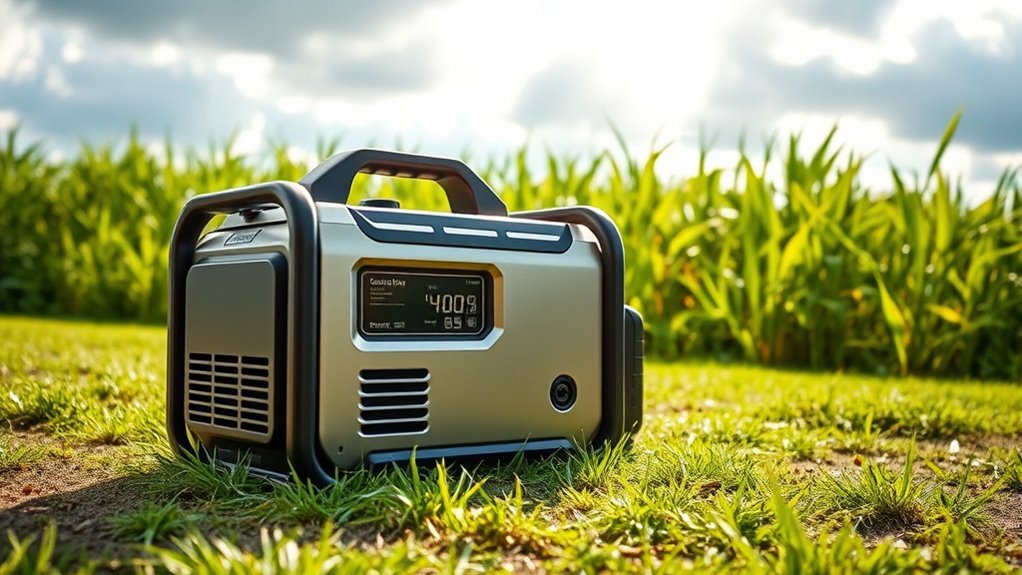
What factors truly determine the fuel efficiency of a portable generator? Primarily, engine size and design influence fuel consumption; larger engines typically consume more fuel under similar loads. The generator’s load factor is also critical—running at ideal capacity maximizes efficiency, whereas under- or overloading causes unnecessary fuel use. Additionally, engine technology, such as fuel injection versus carburetion, impacts combustion efficiency. The quality of components, including the alternator and cooling system, affects operational smoothness and fuel burn. Maintenance practices, like regular oil changes and air filter replacements, directly influence engine performance and fuel economy. Finally, environmental conditions—temperature, altitude, and humidity—alter combustion dynamics, thereby affecting fuel efficiency. Understanding these interconnected factors helps in selecting a model that balances power needs with fuel conservation.
How to Compare Fuel Consumption Rates Across Models?
To effectively compare fuel consumption rates across portable generator models, we must analyze standardized metrics such as fuel efficiency ratings and operational hours under specified loads. These metrics provide objective benchmarks for evaluation. For instance, a generator’s fuel efficiency rating indicates gallons consumed per hour at a given load, while operational hours reveal runtime under typical conditions. Consider the following data for comparison:
| Model | Fuel Efficiency (gal/hr at 50% load) | Runtime per Tank (hrs) |
|---|---|---|
| Model A | 0.25 | 8 |
| Model B | 0.30 | 6.67 |
| Model C | 0.20 | 10 |
| Model D | 0.35 | 5.71 |
| Model E | 0.22 | 9.09 |
This approach guarantees precise, data-driven model selection.
Key Features That Boost Fuel Efficiency in Generators
Enhancing fuel efficiency in generators largely depends on specific design features and technological advancements that maximize energy use. Key among these are inverter technology, which provides precise voltage regulation, reducing waste during fluctuating loads. Variable speed governors automatically adjust engine RPMs to match power demand, minimizing fuel consumption during lower loads. Additionally, advanced carburetion systems enhance combustion efficiency, ensuring complete fuel burn and less wastage. High-quality insulation and soundproofing contribute indirectly by maintaining optimal engine temperatures, preventing inefficiencies caused by overheating or underperformance. Robust cooling systems sustain consistent operation, reducing idle fuel use. Finally, digital control panels enable real-time monitoring of fuel consumption and system performance, allowing users to optimize operation and identify inefficiencies proactively. These features collectively improve fuel economy and operational longevity.
Tips for Maximizing Your Portable Generator’s Fuel Economy
Maximizing your portable generator’s fuel economy requires a strategic approach that involves both proper operation and routine maintenance. Operating the generator within its ideal load range—typically 50-75% capacity—minimizes fuel wastage caused by overloading or underloading. Using the correct fuel type and maintaining consistent fuel-to-oil ratios ensures efficient combustion and prevents engine strain. Routine maintenance, such as regular oil changes, air filter replacements, and spark plug inspections, maintains engine efficiency and reduces fuel consumption. Employing load management techniques—like powering only essential devices—limits unnecessary engine operation. Additionally, ensuring proper ventilation and stable operating conditions prevents inefficient engine performance. These practices collectively optimize fuel use, extending run time and reducing overall consumption.
Common Mistakes That Waste Fuel and How to Avoid Them
Overloading your generator can substantially reduce fuel efficiency by causing unnecessary strain on its components. Running unnecessary loads wastes fuel, as the generator consumes power without purpose. Additionally, neglecting regular maintenance leads to inefficiencies, resulting in higher fuel consumption over time.
Overloading the Generator
Have you ever considered how overloading your portable generator impacts fuel efficiency? Overloading causes the engine to operate under excessive strain, leading to higher fuel consumption without proportional power output. This inefficiency results in faster fuel depletion and increased wear on components, potentially shortening the generator’s lifespan. To illustrate, consider the following:
| Load Level | Fuel Efficiency | Engine Stress |
|---|---|---|
| Optimal | Maximized | Minimal |
| Overloaded | Reduced | Excessive |
| Underloaded | Inefficient | Moderate |
Maintaining a load within the manufacturer’s recommended capacity guarantees fuel is used effectively, minimizing waste, and reducing maintenance costs. Proper load management is vital for maximizing operational efficiency and lifespan.
Running Unnecessary Loads
Ever wonder why your fuel runs out faster than expected when operating your generator? Running unnecessary loads considerably impacts fuel efficiency by increasing engine workload without benefit. Excess loads force the generator to produce more power than needed, leading to higher fuel consumption and unnecessary wear.
To optimize efficiency, avoid:
- Operating appliances that exceed the generator’s capacity
- Running multiple devices simultaneously without evaluating total load
- Using high-power tools or equipment when smaller alternatives suffice
- Leaving devices plugged in when not actively in use
- Running the generator at full throttle unnecessarily
Ignoring Regular Maintenance
Why do many generators consume more fuel than necessary over time? Ignoring regular maintenance leads to decreased combustion efficiency and increased fuel consumption. Dirty air filters restrict airflow, causing the engine to work harder and burn more fuel. Failing to perform timely oil changes results in increased internal friction, reducing overall efficiency. Worn spark plugs can cause incomplete combustion, wasting fuel and producing excess emissions. Additionally, neglecting fuel system inspection may lead to clogged carburetors or filters, impairing fuel delivery. These issues cumulatively force the engine to operate under less-than-ideal conditions, increasing fuel consumption and reducing lifespan. Regular maintenance, including cleaning, inspections, and part replacements, ensures peak engine performance, minimizes fuel waste, and prolongs the generator’s operational efficiency.
Choosing the Right Generator Based on Your Fuel Efficiency Needs
To select the most suitable generator, we must compare fuel consumption rates against your power output requirements, ensuring efficiency without sacrificing performance. Understanding the relationship between load capacity and fuel efficiency allows us to identify models that maximize runtime while meeting demand. By analyzing these technical metrics, we can make data-driven decisions tailored to your specific energy needs.
Fuel Consumption Rates
Understanding fuel consumption rates is essential when selecting a portable generator that aligns with your efficiency needs. Fuel consumption directly impacts operational costs, runtime, and overall performance. Evaluating the rate in gallons per hour (GPH) or liters per hour (LPH) helps determine efficiency by comparing models under similar loads. Factors influencing consumption include engine size, load demand, and technological features like fuel injection systems. It’s important to analyze how consumption scales with load—some generators are more efficient at partial loads, while others excel under full capacity. Establishing a baseline for your typical usage guarantees you select a model that minimizes fuel waste.
- Fuel consumption varies with load percentage
- Higher engine efficiency reduces GPH/LPH
- Technological advancements improve fuel economy
- Load management impacts operational costs
- Accurate consumption data aids in cost prediction
Power Output Compatibility
Selecting a generator with the appropriate power output is essential for maximizing fuel efficiency and guaranteeing reliable performance. Matching the generator’s wattage capacity to your actual load prevents unnecessary fuel consumption caused by overcapacity and reduces wear on the engine. To determine the right size, we analyze your typical power requirements, considering startup surges for appliances with motors or compressors. Operating a generator at or near its maximum capacity increases fuel use and shortens its lifespan, while underpowering risks overload and system failure. By accurately evaluating your load demands, we can select a model that balances efficiency and reliability, minimizing fuel waste. Proper power output compatibility ensures the generator operates within its ideal efficiency zone, delivering consistent performance while conserving fuel.
Frequently Asked Questions
How Often Should I Service My Portable Generator for Optimal Fuel Efficiency?
We suggest servicing our portable generator every 50 to 100 hours of use or at least annually, whichever comes first. Regular maintenance guarantees peak fuel efficiency, prevents breakdowns, and extends the generator’s lifespan through thorough inspection and component replacement.
Does the Type of Fuel Impact a Generator’s Fuel Efficiency?
Yes, the type of fuel considerably impacts a generator’s fuel efficiency; higher-quality, cleaner fuels typically burn more completely, reducing waste and emissions. We recommend selecting the right fuel based on your generator’s specifications for peak performance.
Are Inverter Generators More Fuel-Efficient Than Traditional Models?
We find inverter generators generally more fuel-efficient than traditional models due to their ability to adjust engine speed based on load, reducing fuel consumption and emissions, which makes them a superior choice for energy efficiency and environmental considerations.
How Does Load Size Affect a Generator’s Fuel Consumption?
Like tuning a fine violin, load size directly impacts fuel consumption; smaller loads keep efficiency high, while larger ones strain the engine, increasing fuel use. Properly matching load to generator capacity optimizes performance and conserves fuel.
Can Using a Fuel Stabilizer Improve My Generator’s Efficiency?
Using a fuel stabilizer can improve our generator’s efficiency by preventing fuel degradation, reducing clogging, and ensuring consistent combustion. This maintenance step optimizes fuel use, prolongs engine life, and enhances overall operational performance.
Conclusion
In sum, selecting a fuel-efficient portable generator demands careful analysis of load ratings, features, and maintenance practices. By prioritizing models with inverter tech, variable speed governors, and proper sizing, we can optimize fuel use and extend equipment lifespan. Avoiding common pitfalls is essential—think of it as steering a ship through a storm without wasting precious fuel. Armed with this knowledge, we can confidently choose a model that maximizes efficiency and minimizes operational costs.