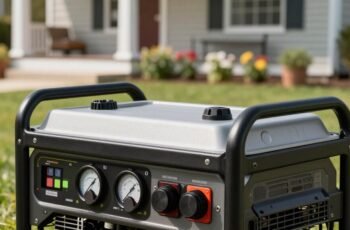
When we first connected a portable generator during a storm, a loose outlet nearly caused a hazardous shock—highlighting the importance of choosing the right connections. Ensuring safety, compatibility, and durability in generator outlets isn’t just technical jargon; it’s critical for reliable operation and personal safety. With a variety of options available, understanding what features and standards to prioritize can make all the difference in avoiding costly mistakes and ensuring seamless power delivery.
Key Takeaways
- Ensure outlets match device plug types, voltage, and amperage requirements for safe operation.
- Look for weather-resistant and durable connections to withstand environmental conditions.
- Verify safety features like GFCIs, circuit breakers, and proper grounding to prevent shocks and hazards.
- Check outlet ratings to match your power capacity needs, including surge and continuous wattages.
- Choose user-friendly options with clear labeling, secure locking mechanisms, and corrosion-resistant contacts.
What Types of Outlets Do Portable Generators Offer?
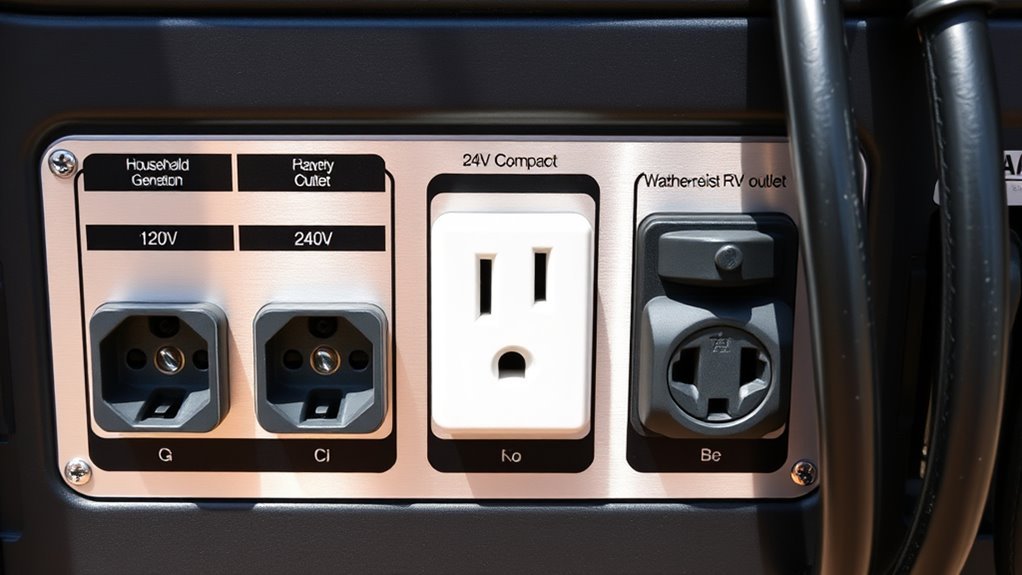
Many portable generators are equipped with a variety of outlet types designed to accommodate different power needs. Typically, these include standard household outlets, such as 120V AC receptacles, which support common appliances and tools. Some generators also feature 240V outlets for higher-powered equipment, like welders or large appliances, often in the form of twist-lock or NEMA configurations. Additionally, some units incorporate specialized outlets, such as USB ports for charging devices or 12V DC outlets for automotive accessories. The diversity of outlet types guarantees versatility for various applications, but matching the outlet specifications to your power requirements is essential. Precise understanding of each outlet’s voltage, amperage, and compatibility helps prevent overloads and ensures safe operation in different scenarios.
How to Choose the Right Power Capacity for Your Needs
To select the appropriate generator capacity, we first assess the total wattage of all devices we plan to operate simultaneously. We then compare these requirements to the rated output of potential generators to guarantee adequate power supply. Proper matching prevents overloads and ensures reliable performance.
Assess Your Power Requirements
Evaluating your power requirements is a critical first step in selecting the appropriate portable generator. We begin by listing all devices and equipment you intend to power, noting their startup (surge) and running wattage. Accurate measurements are essential, especially for high-demand appliances like refrigeration units or power tools, which often have significant initial surges. We then sum the continuous wattage demands, guaranteeing the total does not exceed the generator’s rated capacity. Additionally, consider future needs or potential expansion, which may influence your size choice. Precise assessment prevents underpowering, which risks equipment malfunction, or oversizing, which results in unnecessary expense and inefficiency. Thoroughly understanding your total power load ensures ideal generator performance and longevity while safeguarding your connected devices.
Match Generator Ratings
Selecting a generator with the appropriate power capacity requires careful attention to its rated wattage and surge capabilities. The rated wattage indicates the continuous power the generator can deliver, while surge capacity reflects its ability to handle initial startup loads. To match your needs, compare these ratings with the total wattage of your essential appliances and tools, ensuring the generator can support their simultaneous operation. Overestimating can lead to unnecessary expense and inefficiency, while underestimating risks overloads and voltage drops. Verify that the generator’s surge capacity exceeds the startup requirements of high-inrush devices like refrigerators or power tools. Precise matching guarantees reliable performance, minimizes strain on the generator, and extends its lifespan. Always consult manufacturer specifications to confirm compatibility with your specific power demands.
Safety Features to Look for in Generator Outlets and Connections
When choosing a portable generator, guaranteeing safety features are integrated into the outlets and connections is essential to prevent electrical hazards. Ground-fault circuit interrupters (GFCIs) are critical, as they detect imbalance currents and shut off power to prevent shocks. Weather-resistant covers protect outlets from moisture, reducing the risk of short circuits. Circuit breakers or overload protection integrated into outlets prevent overheating and damage caused by excessive load. Additionally, look for outlets with secure, tamper-resistant designs to prevent accidental contact or foreign objects. Proper grounding terminals are crucial for safety, ensuring electrical faults are safely directed away from users. These features collectively enhance operational safety, minimize risk, and ensure compliance with electrical standards. Prioritizing these safety elements helps safeguard users and connected devices effectively.
Understanding Compatibility With Different Devices and Plugs
Understanding compatibility with different devices and plugs is essential to guarantee safe and efficient operation of a portable generator. Proper matching ensures electrical safety, prevents damage, and maximizes performance. Devices require specific plug types and voltage ratings; mismatched connections can result in equipment failure or hazards. Consider the connector type, amperage capacity, and voltage compatibility before connecting. The following table summarizes common device-plug configurations:
| Device Type | Plug Type | Typical Voltage/Amperage | Notes |
|---|---|---|---|
| Small appliances | NEMA 1-15 | 120V / 15A | Standard household outlets |
| Heavy-duty tools | NEMA 5-20 | 120V / 20A | For higher current devices |
| RV and Campers | TT-30 | 125V / 30A | Suitable for RV connections |
| Industrial equipment | L14-30 | 250V / 30A | 240V circuits, heavier loads |
| Solar/inverter | Anderson Powerpole | Variable voltage | Specialized, modular design |
Ensuring correct compatibility reduces risks and optimizes generator utility.
The Importance of Grounding and Transfer Switches
Proper grounding techniques are essential to guarantee safety and equipment protection during generator operation. Transfer switches with built-in safety features prevent back-feeding and electrical faults, safeguarding both users and the grid. Understanding the distinction between grounding and bonding is critical for correct system setup and compliance with electrical codes.
Proper Grounding Techniques
Ensuring correct grounding of portable generators is essential for safety and equipment protection, as improper grounding can lead to electrical shocks or damage. Proper grounding techniques involve connecting the generator’s grounding terminal to a grounding rod driven into the earth, ensuring a low-resistance path for fault currents. Use a grounding wire that is appropriately rated for the generator’s capacity, and verify that all connections are tight and corrosion-free. It’s vital to follow manufacturer instructions and local electrical codes, as improper grounding can compromise safety and violate regulations. Grounding not only prevents electrical shock hazards but also stabilizes voltage levels, reducing the risk of damage to connected appliances. Accurate grounding practices are fundamental for safe and reliable generator operation.
Transfer Switch Safety Features
Why are transfer switch safety features, particularly grounding and automatic transfer mechanisms, critical for reliable generator operation? Proper grounding guarantees the safe dissipation of fault currents, minimizing shock hazards and equipment damage. Transfer switches with built-in safety features prevent backfeeding, which can endanger utility workers and damage the grid. Automatic transfer mechanisms provide seamless power transfer, reducing manual errors during outages and ensuring continuous, stable power delivery. Safety interlocks within the switch prevent operation under unsafe conditions, such as when the generator is not properly grounded or connected. These features collectively enhance operational safety, protect personnel and equipment, and ensure compliance with electrical codes. Precise design and integration of safety features in transfer switches are essential for dependable, safe generator use.
Grounding Versus Bonding
Grounding and bonding serve distinct yet interconnected roles in safeguarding electrical systems, especially when operating portable generators with transfer switches. Grounding refers to connecting the generator’s frame or chassis to the earth, providing a low-resistance path for fault currents, which helps prevent electric shock and equipment damage. Bonding, however, involves connecting the generator’s internal metal parts to the grounding system, ensuring that all conductive parts are at the same potential. Proper grounding reduces shock hazards, while bonding ensures fault currents are safely directed back to the source. Both are critical for safe operation, particularly when using transfer switches, which isolate the generator from utility power. Correct implementation of grounding and bonding is essential for compliance, safety, and reliable power transfer.
How to Identify User-Friendly and Durable Connection Options
When evaluating connection options on a portable generator, it’s essential to prioritize user-friendly features and durability to guarantee safe and dependable operation. Reliable outlets should feature straightforward interfaces, such as clearly labeled sockets and secure locking mechanisms, minimizing connection errors. Durability is assessed through robust construction materials like weather-resistant covers and corrosion-resistant contacts. Consider the following factors:
| Feature | Description | Benefit |
|---|---|---|
| Weatherproof Enclosures | Protect outlets from environmental elements | Ensures longevity and safety |
| Heavy-Duty Contacts | Use of high-quality, corrosion-resistant materials | Enhances durability and electrical integrity |
| Simplified Locking Mechanisms | Secure connections with minimal effort | Reduces accidental disconnection |
Common Mistakes When Selecting Generator Outlets and How to Avoid Them
Selecting the right outlets on a portable generator requires careful attention to detail, as overlooking key factors can compromise safety and functionality. Common mistakes include choosing incompatible outlet types, neglecting amperage ratings, and ignoring grounding requirements. Using mismatched outlets can lead to improper connections, risking equipment damage or electrical hazards. Overloading outlets beyond their rated capacity causes overheating and potential failure. Failing to verify proper grounding can result in electrical shock or fire hazards. To avoid these issues, always:
- Match outlet types and ratings to your specific power needs
- Ensure outlets are properly grounded and compliant with safety standards
- Check that amperage ratings align with the devices you’ll connect
Precision in selecting outlets enhances safety, efficiency, and long-term reliability.
Tips for Maintaining and Ensuring Safe Outlet Use on Your Generator
Regular maintenance and vigilant use of your generator’s outlets are essential for guaranteeing safety and reliable performance. Regularly inspect outlets for signs of wear, corrosion, or damage, and clean them with appropriate electrical contact cleaners. Confirm all connections are secure and free from debris before operation. Test outlet grounding periodically to confirm proper electrical safety standards are met. Use only compatible extension cords and devices rated for your generator’s outlet specifications to prevent overloads. Adhere strictly to manufacturer guidelines regarding load capacity and operation procedures. Always disconnect power sources before servicing outlets or performing maintenance. Keep outlets dry and protected from moisture, which can cause short circuits or electrical failures. Consistent, precise upkeep minimizes risks and extends the operational lifespan of your generator’s outlets.
Frequently Asked Questions
Can Portable Generator Outlets Handle High-Current Appliances Safely?
Yes, portable generator outlets can handle high-current appliances safely if they feature appropriate outlets, sufficient amperage ratings, and proper grounding. We always recommend checking the generator’s specifications and using the correct extension cords for safety and ideal performance.
Are Weatherproof Outlets Necessary for Outdoor Generator Use?
Weatherproof outlets are essential for outdoor generator use, as they prevent moisture ingress, reduce electrical shock risk, and guarantee safe operation during adverse weather conditions, maintaining equipment longevity and user safety.
What Is the Difference Between Twist-Lock and Standard Outlets?
Ever wondered how twist-lock and standard outlets differ? Twist-lock outlets securely connect with a twisting mechanism, providing a weatherproof, vibration-resistant connection ideal for outdoor use, while standard outlets are simpler, often more vulnerable to disconnection.
How Do I Determine the Maximum Length of Extension Cords?
We determine the maximum extension cord length by considering the wire gauge, load current, and voltage drop. Thicker gauges (lower AWG numbers) support longer distances, ensuring safe, efficient power delivery without overloading or voltage loss.
Do All Generators Support Simultaneous Connection of Multiple Devices?
Not all generators support simultaneous device connections; we recommend checking the generator’s rated output and outlet configuration. Make sure it has enough outlets with proper power ratings, and verify the total load doesn’t exceed the generator’s capacity.
Conclusion
Choosing the right generator outlets is like designing a reliable bridge—every connection must be secure and compatible. We’ve seen a storm damage a poorly grounded setup, causing costly repairs. That’s why prioritizing safety features, proper grounding, and durability is essential. When we select the right outlets, we’re not just powering devices; we’re building a sturdy, safe foundation for all our essential needs, even in the most demanding conditions.