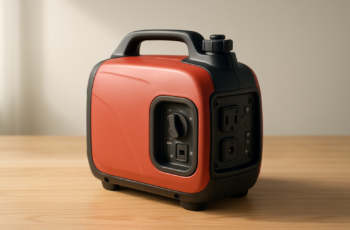
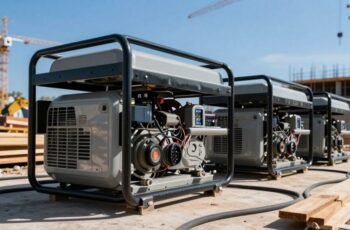
When selecting an extension cord for your portable generator, choosing the correct gauge, length, and durability features is critical for safety and efficiency. The right combination ensures your equipment operates reliably without risking overloads or damage. Understanding these specifications can be complex, but making informed decisions is essential for peak performance. Let’s explore how to identify the best extension cord options tailored to your power needs and outdoor conditions.
Key Takeaways
- Determine the generator’s maximum output amperage to select a cord gauge that supports the load safely.
- Choose a cord length that minimizes voltage drop while providing adequate reach for your setup.
- Opt for heavy-duty insulation and reinforced jackets for durability in outdoor or demanding environments.
- Ensure the extension cord’s amperage and wattage ratings exceed your total device requirements by at least 20%.
- Use grounded, weather-resistant cords and avoid daisy-chaining to ensure safe, reliable power delivery.
How to Choose the Right Extension Cord Gauge for Your Generator
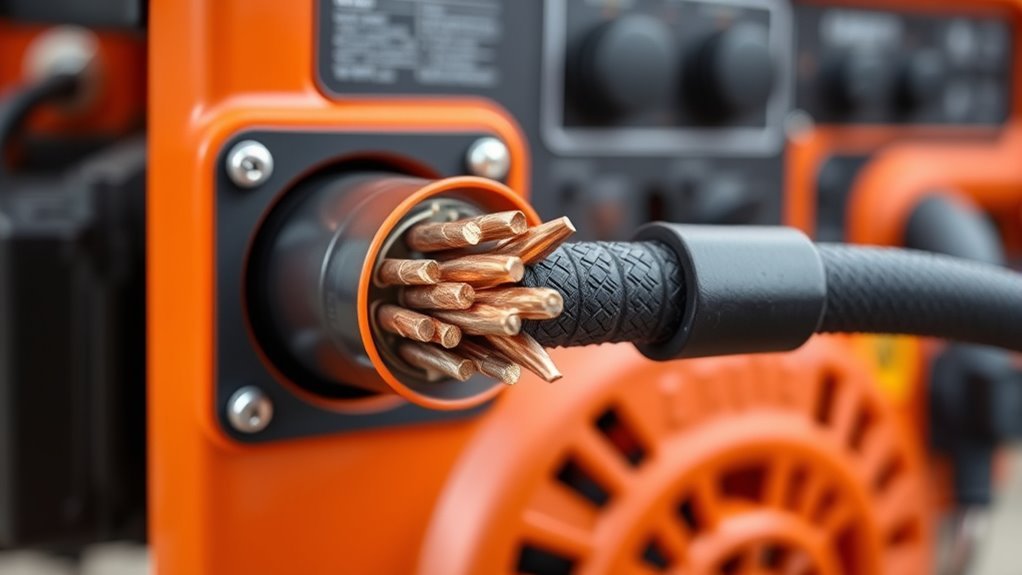
Choosing the correct extension cord gauge for your generator is essential to guarantee safe and efficient power transfer. The gauge, indicated by a number (e.g., 12 AWG), determines the wire’s current-carrying capacity. Lower gauge numbers correspond to thicker wires capable of handling higher currents with less voltage drop. To select the proper gauge, assess your generator’s maximum output amperage and the load requirements of connected devices. For distances under 50 feet, a 12 or 14 AWG cord typically suffices for most portable generators. For longer runs or higher power demands, opting for 10 or 8 AWG ensures minimal voltage loss and prevents overheating. Accurate gauge selection reduces fire hazards, equipment damage, and power inefficiency, making it a critical factor in safe generator operation.
Why Length Matters: Selecting the Best Extension Cord for Convenience and Safety
The length of your extension cord directly impacts both safety and performance by influencing voltage stability and current capacity. Longer cords introduce higher resistance, which can cause voltage drops, reducing the power delivered to your generator’s load. This voltage decrease can impair equipment operation and increase the risk of overheating. Additionally, excessive cord length can lead to increased current loss, straining the generator and connected devices. Selecting an appropriately sized extension cord minimizes these issues, ensuring reliable power delivery. Shorter cords tend to maintain consistent voltage levels and reduce resistance, optimizing safety and efficiency. Hence, it’s essential to balance convenience with technical requirements, choosing a length that supports your setup’s practical needs without compromising electrical performance or safety standards.
What Durability Features to Look for in a Portable Generator Extension Cord
Durability features are essential when selecting a portable generator extension cord because they directly influence the cord’s longevity and safety under demanding conditions. To guarantee robustness, focus on three key aspects. First, look for heavy-duty insulation, such as thermoplastic or rubber, which resists wear, cuts, and exposure to elements. Second, verify the strain relief design at connection points, preventing internal wire damage from bending or pulling stress. Third, select cords with reinforced jackets that withstand abrasion and environmental factors like moisture and UV rays. These features collectively enhance the cord’s ability to endure harsh use, reducing failure risk and maintaining safe operation. Prioritizing durability ensures your extension cord performs reliably in demanding environments while safeguarding your equipment and personnel.
How to Match Your Power Needs With the Correct Extension Cord Specifications
How can you guarantee your extension cord safely handles the power demands of your equipment? First, determine the total wattage or amperage your devices require. Convert wattage to current (amps) by dividing wattage by voltage (typically 120V). Select an extension cord rated for at least 20% above this current to provide a safety margin. Check the cord’s gauge; lower gauge numbers (e.g., 10 AWG) indicate higher current capacity. Confirm the cord’s maximum rated amperage aligns with your calculated load. For longer distances, consider thicker gauge cords to reduce voltage drop, which can impair device performance. Always verify the cord’s specifications include the necessary ratings for your equipment’s power draw, ensuring safe operation without overheating or damage.
Tips for Safe and Effective Use of Extension Cords With Your Portable Generator
To guarantee safe and efficient operation when using extension cords with your portable generator, it’s essential to follow proper connection practices and adhere to electrical safety standards. First, always verify that the extension cord’s wire gauge matches or exceeds the generator’s power output requirements to prevent overheating. Second, ensure all connections are secure and free from damage; loose or frayed cords can cause sparks or shorts. Third, avoid daisy-chaining multiple extension cords, which can lead to voltage drops and overloads. Use grounded, weather-resistant cords for outdoor applications, and keep cords clear of high-traffic areas to prevent tripping hazards. Following these steps helps maintain safe operation, reduces risk of electrical failure, and optimizes power delivery to your equipment.
Frequently Asked Questions
Can I Connect Multiple Extension Cords to Extend Reach Further?
Yes, you can connect multiple extension cords, but it’s unsafe and can cause voltage drops or overheating. We recommend using a single, heavy-duty extension cord rated for your generator’s power, or consulting a professional for proper setup.
What Are the Signs of a Damaged or Unsafe Extension Cord?
Like a warning flag in a storm, frayed wires or exposed conductors indicate damage. We also check for burn marks, loose plugs, or cracked insulation, which signal unsafe conditions requiring immediate cord replacement to prevent electrical hazards.
Are There Specific Colors Indicating Different Power Ratings?
Yes, specific colors indicate power ratings: yellow cords typically handle up to 15 amps, orange for 20 amps, and green or blue often signify higher capacity. Always verify the cord’s label for precise specifications and safety compliance.
How Weather-Resistant Should My Extension Cord Be for Outdoor Use?
Is your outdoor extension cord weather-resistant enough? We recommend a cord rated for outdoor use with a durable, waterproof, and UV-resistant jacket, ensuring it withstands rain, sun, and temperature fluctuations for reliable, safe power delivery.
What Is the Maximum Number of Extension Cords I Can Safely Connect?
We recommend connecting no more than one extension cord in series to avoid voltage drops and overheating. Always check the combined load capacity against your generator’s output, and adhere to manufacturer guidelines for maximum cord connections safely.
Conclusion
By carefully selecting the right extension cord, we can guarantee safe, efficient, and reliable power when it matters most. We comprehend concerns about cost or complexity, but investing in the correct gauge and durability features minimizes risk and equipment damage. Properly rated cords protect your family and gear, providing peace of mind during outages or outdoor projects. Prioritizing safety and quality isn’t just technical—it’s essential for safeguarding everyone and everything we care about.