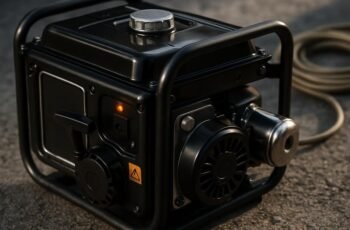
We could power a small city with the right gear, yet portable generators come in distinct, practical classes. We, as engineers and buyers, compare conventional open-frame units, inverter generators, and hybrid solar-supported models for noise, efficiency, and load handling. Each class trades rugged peak output for portability, clean power for sensitive electronics, and quiet operation for extended runtime. We’ll outline how these differences shape suitability for your needs, then show how to choose. So, what fits your scenario best?
Key Takeaways
- Inverter vs conventional: Inverter generators are compact and quiet with stable power for sensitive electronics; conventional units offer higher peak power and rugged builds.
- Fuel options: Gas, propane, and dual-fuel models provide different energy density, emissions, and versatility for varying supplies.
- Solar and hybrid options: Solar charging or hybrid gas/propane with battery banks deliver quiet, low-emission operation for extended uses.
- Duty and portability focus: Portable generators prioritize weight, noise, and ease of transport for job sites or camping.
- Electrical characteristics: Compare rated vs peak output, voltage stability, and surge handling to match loads and reliability.
What Are Portable Generators and How Do They Differ?
Portable generators are compact, self-contained units that convert gasoline, propane, or diesel fuel into electrical power on demand. We analyze differences across portable models by examining core design goals, fuel compatibility, and duty scenarios. Our focus is on portable duty, endurance, and usable output at varied loads, rather than marketing claims. We compare brushless alternators, AVR regulation, and chassis construction to understand how reliability and performance cohere. Noise levels, weight, and portability influence deployment in job sites or camps, guiding practical selection. We evaluate maintenance access, cooling strategies, and fuel economy as determinants of long-term cost. By aligning power curves with expected demand and site constraints, we clarify why certain configurations suit specific tasks over others, without conflating transient specifications with sustained capabilities.
Inverter or Conventional? Which Generator Fits Your Needs?
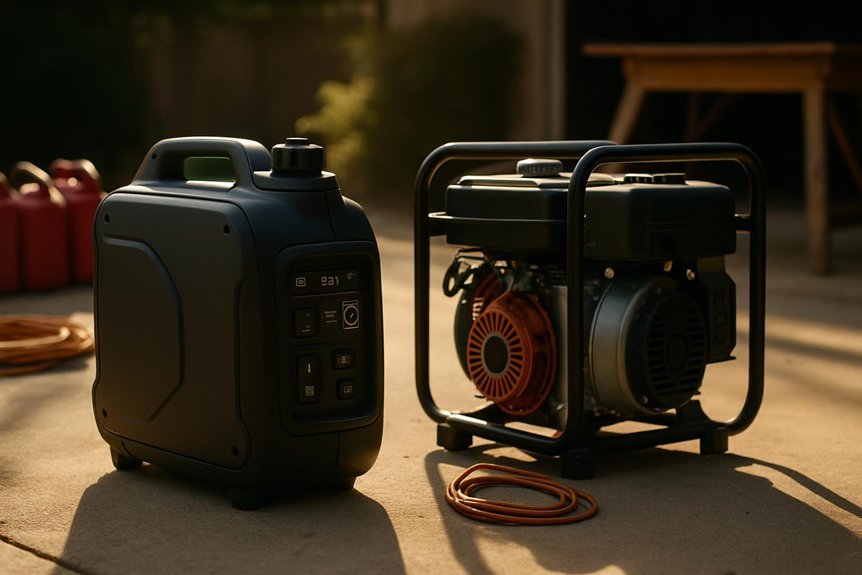
When should you choose an inverter generator over a conventional one, and what trade-offs drive that decision? We compare inverter vs conventional models by output stability, fuel management, and noise profiles. Inverter generators produce clean power with rapid electronic regulation, improving sensitive electronics support. Conventional units deliver higher peak wattage and simpler, rugged construction, often with lower initial cost. If you prioritize portability and quiet operation, inverter technology excels, but portability vs runtime must be weighed; these units typically carry lower continuous running times per tank. For heavy, sustained loads, conventional generators may offer longer runtime between refuels. Our guidance emphasizes matching duty cycles to application, balancing efficiency, noise, and maintenance requirements to select the appropriate approach.
Gas, Propane, or Dual-Fuel: Choosing a Power Source
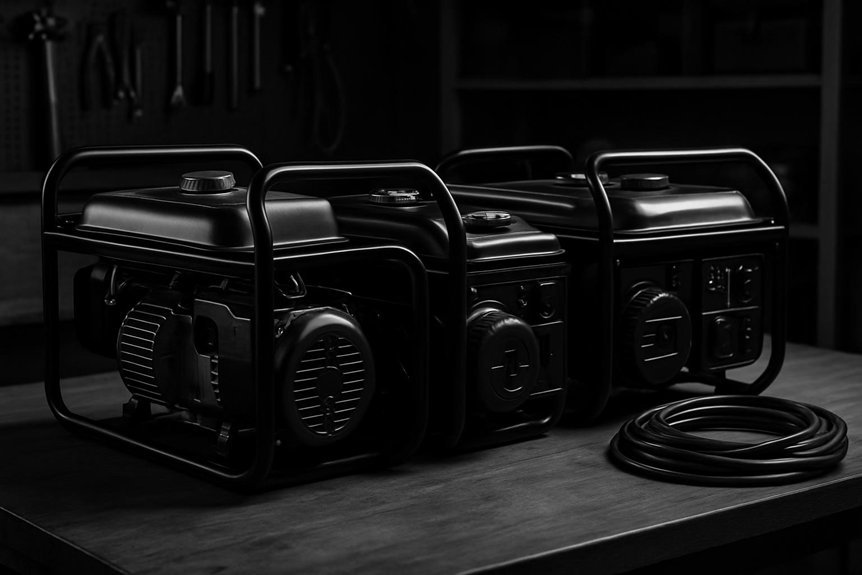
Which fuel is best for reliable, flexible power—gas, propane, or dual‑fuel—and how do you choose? We compare fuel options by energy density, availability, and maintenance implications. Gas offers high energy density and widespread access, delivering strong performance for longer durations, but fueling flexibility can be limited by line pressure and storage. Propane provides cleaner combustion, longer shelf life, and easier portability, though its energy content per volume is lower, reducing runtime between refuels. Dual fuel systems optimize versatility, enabling gas or propane without changing engines, and they simplify outage resilience. When evaluating gas vs propane, factor installation, storage, and local safety codes. Dual fuel vs single fuel adds cost and complexity but enhances adaptability for varying fuels and supply conditions.
Solar and Hybrid Portable Generators: Quiet Power On the Go
Solar and hybrid portable generators combine the reliability of conventional power with the efficiency of solar charging, offering quiet, low-emission operation during outages or off-grid use. We evaluate these units on energy flow, storage capacity, and control interfaces to determine practical applicability. Hybrid models blend gas or propane engines with integrated solar input and battery banks, enabling staged power delivery and reduced runtime when solar availability is high. Solar charging effectiveness depends on panel area, orientation, and photovoltaic efficiency, affecting duty cycles and replenishment rates. We measure noise profiles, emission standards, and thermal management to ensure consistent performance under load. For portable applications, payload balance, inverter quality, and surge handling define usable capability, while monitoring features provide real-time status without compromising reliability. quiet operation, solar charging, verified.
A Practical Framework: How to Pick the Right Portable Generator
Choosing the right portable generator hinges on a structured assessment of load, runtime, and reliability, not just sticker price. We present a practical framework to guide selection, emphasizing measurable criteria over impressions. First, determine continuous and peak load with precise load profiling, then map runtime demands to fuel availability and efficiency targets. We compare generators by electrical characteristics (rated versus peak output, voltage stability, harmonic distortion) and by form factor, noise, and portability that affect field use. We integrate portable testing results to validate performance claims under real conditions, including startup surges and under-load behavior. Next, evaluate fuel efficiency across common fuels, considering maintenance intervals and fuel consumption curves. Finally, quantify total cost of ownership, factoring depreciation, maintenance, and supply reliability to inform a confident, data-driven choice.
Frequently Asked Questions
What Maintenance Schedule Do Portable Generators Require?
We perform routine maintenance every 100–200 hours or annually, whichever comes first, and check oil, filters, and spark plugs; test load banks quarterly. Maintenance intervals depend on usage, while fuel stability requires stabilizer and proper storage.
How Long Can a Generator Run Continuously on a Full Tank?
We can run a generator continuously until the fuel is exhausted; fuel capacity and runtime expectations determine duration. We’ll address concerns about overheating and efficiency, outlining safe limits while detailing how two word discussion ideas—fuel capacity, runtime expectations—apply.
Are Portable Generators Safe for Indoor Use?
Indoor use is unsafe; portable generators should never be run indoors due to carbon monoxide risks. We advise strict outdoor placement with ventilation, CO detectors, and safety protocols to minimize indoor use safety hazards.
Do Generators Come With Transfer Switches or Need Separate Installation?
We need to check: portable generators may or may not include transfer switches; most models require separate installation for a safe transfer switch, with installation considerations and safety precautions in mind. We’ll guide you, precisely and analytically.
What Noise Levels Should I Expect in Decibels?
We typically see noise levels around 50–65 dB at 7–10 meters for portable operation; expect higher with loads. Consider fuel considerations, engine size, and enclosure design when evaluating real-world decibels for your setup.
Conclusion
We’ve mapped the terrain: portable generators run the gamut from rugged open-frame workhorses to whisper-quiet inverters and solar-assisted hybrids. Each type trades noise, weight, and efficiency for power stability, clean output, and runtime practicality. By evaluating your load, environment, and budget, you’ll pinpoint the perfect match—no guesswork, just data-driven clarity. Think of it as swapping a thunderstorm for a well-timed breeze: enough grunt for a kitchen-aid, but quiet enough to keep the neighbors smiling.