Selecting the appropriate portable generator for your cabin requires a detailed understanding of your power demands and the specific features that guarantee safety and efficiency. With many models available—each suited for different applications—making an informed choice can prevent overloads and assure reliable operation. As we explore the various types and key considerations, you’ll discover how to balance performance and budget effectively, ultimately securing a power source tailored to your unique needs.
Key Takeaways
- Assess your cabin’s total wattage needs, including surge capacity, and add a safety margin for future equipment.
- Choose inverter generators for quiet operation and clean power suitable for sensitive electronics.
- Consider portability, fuel efficiency, and noise levels to match your cabin’s remote or accessible location.
- Prioritize safety features like overload protection, low-oil shutdown, and durable, corrosion-resistant construction.
- Balance budget with reliability by evaluating engine durability, warranty, and operational costs for long-term use.
What Are the Different Types of Portable Generators and Which One Fits Your Cabin?

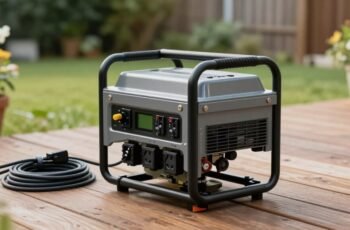
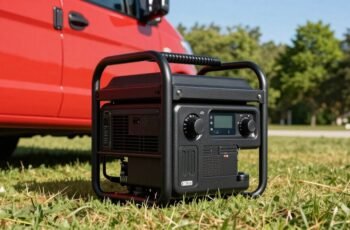
Choosing the right portable generator for your cabin depends on understanding the main types available and their specific features. There are primarily three categories: inverter generators, conventional portable generators, and heavy-duty models. Inverter generators produce cleaner power with variable engine speeds, making them ideal for sensitive electronics and silent operation. Conventional generators operate at a fixed speed, providing higher wattage suitable for powering larger appliances but often with more noise. Heavy-duty models are purpose-built for continuous, high-capacity loads, often used in industrial settings. Each type varies in size, weight, fuel efficiency, and noise levels, requiring careful consideration based on your power needs, portability requirements, and environmental constraints. Selecting the appropriate generator involves matching these technical features to your specific cabin setup.
How to Determine the Power Needs of Your Cabin Equipment and Appliances?
To guarantee your portable generator adequately meets your cabin’s power demands, you must accurately assess the energy consumption of all connected equipment and appliances. Begin by listing each device, noting its wattage, which is typically found on the label or in the user manual. Calculate the total starting wattage for devices with motors or compressors, as these often require a higher surge capacity. Add the running wattages of all appliances to find your continuous load. Consider future expansions or additional equipment, and include a safety margin of approximately 20-25% to accommodate unexpected power surges. Precise calculations prevent underestimating your needs, ensuring your generator provides reliable, stable power without risking overloads or insufficient capacity. Accurate assessment optimizes generator selection and operational safety.
Key Features to Look for in a Reliable and Safe Portable Generator
When selecting a portable generator for your cabin, prioritizing key features that guarantee reliability and safety is essential. Look for models with robust circuit protection systems, including overload and low-oil shutdown, to prevent damage and assure safe operation. A durable frame and corrosion-resistant components enhance longevity in harsh environments. Consider generators with certified emissions compliance, ensuring environmentally safe operation. Noise reduction technology minimizes disturbance and improves usability in remote settings. Additionally, prioritize units with a stable power output, such as inverter generators with Clean Power technology, to protect sensitive electronics. Easy starting mechanisms, like electric or recoil starters, improve convenience. Ultimately, these features contribute to a dependable power source that operates safely under varied conditions, providing consistent energy while safeguarding both equipment and users.
Budget Considerations: Finding a Cost-Effective Generator Without Compromising Quality
While budget constraints are a common consideration, it’s essential to prioritize value over mere cost to guarantee you don’t sacrifice crucial quality and safety features. Achieving a balance involves evaluating technical specifications against price points, ensuring reliability without overspending. To optimize cost-effectiveness, consider:
- Engine durability and load capacity relative to your power needs
- Fuel efficiency metrics for longer runtime and lower operational costs
- Warranty coverage and available support services
- Noise levels, to avoid disturbances and ensure compliance with regulations
- Portability features, like weight and handle design, for ease of transport
Focusing on these key aspects allows us to select generators that meet safety standards and operational demands without unnecessary expenditure. This strategic approach ensures long-term value and dependable performance.
Tips for Maintaining and Operating Your Portable Generator for Long-Term Use
Regular maintenance and proper operation are critical to ensuring your portable generator remains reliable over the long term. Consistently check and replace oil according to the manufacturer’s specifications to prevent engine wear. Regularly inspect air filters and clean or replace them to maintain ideal airflow and emissions. Always run the generator under load periodically to prevent fuel system and engine issues caused by stagnation. Use fresh, stabilized fuel and drain the tank if storing for extended periods to avoid fuel degradation. Follow startup and shutdown procedures precisely to protect internal components. Keep the generator in a dry, well-ventilated area, and perform routine inspections for corrosion or damage. Adhering to these practices maximizes efficiency, reduces breakdowns, and extends the lifespan of your generator.
Frequently Asked Questions
How Loud Are Different Portable Generator Models During Operation?
We find that portable generators range from quiet models at around 50-60 dB, comparable to conversation levels, to louder units at 70-80 dB, akin to city traffic noise, affecting suitability based on noise sensitivity and environment.
Can Portable Generators Be Used in Adverse Weather Conditions?
Yes, portable generators can be used in adverse weather conditions, but we guarantee they’re protected from rain, snow, and extreme winds, use proper grounding, and follow manufacturer safety guidelines to prevent damage and ensure reliable operation.
What Safety Precautions Should I Follow When Using a Generator?
We follow safety precautions such as operating generators outdoors in well-ventilated areas, keeping them dry, avoiding overloading, using proper grounding, and connecting appliances correctly to prevent electrical hazards and carbon monoxide poisoning.
Are There Eco-Friendly or Solar-Powered Portable Generator Options?
We see the gentle sunlight reflecting off solar panels, realizing eco-friendly, solar-powered generators harness renewable energy efficiently. These options reduce emissions, operate silently, and minimize environmental impact, making them ideal for environmentally conscious cabin power solutions.
How Long Can a Portable Generator Run Continuously on a Single Tank?
We find that portable generators typically run between 8 to 20 hours on a single tank, depending on load, fuel capacity, and engine efficiency; always check manufacturer specifications for precise runtime estimates tailored to your specific model.
Conclusion
In summary, selecting the right portable generator is vital for reliable cabin power. Did you know that inverter generators are up to 25% more fuel-efficient than traditional models? By carefully evaluating your power needs, prioritizing essential features, and balancing budget considerations, we can guarantee safe, efficient, and long-lasting operation. Proper maintenance and operation further extend your generator’s lifespan, providing peace of mind and uninterrupted comfort in your cabin for years to come.