Did you know improper storage can double fire risk around a generator? We’ve seen lots of setups that look fine but ignore airflow, clearance, and fuel separation. We’ll walk through clear, level pads, 10 feet from structures, proper ventilation, and a weatherproof cover with unobstructed intake and exhaust. We’ll also cover fuel segregation, CO detectors, and a maintenance routine so you can plan the best spot without compromising safety. Let’s start with the essentials and how to avoid common mistakes.
Key Takeaways
- Place on a clear, level pad with at least 10 feet of separation from structures and combustibles.
- Store outdoors in a well-ventilated, weatherproof area; avoid enclosed indoor or attached garage spaces.
- Elevate on a dry, solid surface with drip trays; ensure unobstructed intake and exhaust, away from doors and windows.
- Use a dedicated, properly vented enclosure or shed with outdoor exhaust dispersion and a carbon monoxide detector nearby.
- Maintain fuel safety by storing away from heat sources in approved containers, with spill containment and regular maintenance logs.
What Makes a Safe Generator Storage Spot
Locating a safe storage spot for a generator is essential to prevent fire, carbon monoxide risks, and fuel spills. We’re guiding you toward the basics that keep everyone safer. First, choose a location with firm footing and good airflow, away from doors, windows, and vents to minimize CO buildup. That’s generator placement in practice: a clear, level pad, shaded if possible, with at least 10 feet of separation from structures and combustibles. Store fuel in approved containers, tightly sealed, and in a separate, ventilated area. Keep cords, maintenance tools, and manuals organized to reduce trip hazards and confusion. Apply weatherproofing basics by protecting the unit from rain or snow without sealing it completely, allowing heat to escape. Regular inspections ensure no leaks or corrosion compromise safety.
Outdoor Storage: Weatherproofing and Ventilation Essentials
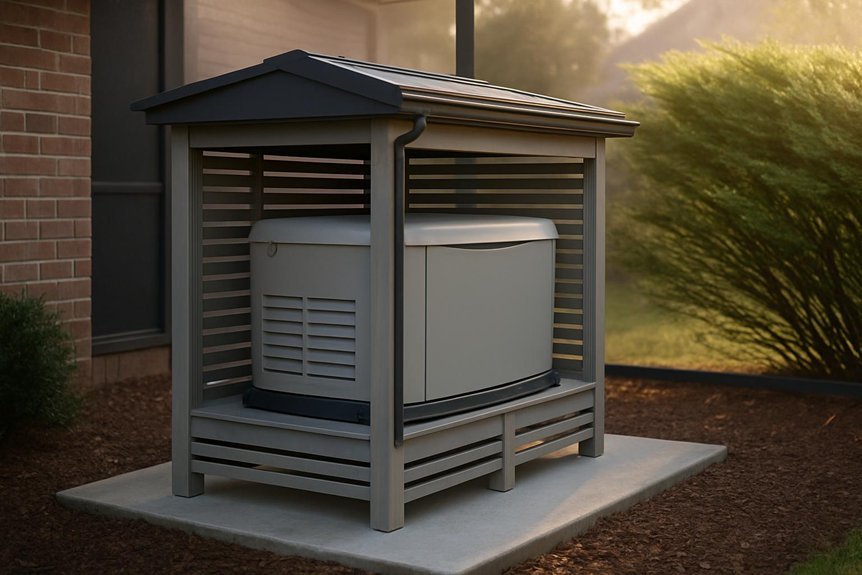
Have you considered how weatherproofing and ventilation affect generator safety outdoors? We approach outdoor storage with tight, practical steps. First, we ensure outdoor weatherproofing by placing the unit on a non-slip, dry surface and elevating it slightly to prevent water intrusion. We seal panels where applicable and use a weatherproof cover that breathes to avoid condensation buildup. Next, we establish ventilation essentials: keep a clear, unobstructed intake and exhaust area, and never enclose the generator in confined spaces. We position away from doors, windows, and vents to prevent fumes entering living areas. Grounding remains essential, and we inspect cables for wear. Regularly clean debris and check seals after rain or snow. These practices reduce corrosion, overheating, and exposure risk while maintaining reliable operation.
Covered Shed or Carport: Pros, Cons, and Setup Tips
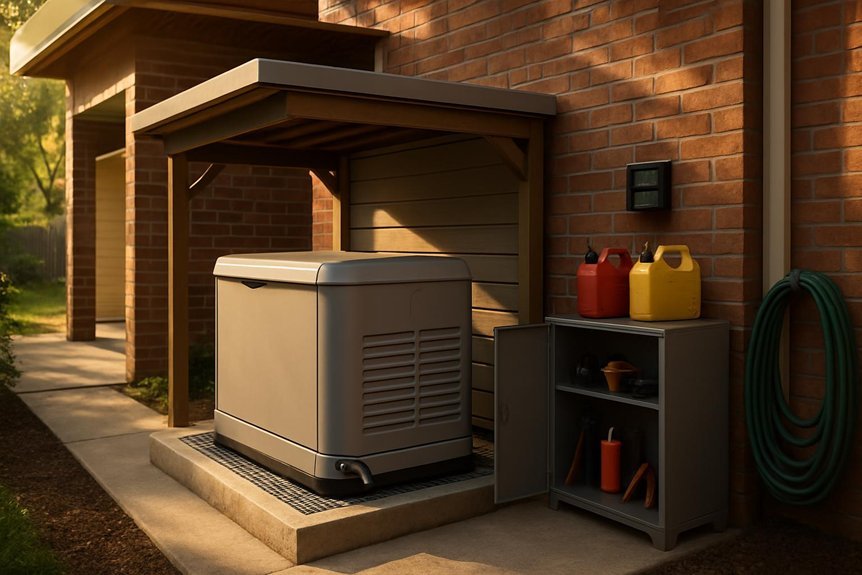
A covered shed or carport can offer practical protection from weather while keeping a generator accessible for quick use, but it also brings trade-offs. We weigh accessibility against ventilation, fire risk, and moisture control in a generator shed or carport setup. Ensure clearance, exhaust routing, and secure mounting to minimize movement. Elevate the unit off the ground and add a drip tray to catch fuel spills. Use a rigid roof with proper drainage and keep the area free of combustibles. For safety, install a carbon monoxide detector nearby and maintain a dedicated power src. Consider weatherproof cord management and a weatherproof transfer switch for safe operation.
| Feature | Pros | Cons |
|---|---|---|
| Ventilation | Reduced fumes | Wind exposure |
| Grounding | Stable base | Moisture risk |
| Security | Deterrence | Access limits |
| Drainage | Prevents pooling | Maintenance |
| CO Protection | Safety | Battery drain |
Keywords: generator shed, carport setup.
Indoor Storage: When It’s Appropriate and How to Do It Safely
Indoor storage is appropriate only when fans, ventilation, and safety measures are in place, and we’ll outline when to use it and how to do it safely. We prioritize generator placement that minimizes exhaust exposure and avoids heat buildup in occupied spaces. Keep the unit on a solid, level surface with unobstructed clearance around all sides. Use environmental controls to maintain stable temperature and reduce humidity, preventing corrosion and moisture damage. Install a dedicated, properly vented enclosure or room where fumes can disperse outdoors, never sealed or indoors without exhaust routing. Install carbon monoxide detectors at safe, occupied levels and test them regularly. Have a shutoff procedure and accessible emergency controls. Document maintenance, clear access routes, and restrict ignition sources near the storage area.
Fuel Storage and Management Near Your Generator
Where should fuel for your generator be stored and how should it be managed to stay safe? We keep fuel away from heat sources, flames, and ignition pathways, and we store it in approved containers with tight caps. Always use a shaded, ventilated area outside living spaces, never indoors or in garages that are attached to the home. Label each container clearly and separate fuels by type to avoid cross-contamination. Maintain a dedicated metal or approved plastic cabinet secured from children and pets, with a spill tray and secondary containment. Keep fuel containers full to minimize air; ventilate the storage area and inspect for leaks or deterioration weekly. Practice fuel safety, and ensure storage labeling is visible and legible at a glance. Regularly rotate stock to use oldest fuel first.
Vibration, Moisture Control, and Noise Considerations
What steps can we take to minimize vibration, moisture intrusion, and noise from a home generator? We’ll start with vibration isolation: place the unit on a solid, level base, pad it with anti-vibration mounts, and orient it away from living spaces. Guard rails or partitions help confine sound and prevent contact. For moisture control, ensure proper moisture drainage around the base, graded surrounding soil, and a drip shield to shed rain. Use a weatherproof enclosure only if it’s rated for exhaust and ventilation; never block intake or exhaust. Install a dedicated vented enclosure or pad with airflow, and keep clearances per the manufacturer. Regularly inspect seals, tubing, and drains to maintain performance and safety. Prioritize insulation, grounding, and clearance to reduce risk.
Maintenance Routine to Protect Your Investment
We routinely inspect and service the generator to protect your investment, focusing on reliability, safety, and longevity. Regular maintenance reduces unexpected outages and extends generator lifespan. Start with a visual check for corrosion, loose fittings, and oil leaks, then verify oil level and change intervals per the manual. Inspect air filters and replace if dirty to maintain proper combustion and cooling. Run the unit briefly to ensure smooth starting, stable voltage, and proper cooling fan operation. Confirm fuel compatibility and inspect for fuel contamination or stale gas, replacing fuel if needed. Keep battery terminals clean and connections tight. Store a fresh maintenance log, noting dates, parts replaced, and test results. Adhere to manufacturer guidelines for service intervals to sustain performance and safety.
Legal, Safety, and Emergency Guidelines for Home Storage
We’ll cover legal compliance, permits, and clear safety protocols to guide responsible home storage. We’ll outline emergency planning steps so you’re prepared for outages, fires, or spills while meeting local rules. Our goal is precise, actionable guidance that keeps you, your family, and your property safe.
Legal Compliance and Permits
Legal compliance and permits are essential when storing a generator at home, because proper approvals and adherence to codes protect people and property. We guide you through the basics, not drama. We first confirm generator ownership and ensure documentation matches local records, preventing future disputes. Next, we review permitting requirements, including any renewal timelines or inspections, so you’re not surprised by a notice. Standards compliance matters, as equipment must meet emission, electrical, and fire-safety criteria before installation. We also consider storage zoning, verifying that chosen locations align with lot setbacks, accessibility, and neighbor impact. We document all approvals and keep copies accessible for audits or future resale. By staying proactive, we minimize legal risk while safeguarding household safety and reliability.
Safety Protocols and Emergency Planning
When storing a generator at home, safety protocols and emergency planning must be built into daily routines and response actions. We prioritize clear procedures that align with generator placement and electrical code requirements, reducing risk during use and maintenance. Our plan emphasizes containment, ventilation, fuel handling, and rapid shutdown, so you know exactly what to do when conditions change. Regular drills, updated contact lists, and accessible manuals keep everyone prepared. We also establish inspection checklists to catch wear before it becomes a hazard, and designate a safe, ventilated storage area away from doors and windows. Commit to these safeguards so neighbors and households stay protected.
- Ensure proper generator placement for ventilation and exhaust separation
- Adhere to electrical code when wiring and connecting loads
- Maintain fuel, oil, and cooling precautions, with spill containment
- Practice regular drills and quick-access shutdown procedures
Frequently Asked Questions
How Far Should a Generator Be From Doors and Windows?
We should keep a generator at least 20 feet from doors and windows, ensuring safety clearances and proper ventilation. We’ll follow generator placement tips to reduce carbon monoxide risk and maintain airflow for safe operation.
Can a Generator Run Indoors With Fans or Vents?
We can’t run a generator indoors, even with fans or vents. Real example: backfired fumes risk deadly CO buildup. Generator safety demands outdoor use with proper ventilation; indoor ventilation won’t eliminate dangerous emissions. Stay safe, seek outdoor options.
What Are Best Practices for Lightning Protection Near Generators?
We strongly recommend proper lightning protection practices: install grounded surge protection, keep clearances, and use a dedicated, bonded grounding electrode system. For generator maintenance and fuel storage, store fuels away from electronics, heat, and moisture, and inspect regularly. Safety first.
How Often Should Carbon Monoxide Detectors Be Tested Around Generators?
We test carbon monoxide detectors every month for generators, and ensure proper maintenance scheduling. Regular checks are crucial; never run generators indoors. Focus on generator placement to maximize ventilation and reduce CO buildup while maintaining safety compliance.
Are There Noise Ordinances Affecting Residential Generator Use?
Yes, noise ordinances can affect us; residential legality limits generator operation times and decibel levels. We’ll follow local rules, use barriers, and run during permitted hours to protect neighbors and stay compliant. Please check your municipality’s specifics.
Conclusion
We know you want convenience, not chaos. So, we’ll say it plainly: store safely, or don’t store at all. Yes, we’d rather skip the drama, too. If you skimp on a pad, airflow, or fuel separation, you’ll likely regret it—fast. So we’ll keep it boring and smart: clear space, proper drainage, and guarded fuel. Because the only spark you want near your home is a friendly one from a generator, not a preventable disaster. Safety first, always.