We prepare, we evaluate, we document our approach to long-term generator storage with disciplined precision. We’ll discuss selecting fuel and stabilizers, prepping lubrication, and maintaining electrical health, all while ensuring weatherproof, vented enclosures and labeled tanks. We’ll outline a practical schedule for inspections, conditioning cycles, and seasonal adjustments. Together, we’ll identify the gaps that can undermine reliability, and we’ll chart a path that keeps systems ready—if we follow the plan, something crucial remains to address as we progress.
Key Takeaways
- Choose appropriate fuel and stabilizers based on engine type, storage duration, climate, and monitor octane, ethanol content, and volatility.
- Store fuel sealed, labeled, vented as required, with tested stability window and indicators before reuse.
- Use weatherproof, ventilated enclosures with sealed, gasketed seams, corrosion-resistant hardware, vibration isolation, and service access.
- Implement battery care and electrical health practices, including resting voltage windows, conditioning steps, humidity control, and terminal inspections.
- Establish maintenance, logging, and seasonal adjustments for fuel stabilizers, storage temperatures, inverter responses, and preventive safeguards.
How to Choose the Right Fuel and Stabilizers for Long-Term Storage
Choosing the right fuel and stabilizers for long-term storage requires a disciplined, step-by-step approach. We begin by identifying appropriate fuel choices based on engine type, storage duration, and climate, then assess octane rating, ethanol content, and volatility. Next, we evaluate stabilizer compatibility, selecting additives proven to prevent phase separation, varnish formation, and corrosion without degrading fuel performance. We document storage conditions, ensuring containers are sealed, labeled, and vented as required. We allocate a testing window to verify fuel stability before reuse, noting color, odor, and sediment indicators. We prioritize compatibility with our equipment’s seals and fuel lines, avoiding blends that exceed manufacturer guidance. Finally, we establish a replacement schedule aligned with storage length, recording results for future reference.
Prep Your Generator: Cleaning, Lubrication, and Routine Maintenance
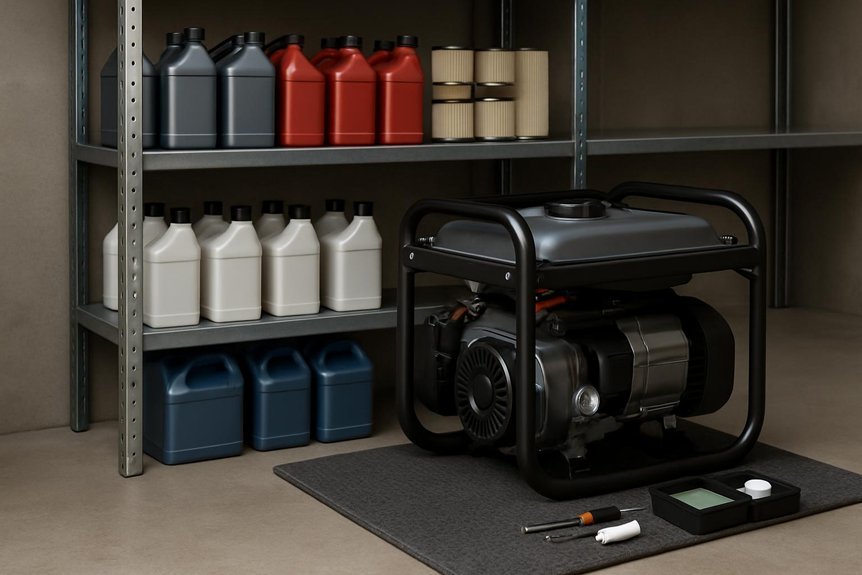
We examine Cleaning Fundamentals to remove debris and prevent corrosion, then proceed to Routine Lubrication Tips to maintain bearings and seals. We’ll outline a precise sequence: initial inspection, targeted cleaning, and verified lubrication intervals, all with clean, supported steps. By following these practices, we set a reliable baseline for long-term storage readiness and operational reliability.
Cleaning Fundamentals
How often should you start with a visual and tactile check before any cleaning? We perform a baseline survey, then proceed with controlled steps to preserve integrity during cleaning fundamentals. We document findings, isolate hazards, and follow established procedures to support long term maintenance. We remove dust with soft brushes, avoid moisture intrusion, and restrict contact with electrical connections until de-energized. We treat surfaces with appropriate cleaners, then dry thoroughly to prevent corrosion. We verify fasteners, electrical routing, and enclosure seals after cleaning. Adhere to manufacturer guidance for storage conditions and residue removal, and log outcomes for future reference.
- Confirm power is off, disconnect, and ground as required.
- Use non-abrasive tools, lint-free cloths, and minimal moisture.
- Inspect for corrosion, wear, and loose components, recording results.
Routine Lubrication Tips
Routine lubrication is essential for reliable generator operation and long-term durability. We approach this step with a precise plan: inspect oil level, confirm type, and note viscosity requirements from the manufacturer. Use only clean, labeled containers and a dedicated funnel to prevent cross-contamination. When refilling, match oil viscosity to ambient storage conditions and engine design, avoiding overfilling that can trap air and impair lubrication. After addition, run the engine briefly and monitor for leaks, smoke, or unusual noise, then recheck levels once cooled. Record date, oil type, and viscosity in the maintenance log. For storage, cycle the oil through moving parts by idling, ensuring even distribution. This routine lubrication discipline minimizes wear and supports future restart reliability.
Battery Care and Electrical Health for Extended Inactivity
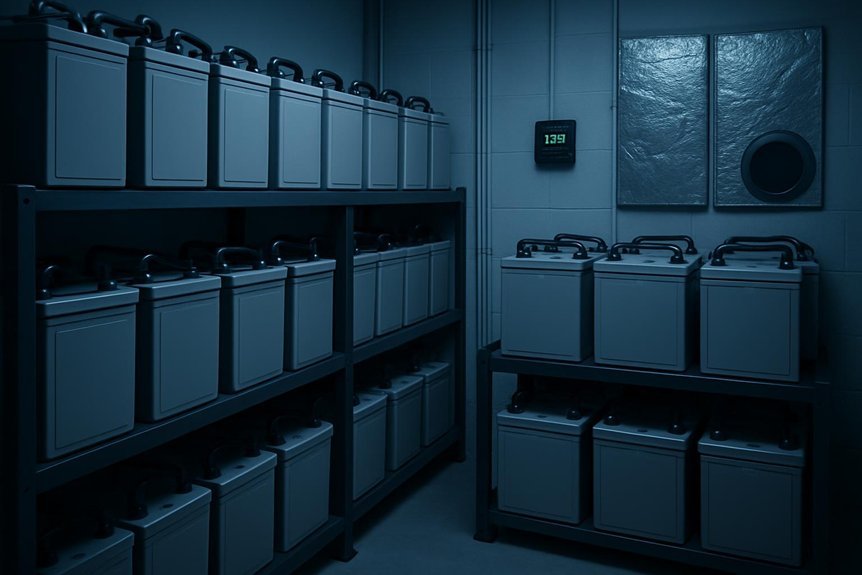
We’ll start by outlining optimal Battery Storage Voltage targets and how they influence long-term health during inactivity. Next, we’ll compare Inactivity Charge Levels to recommended maintenance ranges to prevent self-discharge and sulfation. Finally, we’ll specify practical steps for Terminal Corrosion Prevention to preserve connectivity and reliability.
Battery Storage Voltage
Battery storage voltage is a critical factor for preserving capacity and preventing degradation during extended inactivity. We monitor and maintain a target voltage to sustain battery health and ensure voltage stability over time. Our approach is precise, data-driven, and repeatable, focusing on controlled levels that minimize self-discharge and sulfation risk.
1) Establish a recommended resting voltage window tailored to our chemistry and storage duration.
2) Implement periodic verification with calibrated instrumentation to confirm voltage stability.
3) Document deviations and adjust conditioning steps to preserve long-term capacity.
Inactivity Charge Levels
Inactivity charge levels are a key complement to resting voltages, guiding how we prepare cells for prolonged storage. We establish target charge ranges that balance self-discharge rates with chemical stability, ensuring readiness for long term generator storage. Our approach measures open-circuit voltage after stabilization, then adjusts using controlled charging to reach predefined levels without overpotential stress. We document ambient conditions, storage temperature, and float current, since these factors influence charge drift and electrolyte concentration. We avoid high surface charges that accelerate corrosion or plating during inactivity, opting for conservative margins appropriate to cell chemistry. We schedule periodic verification, rebalancing only when voltages drift beyond tolerance. This disciplined protocol preserves capacity, minimizes impedance growth, and maintains electrical health, delivering reliable performance upon recommissioning after long term storage.
Terminal Corrosion Prevention
Terminal corrosion risks during extended inactivity hinge on static potentials and moisture interaction at connections. We, as stewards of storage integrity, implement a disciplined approach to terminal corrosion prevention by monitoring contact cleanliness, ensuring proper torque, and applying compatible protective coatings. We emphasize environmental controls to limit humidity swings, temperature fluctuations, and dust ingress that promote electrochemical activity. Regular terminal inspections, combined with controlled venting and dehumidification when feasible, reduce corrosion pathways and maintain battery health. Our protocol aligns electrical health with safe inactivity periods, preserving generator reliability upon restart.
- Confirm connection cleanliness and torque specifications before long-term idle periods.
- Maintain stable ambient humidity and moderate temperatures to minimize electrochemical activity.
- Apply corrosion-inhibiting coatings only where compatible with terminal materials and sealing interfaces.
Safe, Weatherproof Storage Solutions and Protective Enclosures
To ensure long-term reliability, we implement weatherproof storage solutions and protective enclosures that guard generators from moisture, dust, and temperature fluctuations. We then select robust housing that accommodates ventilation, cable routing, and airflow, preventing heat buildup. Our approach uses a rated wifi enclosure for monitoring sensors and controller access, keeping data transmission secure while sealed against environmental ingress. We corroborate enclosure integrity with gasketed seams, proper fasteners, and corrosion-resistant hardware. We pursue rainproof mounting on sturdy substrates, ensuring level alignment and vibration isolation to preserve fitment over time. Internal layouts prioritize service access, battery isolation, and condensate drainage. We document ingress protection (IP) levels, material compatibility, and UV resistance, aligning with maintenance intervals. This disciplined setup reduces corrosion risk and supports reliable, ready performance when called.
Start-Up Readiness: Post-Storage Inspection and First-Run Checklist
Once the storage period ends, we perform a structured post-storage inspection and a first-run checklist to confirm readiness and detect any latent issues before operation. We approach start up readiness with a methodical protocol: verify fuel integrity, inspect seals and connections, test lubrication levels, and confirm battery condition. A controlled prestart sequence reduces risk and supports reliable operation, consistent with the long term generator storage guide.
- Confirm perimeter, mounts, and exhaust pathways are clear; verify no corrosion or physical damage.
- Validate fuel, oil, coolant levels, and filter integrity; perform a quick cranking test to ensure electrical and starting systems engage smoothly.
- Proceed with a cautious, supervised first run, monitoring temperatures, pressures, and load behavior for anomalies.
Troubleshooting and Seasonal Maintenance Schedule to Preserve Longevity
A systematic approach to troubleshooting and a seasonal maintenance schedule are essential for preserving longevity; by documenting recurring failure modes and aligning service intervals with manufacturer recommendations, we minimize downtime and extend reliability. We present a formal, stepwise protocol: establish baseline operating parameters, perform periodic fuel testing to detect contamination, and verify inverter/controller responses under load. Schedule quarterly inspections of battery health, connections, and electrolyte levels, plus conditioning cycles to prevent gassing and stratification. Implement user friendly safeguards, including clear fault codes, accessible venting, and automatic shutdown thresholds. Maintain a log of corrective actions, test results, and seasonal adjustments to fuel stabilizer concentration and storage temperatures. Adhere to recommended intervals, record deviations, and refine procedures to sustain dependable operation through storage and seasonal cycles.
Frequently Asked Questions
How Long Can Stored Fuel Remain Usable Before Replacement?
We can’t rely on long term fuel indefinitely; generally, stored fuel remains usable for about 6–12 months under proper conditions. We recommend testing, stabilizers, and freshening before use after storage duration extends beyond a year.
What Safety Checks Should Be Done Before Long-Term Storage?
Safety checks are essential before storage. We perform a systematic inspection of fuel, oil, and electrical systems, then implement maintenance routines, test starting capability, and verify ventilation and battery condition to prevent deterioration and ensure ready operation.
Can Solar Charging Extend a Generator’s Inactive Life?
Yes, solar charging can extend electrolyte stress-free inactive life. We perform solar maintenance and performance monitoring, ensuring steady trickle charging, voltage stability, and balanced cycling, preventing sulfation and corrosion while preserving generator readiness for recommissioning.
How Often Should You Rotate Stored Generators?
We rotate stored generators every 3 to 6 months. In our experience, this maintains battery health and lubricants. This generator maintenance cadence reduces fuel varnish risk and guarantees readiness during storage rotation for reliability.
What Environmental Factors Most Affect Long-Term Storage Outcomes?
We identify environmental factors and storage conditions as the major influencers; humidity, temperature stability, dust, corrosion potential, and vibration govern long-term outcomes, so we implement sealed environments, climate control, filtration, and routine inspections to maintain reliability.
Conclusion
We’ve laid out a precise, methodical approach to storing a generator for the long haul, and that truth remains: preparation fixes risk before it happens. When we select fuels and stabilizers with care, perform disciplined maintenance, and protect the unit with weatherproof enclosures, we reduce failure modes like varnish, phase separation, and corrosion. If we test, document, and adjust seasonally, we preserve reliability, ensuring readiness after storage and a confident first start.