You may not realize that maintenance often costs more on a yearly basis than the initial purchase when you factor in inspections, preventive care, and occasional major component replacements. We’ll break down typical annual ranges, hidden fees, and how to forecast a budget driven by data like uptime and wear indicators. With that lens, we can compare small versus large units, plan fixed versus event-driven costs, and decide whether in-house or authorized techs make the most sense.
Key Takeaways
- Routine inspections typically cost $150–$300, with annual preventive maintenance packages around $250–$500.
- Major component replacement or service events generally run $600–$1,500 each, plus potential travel or after-hours fees.
- Hidden costs include diagnostics, parts pricing volatility, and incidental charges affecting the total budget.
- Costs scale with generator size: smaller units have lower per-year service costs but higher relative fuel use; larger units spread fixed overheads over more output.
- Data-driven maintenance and pilot testing help optimize intervals, reduce downtime, and improve total cost of ownership.
How Much Do Generator Servicing Costs Typically Look Like
How much do generator servicing costs typically look like? We analyze typical service visits, parts, and labor to deliver a concise forecast. On average, routine inspections run about $150 to $300, with preventive maintenance packages often ranging $250 to $500 annually, depending on model and site requirements. Major service or component replacement, such as filters, belts, or control boards, can push costs higher—potentially $600 to $1,500 per event. We also consider hidden fees like travel charges or after-hours service. We weigh insurance implications and fuel efficiency when budgeting: generator insurance can influence risk management costs, while improved fuel efficiency lowers operating expenses over time. Overall, we prefer a data-driven plan: estimate maintenance as a fixed annual baseline plus variable repairs to stay resilient.
What Routine Maintenance Should You Budget For
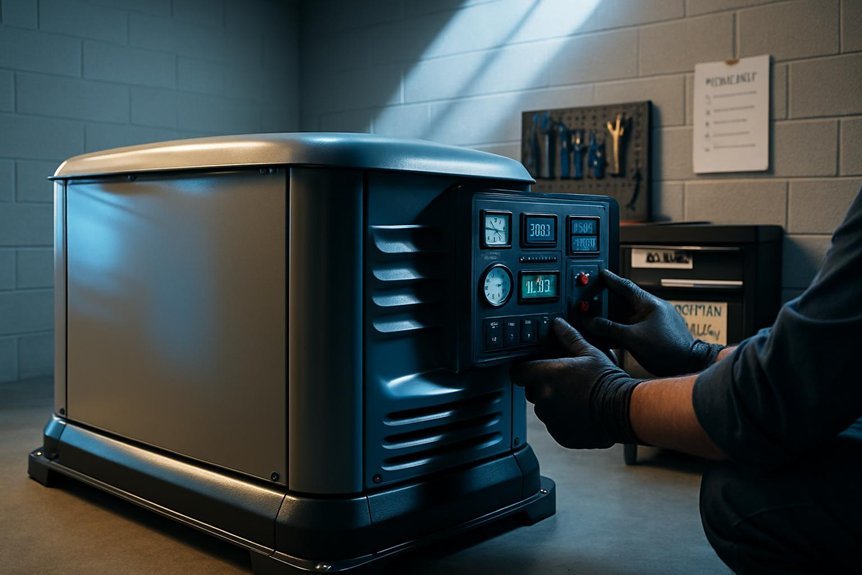
Routine maintenance for a generator should be budgeted as a predictable annual baseline plus small, event-driven checks. We target a clear framework: annual servicing, filter replacements, and battery health as core costs, plus incidental diagnostics after outages. Our maintenance budgeting approach emphasizes data-driven intervals rather than guesswork, aligning tasks with hours of operation, runtime, and environmental exposure. We compare service plans by scope, not just price, ensuring essential inspections—oil, coolant, alternator tests, and load Bank diagnostics—are included. A disciplined schedule reduces unexpected failures and downtime. When evaluating options, prioritize consistency of parts, technician qualifications, and response times. In our view, a robust plan minimizes variability, enabling accurate cost forecasting and smoother budgeting over the service cycle. service plan comparison informs smarter selections.
Annual Cost Scenarios: Small vs. Large Generators
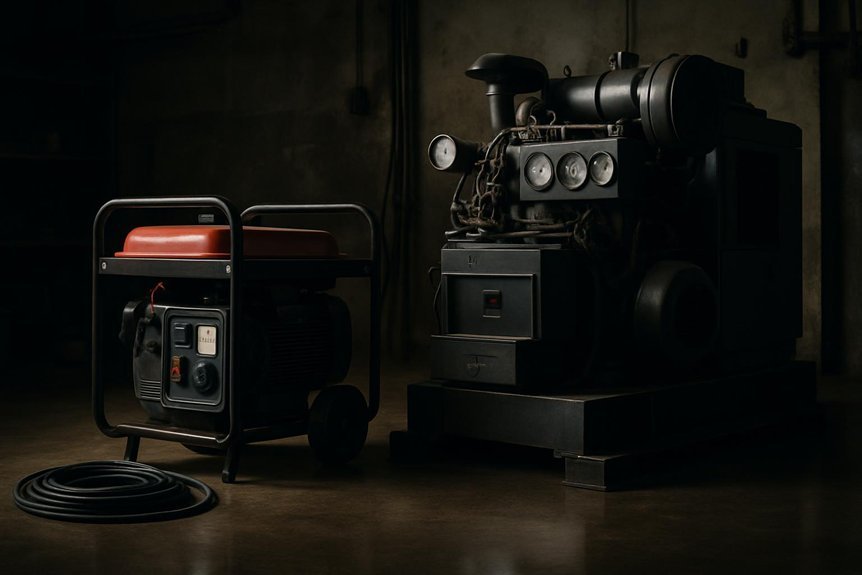
What do annual costs look like when comparing small and large generators, and where do the big differences come from? We estimate ongoing expenses by fuel needs, maintenance intervals, and parts usage. Small units typically incur lower per-year service costs but higher relative fuel consumption if operated frequently, whereas large units spread fixed overheads over a bigger output, reducing cost per kilowatt-hour but raising procurement and maintenance bill items. Warranty coverage often differs, with large generators sometimes commanding longer terms or broader parts inclusion, influencing long-term reliability value. Generator procurement costs scale with capacity, impacting upfront and amortized annual costs. We model expected maintenance visits, filter changes, and typical consumables, then compare return on investment across scales. Overall, large units may be more economical over time where utilization is high and reliability matters most.
Hidden Costs: Diagnostics, Repairs, and Parts
Hidden costs often surprise buyers: diagnostics, repairs, and parts can exceed initial estimates if failures occur outside standard maintenance windows. We quantify risk by tracking failure frequency, mean time to repair, and part replacement rates across models. Our data shows diagnostics typically account for a substantial share of service calls, especially when symptoms are intermittent or non-obvious. Repairs vary with component complexity and access, and parts costs swing with supplier pricing and availability. We emphasize that hidden costs arise not from routine service, but from unplanned interventions triggered by wear, corrosion, or environmental exposure. By categorizing events, we can forecast likely outliers and negotiate scope before work begins. Transparency helps customers prepare for potential deviations from baseline maintenance budgets.
How to Estimate Your Yearly Maintenance Budget
We’ll break down your yearly maintenance budget by the main factors that drive costs and the typical maintenance cost breakdown. By estimating each line item—routine servicing, part replacement, and unforeseen issues—we can quantify expected outlays and seasonality. This data-driven approach helps us set a realistic, defensible annual budget for generator upkeep.
Yearly Budget Factors
Estimating your yearly maintenance budget hinges on a disciplined, data-driven approach. We’ll outline factors that shape costs, then translate data into actionable budget planning for steady generator maintenance and reliability.
- Historical repair frequency and average outage duration
- Labor rates, travel time, and technician availability
- Parts pricing volatility and replacement cycles
- Preventive maintenance schedules versus reactive fixes
- Spare parts inventory costs and shelf-life considerations
We use these inputs to forecast annual spends, balance risk, and avoid surprises. By tracking failed components, downtime costs, and service intervals, we improve accuracy and allocate funds where they yield the most value. This disciplined method supports consistent generator maintenance without overcommitting, aligning spend with expected reliability and uptime. Our goal: a lean, defendable yearly budget that matches operating needs and risk tolerance. Budget planning becomes a proactive, data-backed discipline.
Maintenance Cost Breakdown
To estimate your yearly maintenance budget, start with a clear breakdown of expected costs by category and unit. We present a data-driven view that weighs labor, parts, and consumables against usage metrics. We itemize routine services like oil changes, filter replacements, and battery checks, then project preventive maintenance windows aligned with manufacturer schedules. We quantify risk by failure likelihood and failure impact, translating them into contingency lines for unforeseen repairs. We compare service frequency with actual runtime to refine annual totals, monitoring trends for fuel efficiency and component wear. We emphasize generator safety as a budgeting anchor, allocating costs for safety inspections and compliance. Our approach links maintenance cost to reliability, ensuring sustained performance and optimized fuel efficiency across the year.
Ways to Cut Downtime and Extend Lifespan
We’ll outline concrete downtime-reduction techniques and lifespan-extending strategies with clear metrics and expected outcomes. By comparing maintenance intervals, component health indicators, and failure rates, we’ll identify which practices deliver the best uptime without inflating costs. Our aim is to prioritize data-driven actions that researchers and practitioners can implement immediately for measurable results.
Downtime Reduction Techniques
Downtime is costly and preventable, so we focus on techniques that both reduce outages and extend asset life. We quantify failure modes, prioritize high-impact components, and validate results with metrics. Our approach combines data-driven scheduling, standardized procedures, and rapid fault isolation to minimize unplanned events. We target downtime optimization through proactive condition monitoring, trend analysis, and predefined thresholds that trigger corrective actions before collapse. Maintenance scheduling becomes a lever for reliability, balancing work orders with production windows to limit disruption. We avoid excessive interventions while preserving performance margins and spare-part readiness.
- Implement real-time condition monitoring for critical assets
- Use predictive analytics to forecast part wear and failure
- Schedule maintenance during low-demand periods
- Standardize checklists to reduce rework
- Track MTBF and MTTR to refine tactics
Extending Lifespan Strategies
How can we push asset life expectancy without increasing downtime? We balance proactive maintenance with data-driven monitoring to extend lifespan while controlling costs. Our approach emphasizes extending lifespan through targeted inspections, condition-based maintenance, and component redundancy where warranted. We track failure modes, MTBF trends, and wear indicators to schedule interventions before failures occur, reducing unplanned downtime. By integrating reliability-centered concepts into maintenance budgeting, we allocate funds to high-impact tasks, optimize part stocking, and minimize rookie errors. We quantify benefits: longer asset cycles, higher availability, and predictable cash flows. We then validate strategies with pilot programs, adjusting baselines as data accrues. In sum, disciplined maintenance budgeting paired with continuous monitoring yields durable performance, lower total cost of ownership, and steadier operation across service intervals.
Choosing a Service Plan: In-House vs. Authorized Technicians
Choosing a service plan hinges on whether you hire in-house technicians or rely on authorized professionals. We compare costs, expertise, and risk to determine the optimal path for a durable generator. Our approach emphasizes data-driven decisions, clarity, and predictable maintenance outcomes.
- Cost per service vs. annualized maintenance expense
- Expertise alignment with model-specific requirements
- Response time and on-site availability
- Warranty protection and eligibility under service plan terms
- Long-term asset value and resale impact
In house vs. authorized planning influences downtime, safety compliance, and resourcing flexibility. We weigh upfront training investments against vendor support contracts, then map risks to financials. Our conclusion: choose a service plan that minimizes total cost of ownership while preserving performance and reliability, with clearly defined SLAs and transparent billing. Align your choice with equipment complexity, regulatory needs, and internal staffing capabilities.
Frequently Asked Questions
How Does Downtime Impact Overall Generator Reliability and Cost?
Downtime worsens reliability; downtime cost spikes when outages recur, and reliability impact compounds downtime duration. We quantify through mean time to repair, failure rate, and cost per hour, then optimize maintenance to minimize downtime and total lifecycle costs.
Do Maintenance Needs Differ by Fuel Type and Brand?
Yes—maintenance needs vary by fuel type and brand, dramatically so; we’re talking aircraft-level consistency differences. We’ll compare maintenance schedules and fuel compatibility, using data to show where certain systems demand tighter intervals and precise fuel specs.
What Signs Indicate Imminent Failure Requiring Servicing?
Imminent failure signs include unusual noises, excessive vibration, frequent hard starts, warning lights, reduced power, and oil or coolant leaks. We monitor these servicing signs with data-driven checks, documenting trends and scheduling preventative servicing before breakdowns occur.
Are There Seasonal Maintenance Considerations for Standby vs. Prime Units?
We do consider seasonal startup and standby nuances differently: seasonal maintenance prioritizes fuel stability, battery checks, and lubrication before peak demand, while prime units emphasize continuous monitoring and startup reliability; we analyze data to minimize downtime and costs.
How Do Warranty Terms Affect Service Pricing and Coverage?
We answer: Warranty terms shape service pricing, coverage details, and exclusions, while claim processes and eligibility affect downtime impact and repair costs; extended warranties, maintenance windows, and coverage details define eligibility and overall service pricing.
Conclusion
We’ve shown that maintenance is a fixed baseline with event-driven spikes, averaging roughly $150–$300 annually for inspections, $250–$500 for PMs, and $600–$1,500 per major component event. One striking stat: larger units spread fixed costs over more output, reducing per-kilowatt maintenance even as total spend rises. By aligning intervals to uptime and wear indicators, we cut downtime and extend lifespan. Opt for a data-driven service plan that balances in-house and authorized tech support.