We know storage sounds tedious, but proper prep reduces fire, fuel spills, and downtime. We assess our generator type and goals, then secure a clean, dry space with level, noncombustible surfacing and clear access. We drain or cap fuel, disconnect spark sources, and stabilize the battery while ensuring ventilation and pest protection. We’ll outline exact steps for fuel, oil, electricals, and seasonal checks, then assign duties and set a maintenance cadence to keep it ready for use when the power returns.
Key Takeaways
- Choose a cool, dry, well-ventilated storage area on a noncombustible surface with clear around-each-side clearance.
- Disconnect spark plug, drain or cap fuel per guidance, remove residual fuel, and clean surfaces before storage.
- Stabilize fuel and battery/inverter components; store in sealed containers and a dry, temperature-stable environment.
- Document operating limits, maintenance cadence, and inspection schedule; assign responsibilities for ongoing safety checks.
- Regularly reassess surroundings after weather events or occupancy changes and ensure proper ventilation and accessible service panels.
Assess Your Generator Type and Storage Goals
Evaluating your generator starts with two essentials: identifying the type you own and clarifying your storage goals. We approach this with a precise, procedural mindset, focusing on risk reduction and clear steps. First, categorize the generator type by fuel, power output, and build. Then, map how you plan to store it: indoor vs. outdoor, dry shelter, ventilation, and accessibility. We assess fuel state, oil level, battery condition, and overall integrity to determine handling risks. Next, document operating limits, startup frequency, and maintenance cadence relative to your storage goals. Identify potential hazards (sparks, fumes, moisture) and establish mitigation measures before any shutdown. Finally, confirm alignment between the generator type and intended storage goals, ensuring the plan minimizes corrosion, degradation, and accidental discharge.
Clean and Prep Before Storage
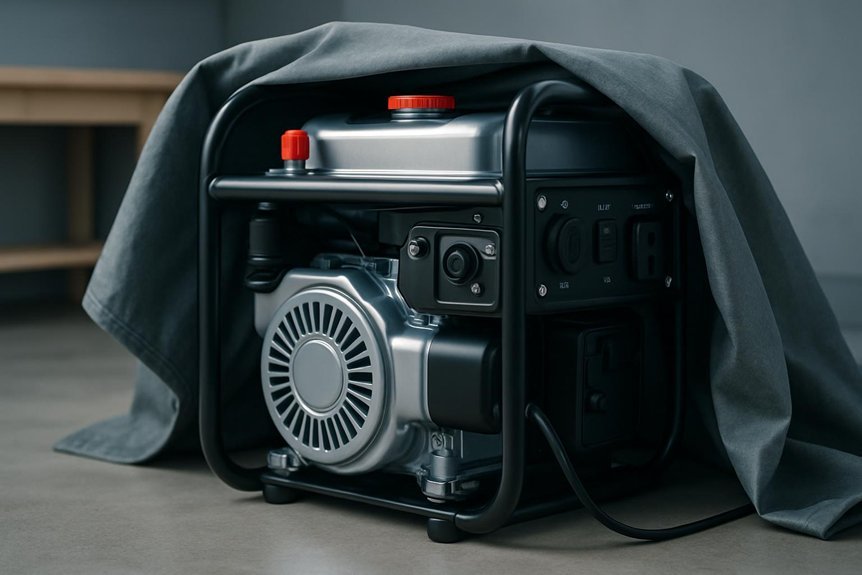
Before storage, we clean and prep the unit to minimize corrosion and leaks. We begin with a visual inspection, noting damaged cords, loose fittings, and oil leaks. Next, we disconnect the spark plug and ground the engine to prevent accidental starts. Drain or cap fuel lines per manufacturer guidance, then remove residual fuel using approved methods to reduce varnish buildup. Wipe surfaces with a non-abrasive, rust-inhibiting cleaner; apply light oil to metal components to deter corrosion. Change oil if recommended, and replace the air filter with a fresh, dry unit. Perform a test run to verify smooth operation, listening for abnormal sounds. Document maintenance steps as part of our generator storage plan, incorporating winterizing tips for long-term safeguarding.
Choose the Right Fuel Strategy for Long-Term Storage
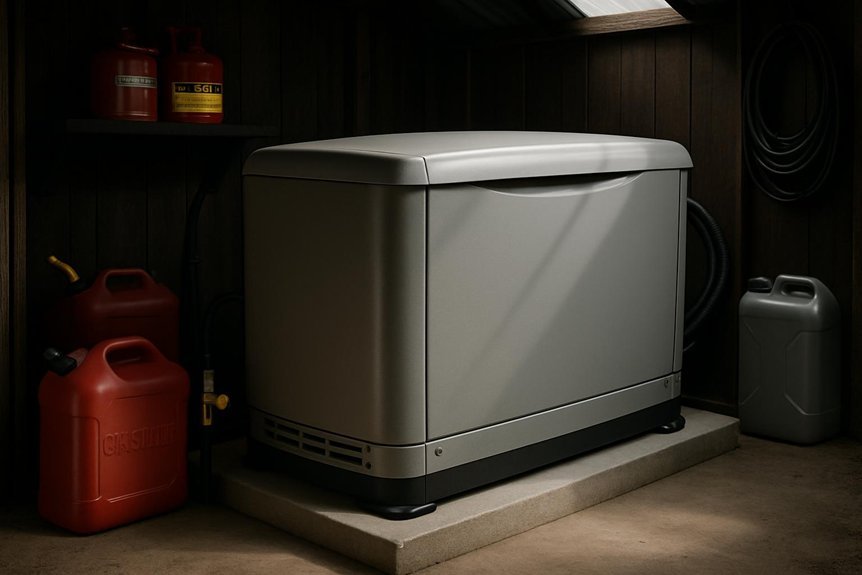
Choosing the right fuel strategy for long-term storage starts with understanding your generator’s fuel system and the risks of leaving fuel unchanged. We assess options that optimize fuel longevity while minimizing emission controls issues, then implement a plan you can trust. We’ll prioritize stabilizers, appropriate fuel, and controlled storage conditions, avoiding ethanol-heavy mixes where possible.
| Consideration | Action |
|---|---|
| Stabilizers | Add per instructions; run engine briefly to circulate. |
| Fuel type | Use fresh, low-ethanol or dedicated storage fuel; avoid aging blends. |
| Storage conditions | Cool, sealed container; full to reduce moisture pickup. |
We document procedures, monitor changes, and confirm compatibility with existing emission controls; risk-reduction guides our approach.
Stabilize Battery and Electricals for Standby or Inverter Models
We’ll start by stabilizing battery electrolytes to prevent degradation during storage and cold starts. Next, we’ll preserve inverter electronics by disconnecting nonessential loads and applying proper insulation and moisture control. We’ll emphasize risk awareness, follow exact procedures, and verify that voltage and electrolyte levels meet manufacturer specs before reactivation.
Stabilize Battery Electrolytes
Stabilizing battery electrolytes begins with ensuring the electrolyte chemistry remains consistent and free of contaminants. We approach this with a disciplined, stepwise routine to minimize risk and maintain standby readiness.
- Verify electrolyte temperature stays within spec and avoid thermal shock.
- Inspect seals, vents, and casing for leaks or contamination before charging.
- Measure electrolyte density and pH; log deviations for corrective action.
- Replace degraded electrolyte per manufacturer guidance and document the process.
Preserve Inverter Electronics
Preserving inverter electronics requires a disciplined approach to guard against thermal, electrical, and environmental stress. We start by ensuring proper ventilation and ambient cooling, because overheating triggers component fatigue. Next, we verify inverter protection features: surge suppression, fault alarms, and thermal shutoffs, and test them before every storage interval. We disconnect nonessential loads, store in a dry, stable temperature environment, and shield from dust or moisture to prevent corrosion. We also stabilize fuel and electrolyte conditions, using recommended stabilizers to minimize varnish formation and fuel degradation that could affect standby operation. Regularly inspect wiring harnesses for cracks or loose connections, and reseal any enclosures to deter humidity ingress. Document maintenance windows, and follow manufacturer guidelines for inverter protection and fuel stabilization to preserve long-term reliability.
Prevent Corrosion and Pest Intrusion in the Storage Environment
Preventing corrosion and pest intrusion starts with a controlled storage environment. We assess risks, implement controls, and monitor continuously to protect the generator from damage. We focus on material selection, sealing, and moisture management to reduce generator corrosion and eliminate entry points for pests. Our approach is actionable and proactive, prioritizing safety and reliability.
Preventing corrosion and pest intrusion starts with a controlled storage environment for reliability and safety.
- Maintain a dry, clean, and ventilated space with desiccants and dehumidifiers as needed
- Seal openings, gaps, and joints; inspect weatherstripping regularly
- Treat surrounding areas for pests and trap access routes without harming equipment
- Schedule periodic inspections for corrosion indicators, lubricant integrity, and fuse/terminal cleanliness
We document findings, correct issues promptly, and train staff in pest prevention and corrosion awareness.
Seasonal Shutdown Procedures and Periodic Maintenance
We’ll outline seasonal shutdown steps and the periodic maintenance checklist to prevent surprise failures. We’ll act with clear, risk-focused instructions so you can verify each task before storage season begins. We’ll keep language precise and concise, avoiding unnecessary steps or fluff while stressing proper sequencing and safety.
Seasonal Shutdown Steps
Do we need a clear plan before we shut down for the season? Yes. We follow a precise sequence to minimize risk and protect stored fuel, equipment, and the alternator. We optimize for a safe storage climate and ensure fuel alternatives are considered. We shut down correctly, secure access, and tag controls to prevent accidental startup.
- Drain or stabilize fuel, then seal containers and label
- Disconnect power, remove batteries, and store in a controlled area
- Inspect ventilation, moisture control, and corrosion prevention
- Verify oil level, coolant, and accessory protection for long-term storage
We document every step, so later checks are straightforward. If weather shifts, we adjust practices to maintain the proper storage climate and prevent fuel degradation.
Periodic Maintenance Checklist
When should we perform a periodic maintenance checklist during seasonal shutdowns to ensure reliability and minimize risk? We begin by inspecting the storage environment for humidity, temperature, and dust levels, then confirm ventilation is unobstructed. Next, we verify fuel, oil, and coolant levels, replacing degraded fluids as needed, and test the battery with a load and electrolyte check. We inspect belts, hoses, and connectors for signs of wear, tightening or replacing as required. We perform a thorough generator care audit: shoreline connections, grounding, and safety interlocks. We run a dry start, listen for abnormal sounds, and confirm start/stop functions. Finally, we document findings, schedule replacements, and update maintenance logs. This disciplined routine reduces corrosion risk and ensures readiness for startup after storage.
Safe Housing and Location Guidelines for Generators
Proper placement protects people and the generator. We’ll guide you to safe housing and smart location choices, focusing on risk reduction and clear procedures. Before deployment, assess airflow, fuel proximity, and ignition sources. We emphasize generator housing that minimizes exposure to weather, debris, and trespass while allowing adequate ventilation. Venting concerns are critical: exhaust must vent away from entryways, windows, and occupied spaces, never indoors. Position the unit on a level, noncombustible surface with a clear clearance around all sides. Grounding, weatherproof enclosures, and secure mounting reduce movement and hazards. Use protectively sloped roofs or canopies only if ventilation remains unobstructed. Maintain accessible service panels and emergency shutoffs, and establish a temporary safe zone during operation. Regularly reassess surroundings after storms or changes in occupancy.
Create a Maintenance and Inspection Checklist for Years of Storage
To maintain safe, reliable operation after long-term storage, we establish a practical maintenance and inspection routine that covers both the unit and its surroundings. We address generator storage and perform a focused long term maintenance check to prevent corrosion, contamination, and moisture intrusion. Our checklist prioritizes valve seals, fuel degradation, battery health, oil levels, and wiring integrity, plus surrounding area clearance and ventilation. We document findings, assign responsible steps, and schedule re-inspections. This process reduces risk and supports rapid startup when needed.
| Area | Action |
|---|---|
| Unit exterior | Inspect seals, housing, and ventilation for corrosion or pests; clean as needed. |
| Surroundings | Remove debris, ensure dry, well-ventilated space; verify water drainage and accessibility. |
Frequently Asked Questions
How Long Can a Generator Safely Sit Unused Before Storage?
We can safely store a generator unused for 6–12 months with proper prep. Inspect, drain fuel, change oil, clean vents, and cover. Two word ideas: long term storage; generator corrosion. Not relevant: unrelated topics.
What Is the Best Way to Transport a Stored Generator?
We transport generators on a steady, supported trailer, securing with straps and wheel chocks for transport safety. We follow strict procedures, and check fuel storage conditions, ventilation, and shutoff valves to minimize risk before loading or unloading.
Can You Start a Stored Generator After Long-Term Storage Without Maintenance?
We can’t start a stored generator after long-term storage without maintenance; perform a cautious start-up procedure first, verify fuel, oil, and battery, then run storage maintenance checks to prevent damage and ensure safe, reliable operation.
What Unusual Signs Indicate Stored-Generator Damage or Failure?
We notice unusual signs like cracks, corrosion, and strange noises; these indicate stored-generator damage or failure and require immediate inspection. We treat this as an unrelated topic and offbeat concern, proceeding with cautious, risk-focused, procedural evaluation.
Should I Insulate a Generator Stored Outdoors Year-Round?
We should not insulate a generator stored outdoors year-round; we’d risk moisture, corrosion, and insulation damage. Our insulation considerations prioritize indoor storage or protective enclosure, addressing outdoor storage risks with weatherproof housing, dehumidification, and routine dry checks.
Conclusion
We’ve walked you through every corner of safe storage, and now it’s time to seal the deal. Think of your generator as a dormant ally—ready but restrained. Follow our steps: drain fuel, disconnect spark, cap, stabilize, seal, and shield. Check zones for airflow, dryness, and access, then lock in a maintenance cadence. With disciplined practices, you’ll reduce risk, extend life, and keep power ready without surprises. Safety isn’t luck; it’s our shared routine.