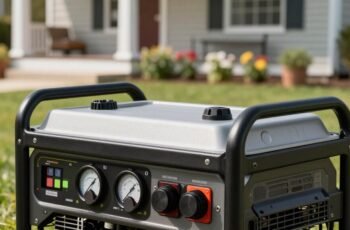
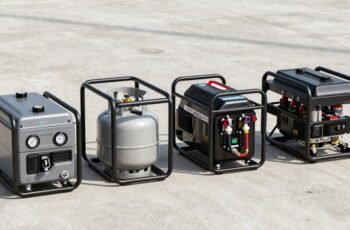
Choosing the perfect portable power generator for home backup isn’t just a simple decision—it can feel like a life-or-death challenge in an emergency scenario. With so many factors to weigh, from power capacity to safety features, it’s easy to overlook critical details that could jeopardize your home’s stability. To guarantee you make an informed choice, understanding what truly matters in a generator’s design and performance is essential—so let’s explore the key considerations that will keep your home powered when it matters most.
Key Takeaways
- Ensure the generator has sufficient power output (watts) and capacity (watt-hours) to support essential home appliances during outages.
- Prioritize fuel efficiency and runtime to maintain reliable backup power for extended periods.
- Choose models with safety features like overload protection, automatic shutdown, and carbon monoxide detectors for safe operation.
- Opt for portable, lightweight designs with handles and wheels for easy transportation and storage.
- Consider noise levels, fuel type, and environmental impact to match your home’s needs and safety requirements.
What Are the Key Features of a Reliable Portable Power Generator?
When evaluating a portable power generator, understanding its key features is essential to guaranteeing reliable performance. Critical factors include power output consistency, fuel efficiency, and durability. A dependable generator must have a stable power delivery, typically measured in watts, to support various devices without fluctuations. Fuel efficiency impacts operational runtime, making it crucial for prolonged outages. Durability involves robust construction with corrosion-resistant materials and vibration mitigation to withstand transport and harsh environments. Noise levels also matter, especially for residential use, requiring sound-dampening features. Additionally, safety features such as automatic shutdown, overload protection, and grounding enhance reliability and user confidence. Finally, ease of maintenance, including accessible oil and filter components, ensures long-term performance, making these features the foundation of a truly reliable portable power generator.
How Do Power Output and Capacity Affect Your Home Backup?
Power output and capacity are critical factors that directly determine a portable generator’s effectiveness as a home backup. Power output, measured in watts, indicates how much electrical load the generator can sustain simultaneously. Insufficient output can lead to overloads or shutdowns, compromising essential appliances’ operation. Capacity, often expressed as total watt-hours or fuel tank size, reflects how long the generator can supply power before refueling or recharging. A higher capacity ensures longer runtime, especially during extended outages. Balancing these factors is crucial; a generator with high capacity but low power output may run continuously but can’t power multiple devices simultaneously. Conversely, a high-output unit with limited capacity may meet immediate needs but lack endurance. Both aspects must align with your home’s specific power requirements for ideal backup performance.
What Factors Make a Generator Truly Portable and Easy to Use?
To guarantee a generator is truly portable and user-friendly, several key factors must be considered. First, weight and size directly influence mobility; lighter units with compact dimensions facilitate easier transportation and storage. Second, handle design and wheel integration enhance maneuverability, reducing physical strain during movement. Third, controls should be intuitive, with straightforward interfaces that require minimal setup, ensuring quick deployment in emergencies. Additional considerations include durable construction for harsh conditions and ergonomic features to minimize user fatigue. By focusing on these elements, a generator can deliver practical portability without sacrificing performance or safety. This analytical approach guarantees that the device aligns with user needs, providing reliable power during critical moments while maintaining ease of use.
Why Fuel Efficiency and Runtime Matter for Emergency Power?
Fuel efficiency and runtime are critical factors in emergency power scenarios because they directly influence the duration and reliability of backup energy supplies. Higher fuel efficiency extends operational periods without refueling, guaranteeing continuous power during prolonged outages. Effective runtime allows generators to sustain essential loads, preventing interruptions in critical systems like refrigeration, medical devices, or communication equipment. Analyzing fuel consumption rates reveals how effectively a generator converts fuel into usable electricity, impacting overall operational costs and logistical planning. Short runtime necessitates frequent refueling, increasing inconvenience and potential downtime, especially in remote or disaster-affected areas. Thus, selecting a generator with ideal fuel efficiency and sufficient runtime maximizes reliability, minimizes maintenance, and guarantees uninterrupted power, which are essential considerations in emergency preparedness and response strategies.
How Quiet Should Your Generator Be During Use?
While selecting a portable generator, understanding its noise level is essential for both safety and comfort, especially in residential or noise-sensitive environments. Excessive noise can cause disturbance, reduce situational awareness, and violate local noise ordinances. Ideal noise levels typically range between 50-65 decibels during operation, comparable to a normal conversation or background music.
Important considerations include:
- Decibel ratings: Lower figures indicate quieter operation, critical for prolonged use in quiet settings.
- Sound attenuation features: Enclosures or mufflers can considerably reduce operational noise.
- Operational context: Use in close proximity to living spaces demands stricter noise standards, whereas remote applications may allow higher noise levels.
Balancing noise output with power capacity ensures both effective operation and community compliance.
Which Fuel Types Are Best for Home Backup Generators?
When evaluating fuel types for home backup generators, we consider efficiency, cost, and environmental impact, as these factors directly influence long-term operation. Availability and accessibility also play vital roles, affecting both initial setup and ongoing supply reliability. Analyzing these points helps identify the most practical and sustainable options for consistent power backup.
Fuel Efficiency and Cost
Choosing the right fuel type for home backup generators hinges on evaluating their fuel efficiency and ongoing costs. Fuel efficiency directly impacts operational expenses, making it essential to compare consumption rates across options. Cost considerations include initial purchase price, fuel price fluctuations, and maintenance expenses.
Key factors include:
- Fuel consumption rate: Lower rates reduce running costs over time.
- Fuel storage and availability: Readily available fuels lower logistical costs.
- Refueling intervals: Longer intervals minimize downtime and refill costs.
Gasoline generators tend to be less efficient but are more affordable upfront. Diesel units offer higher efficiency and durability but at increased initial investment. Propane provides cleaner operation and stable fuel costs, yet may have higher setup costs. Careful analysis of these factors ensures maximum long-term value.
Environmental Impact Considerations
Evaluating the environmental impact of different fuel types for home backup generators requires a focus on emissions, sustainability, and ecological footprint. Gasoline-powered generators produce higher greenhouse gases (GHGs) and pollutants, contributing to air quality issues. Propane and natural gas generators offer cleaner combustion, emitting fewer particulates and GHGs, consequently reducing overall ecological impact. Diesel generators, while efficient, tend to generate more particulate matter and nitrogen oxides, which have adverse environmental effects. Renewable options, such as solar-powered generators, have negligible emissions during operation, making them the most sustainable choice. However, their environmental benefits depend on the manufacturing process and energy sources used for electricity storage. Overall, selecting a fuel type involves balancing immediate environmental benefits against long-term sustainability and ecological considerations.
Availability and Accessibility
Which fuel types are most accessible and reliable for home backup generators? Gasoline, propane, and diesel are the primary options, each with distinct accessibility and logistical considerations. Gasoline is widely available but has a short shelf life and storage challenges, especially in larger quantities. Propane offers consistent supply and longer storage stability, making it suitable for prolonged outages. Diesel provides high energy density and efficiency but requires specialized storage and handling infrastructure. When evaluating these fuels, consider factors such as infrastructure reliability, shelf life, and safety protocols.
- Gasoline: Ubiquitous availability but limited shelf life and storage concerns
- Propane: Long shelf stability, infrastructure dependent but generally reliable
- Diesel: High energy density, requires specialized storage and handling
How Do Safety Features and Ease of Maintenance Impact Your Choice?
Safety features like automatic shutdowns and alert systems markedly reduce operational risks and enhance user confidence. Ease of maintenance, including accessible components and clear instructions, minimizes downtime and guarantees reliable performance. Together, these factors directly influence the overall safety, efficiency, and longevity of a portable generator.
Safety Protocols and Alerts
How do safety features and ease of maintenance influence our choice of portable power generators? They are critical in minimizing operational risks and ensuring reliable performance during emergencies. Safety protocols such as automatic shutoff in overload conditions, ground-fault circuit interrupters (GFCIs), and carbon monoxide detectors directly prevent potential hazards. Ease of maintenance affects the longevity and consistent safety of the unit, enabling timely inspections and repairs.
Key safety considerations include:
- Automated safety shutoffs prevent damage during overloads or low oil conditions.
- Integrated alerts notify users of abnormal operation or potential hazards.
- User-friendly diagnostic indicators facilitate quick troubleshooting.
These features not only enhance safety but also streamline maintenance, reducing downtime and ensuring continuous power during critical moments.
Maintenance Accessibility and Ease
Maintaining portable power generators with ease is essential for guaranteeing their long-term reliability and safety. Accessibility directly affects maintenance frequency and quality, impacting operational lifespan. Generators with straightforward access points for oil changes, filter replacements, and inspections reduce downtime and minimize error risk. Features like quick-release panels or modular components streamline routine tasks, encouraging consistent upkeep. Ease of maintenance also influences safety; accessible parts lower the chance of mishandling during repairs or inspections. Additionally, clear labeling and all-encompassing user manuals facilitate proper maintenance procedures. When evaluating generators, prioritizing models with intuitive design and easy access ensures ongoing performance, reduces potential hazards, and simplifies troubleshooting. Ultimately, maintenance accessibility is a critical factor that sustains generator efficiency and safety over its operational life.
What Budget Should You Set for a Quality Portable Power Generator?
Determining an appropriate budget for a high-quality portable power generator involves balancing performance requirements with cost considerations. Generally, higher costs correlate with increased power output, longer runtime, and advanced features such as inverter technology and enhanced durability. To optimize investment, consider these factors:
- Power capacity aligned with essential household loads
- Runtime efficiency based on fuel consumption and tank size
- Durability and build quality to withstand environmental stress
Allocating funds within a range of $500 to $2,500 typically yields reliable options, but premium units exceeding this may offer superior longevity and advanced controls. Establishing a budget requires analyzing your specific backup needs against these technical parameters, ensuring a cost-effective, high-performance solution tailored to your home.
How to Evaluate Top Portable Generators for Your Home Backup Needs
Evaluating top portable generators for your home backup requires a systematic analysis of their technical specifications and performance metrics. First, examine power output, affirming it meets your essential appliance demands, with both running and surge wattage considered. Next, assess fuel efficiency and runtime to determine how long the generator can operate during outages. Noise levels are also critical; lower decibel ratings minimize disruption. Portability features, such as weight, handle design, and wheel quality, influence ease of transport. Additionally, review the generator’s build quality, durability, and safety features like overload protection and grounding. Finally, compatibility with your existing home systems and future expansion options should be considered. A thorough evaluation grounded in these factors ensures you select a reliable, efficient backup power solution.
Frequently Asked Questions
How Long Do Portable Generators Typically Last Before Needing Repairs?
Portable generators typically last 1,000 to 3,000 hours of operation before requiring repairs or maintenance, depending on usage, brand quality, and maintenance practices. Regular servicing, proper operation, and quality units extend their lifespan considerably.
Are Portable Generators Suitable for Powering Sensitive Electronics?
Think of portable generators as the heart of your power system; they can power sensitive electronics if they provide clean, stable sine wave output, usually via inverter technology, ensuring your devices operate safely and efficiently.
What Maintenance Skills Are Required to Keep a Generator in Good Condition?
We maintain generators by regularly checking oil levels, replacing filters, inspecting spark plugs, and testing functionality. Consistent troubleshooting and cleaning prevent failures, ensuring reliable operation, and extending the generator’s lifespan in a technical, systematic manner.
Can Portable Generators Be Safely Used Indoors or in Enclosed Spaces?
We advise against using portable generators indoors or in enclosed spaces due to carbon monoxide risks. Proper ventilation is crucial, and using them outdoors in open areas guarantees safe operation, preventing hazardous gas buildup and ensuring safety during power outages.
How Do Weather Conditions Affect the Performance of Portable Power Generators?
Weather acts like an unpredictable conductor, shaping generator performance; rain, cold, or wind impair efficiency by reducing airflow and increasing strain, so we recommend weatherproofing and choosing models designed to withstand diverse conditions for reliable backup power.
Conclusion
Choosing the right portable power generator is like assembling a complex puzzle—each feature, from capacity to safety, must fit perfectly to guarantee reliable backup power. We’ve seen how thorough evaluation transforms uncertainty into confidence, much like tuning a finely calibrated instrument. By analyzing key specs and safety features, we position ourselves for resilient, efficient, and eco-conscious power solutions, turning potential chaos into a controlled, steady flow—making sure our homes stay powered, safe, and ready for anything.