When selecting a quiet portable generator, we recognize the importance of minimizing noise to guarantee comfort and safety in outdoor or emergency scenarios. Identifying models with low decibel ratings, advanced soundproofing, and efficient operation is critical to meeting these needs. Yet, balancing sound levels with power output and runtime requires careful consideration. Let’s explore the key factors and technologies that enable effective noise reduction without compromising performance.
Key Takeaways
- Prioritize generators with low decibel ratings (50-60 dB) and soundproofing features like enclosures or mufflers.
- Measure noise levels at standard testing conditions (7 meters distance, 1.5 meters height) to ensure accurate comparison.
- Choose compact, lightweight models with noise-reduction technology suitable for outdoor use and portability.
- Ensure the generator has efficient fuel consumption and sufficient runtime for your specific power needs.
- Verify build quality and noise mitigation features to ensure durability and quieter operation during prolonged use.
What Makes a Portable Generator Quiet?
To understand what makes a portable generator quiet, we must first examine the key components and design features that influence noise levels. The engine’s size and type directly impact sound output; smaller, inverter engines typically produce less noise. The muffler system plays a critical role in noise reduction by dampening exhaust sound waves. Additionally, the enclosure design affects sound insulation; models with sound-absorbing materials or acoustic enclosures notably lower noise emissions. The vibration isolation system minimizes mechanical noise transmission, while the engine’s operational speed can be optimized to reduce noise during lighter loads. Overall, the integration of these elements determines the generator’s acoustic profile, with advanced engineering focusing on vibration damping, soundproofing, and engine efficiency to achieve quieter operation.
Key Factors to Consider When Choosing a Low-Noise Generator
When selecting a low-noise generator, evaluating sound level ratings provides a clear measure of operational noise. Engine and muffler design notably influence sound output, with well-engineered components reducing overall noise levels. Understanding these factors guarantees we choose a generator that meets both performance and acoustic requirements.
Sound Level Ratings
Sound level ratings are essential metrics that quantify the noise output of portable generators, typically measured in decibels (dB). These ratings provide a standardized way to compare models’ noise emissions, with lower dB values indicating quieter operation. For example, a generator producing 50-60 dB is generally considered quiet enough for residential use, while higher levels suggest increased noise pollution. It’s important to understand that decibel measurements are logarithmic; a small difference in dB can represent a significant change in perceived loudness. When evaluating generators, we focus on the rated sound level at a specific load—often at 25%, 50%, or maximum capacity—to determine suitability for noise-sensitive environments. Accurate sound level ratings enable informed decisions aligned with noise reduction priorities.
Engine and Muffler Design
Engine and muffler design play essential roles in minimizing noise output in portable generators. A well-engineered engine with smooth operation reduces vibration and mechanical noise. Additionally, muffler design markedly impacts sound attenuation; models with large, multi-chamber mufflers effectively dampen exhaust noise. Features such as sound-dampening materials within the muffler or enclosed engine compartments further decrease sound levels. It’s crucial to consider the engine’s RPM stability, as consistent RPM reduces engine noise fluctuations.
| Feature | Effect on Noise | Design Consideration |
|---|---|---|
| Engine Balance | Reduces vibration | Counterweights and precision assembly |
| Muffler Size | Dampens exhaust sound | Larger, multi-chamber mufflers |
| Enclosed Engine Compartments | Blocks noise escape | Sound-insulating materials |
How Noise Levels Are Measured in Portable Generators?
To accurately assess noise levels in portable generators, standardized measurement protocols are employed that focus on specific acoustic parameters. These protocols specify measurement distance, typically 7 meters (23 feet), and require measurements to be taken at a height of 1.5 meters (5 feet) above ground level, approximating human ear height. Sound pressure levels are recorded using a calibrated sound level meter, which measures the equivalent continuous sound level, denoted as Leq. Additionally, peak sound levels, or Lmax, are recorded to capture maximum noise output during operation. These measurements are conducted in controlled environments or designated outdoor test areas to minimize ambient noise interference. Consistent application of these protocols guarantees reliable comparison of generator noise emissions, facilitating informed selection of low-noise models.
Best Small and Compact Quiet Generators for Camping and Travel
When selecting small and compact generators for camping and travel, size and weight are critical factors that impact portability and ease of use. We focus on units that deliver effective power output while maintaining low noise levels for unobtrusive operation in outdoor environments. By analyzing these parameters, we identify models that optimize both functionality and quietness.
Compact Size and Portability
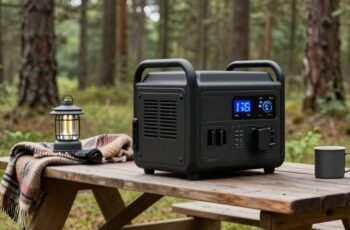
Because portability is essential for outdoor enthusiasts, selecting a generator with a compact size guarantees ease of transport and storage. Compact models typically feature a lightweight, streamlined design that minimizes bulk without compromising power output. Many utilize integrated handles or ergonomic structures to facilitate manual carrying or easy placement in vehicles. Dimensions are carefully engineered to fit into tight spaces, such as car trunks or RV storage compartments, while maintaining structural integrity. Power-to-size ratio is optimized through advanced engineering, allowing robust performance in a minimal footprint. Additionally, foldable or collapsible components can enhance portability further. Overall, choosing a small, lightweight generator ensures convenience during setup, transportation, and storage, making it ideal for mobility-focused applications like camping, hiking, or travel.
Noise Levels and Quiet Operation
While small and compact generators are ideal for portability, their noise levels are equally important for outdoor use, especially in camping and travel scenarios. Low noise operation minimizes disturbance to wildlife and fellow campers, ensuring a quieter environment. Noise levels are typically measured in decibels (dB); for outdoor recreational use, models emitting between 50-60 dB are considered quiet. Many modern generators incorporate sound-dampening enclosures, inverter technology, and optimized engine design to reduce operational noise. These features help maintain stable power output while minimizing sound emissions. When selecting a generator, it’s essential to verify its rated noise level at a specified load, ensuring it meets your outdoor activity’s quietness requirements. Precise noise management enhances both comfort and compliance with campsite regulations.
Fuel Efficiency and Runtime: Why They Matter for Quiet Generators
Have you ever considered how fuel efficiency and runtime directly impact the practicality of a quiet generator? These factors determine operational cost, convenience, and suitability for extended use. Efficient fuel consumption ensures minimal refueling, reducing noise caused by frequent starts and stops. Longer runtime means less interruption during critical applications or emergencies. To evaluate these aspects, consider:
- Fuel consumption rate per kilowatt-hour (kWh) — lower rates indicate better efficiency.
- Fuel tank capacity — larger tanks enable prolonged operation without refueling.
- Continuous runtime at rated load — essential for planning extended use.
- Fuel type and availability — impacts operational costs and ease of refueling.
Prioritizing these metrics helps select a generator that balances quiet operation with practical, sustained performance.
Comparing Soundproofing Features and Noise-Reduction Technologies
To effectively compare soundproofing features and noise-reduction technologies in portable generators, we must analyze how each system minimizes operational noise. Soundproofing features typically include insulated enclosures, vibration-dampening mounts, and sealed panels, which collectively absorb or block sound waves. Noise-reduction technologies focus on engine design improvements, such as mufflers with advanced acoustic chambers, low-vibration components, and optimized exhaust routing to reduce sound emissions at the source. Some models incorporate sound-absorbing materials directly within the frame, while others utilize active noise-canceling systems. Precision in these technologies is critical; effective soundproofing minimizes ambient noise without compromising airflow or cooling efficiency. Comparing these features involves evaluating their material quality, engineering design, and overall impact on noise attenuation levels.
How to Balance Power Output and Noise for Your Needs
Achieving a prime balance between power output and noise levels requires careful consideration of your specific energy demands and environmental constraints. To optimize this balance:
- Determine peak power requirements—identify essential appliances and their startup surges to avoid overestimating capacity.
- Select a generator with adjustable output settings—this allows modulation of power levels to minimize noise during lower demand periods.
- Evaluate noise specifications at different loads—choose models with noise ratings measured at various output levels to ensure real-world performance matches your needs.
- Prioritize inverter or hybrid technology—these units typically provide cleaner, quieter power while maintaining sufficient output for sensitive devices.
This methodical approach ensures you meet your power needs without compromising noise reduction.
Tips for Operating Your Quiet Generator Effectively
Proper operation of your quiet generator is essential to guarantee peak performance and longevity. Always operate within the manufacturer’s recommended load capacity to prevent strain that can increase noise and reduce lifespan. Assure proper ventilation to avoid overheating, maintaining at least a few feet of clearance around the unit. Regularly check and change oil as specified to reduce internal friction and noise. Use a stable, level surface to minimize vibrations that could amplify sound levels. Avoid sudden throttle changes; instead, increase or decrease load gradually to maintain smooth engine operation. Periodic inspection of spark plugs, air filters, and fuel lines helps sustain ideal performance and noise reduction. Following these precise operational practices ensures your generator runs quietly and efficiently over its service life.
Common Mistakes to Avoid When Buying a Low-Noise Portable Generator
When selecting a low-noise portable generator, many buyers overlook critical factors that can impact performance, durability, and noise levels. Common mistakes include:
- Ignoring noise ratings: Choosing a generator based solely on wattage without considering decibel levels can lead to excessive noise.
- Overlooking runtime: Failing to verify fuel capacity and efficiency results in inadequate operation during power outages.
- Neglecting build quality: Selecting models with inferior components compromises longevity and increases maintenance needs.
- Disregarding noise mitigation features: Not prioritizing sound-attenuating enclosures or mufflers reduces the generator’s quiet operation advantage.
Avoiding these errors ensures optimal performance, durability, and minimal noise, aligning your purchase with your quiet operation goals.
Frequently Asked Questions
Are Quiet Generators Suitable for All Outdoor Environments?
Quiet generators are suitable for most outdoor environments, especially where noise restrictions apply, like campsites or neighborhoods. We recommend evaluating environmental noise levels and specific usage requirements to guarantee ideal performance and compliance with local regulations.
How Does Altitude Affect the Noise Level of a Portable Generator?
Altitude can increase a generator’s noise level due to reduced air density affecting cooling efficiency, causing the engine to work harder and produce more sound; understanding this helps us select models suitable for high-altitude environments.
Can a Quieter Generator Power High-Demand Appliances Effectively?
Yes, a quieter generator can power high-demand appliances effectively if it has sufficient wattage capacity, stable output, and advanced inverter technology, ensuring reliable performance without excessive noise, making it suitable for sensitive electronics and heavy-duty use.
What Maintenance Practices Help Keep My Generator Noise Low?
We regularly inspect and replace worn components, keep the air filters clean, and perform routine oil changes. These practices guarantee ideal engine performance, reduce vibrations, and maintain low noise levels, prolonging your generator’s quiet operation effectively.
Do Noise Levels Vary Significantly Between Different Brands or Models?
Noise levels do vary considerably between brands and models; for example, a high-quality Honda generator may operate at 50 dB, while a cheaper alternative could reach 70 dB, impacting usability in noise-sensitive environments.
Conclusion
In the end, choosing a quiet generator isn’t just about dB levels—though that’s a good start. We’ve seen how features, efficiency, and proper use make all the difference. Ironically, the quietest models often require careful operation and maintenance to truly stay silent. So, while it’s tempting to chase the lowest noise rating, remember that peak performance and longevity depend on balancing sound, power, and care. Silence may be golden, but it’s earned through knowledge and effort.