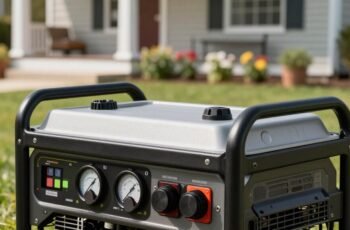
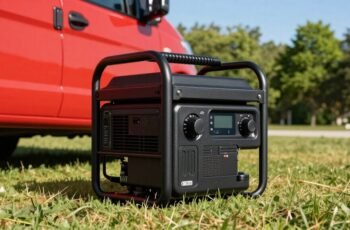
Much like steering through a complex electrical circuit, choosing the right portable generator requires precise calculations and careful consideration of your power needs. We understand that selecting the correct wattage can seem daunting, especially with varying device demands and surge requirements. To ensure your setup is both efficient and reliable, it’s essential to grasp the specifics of your appliances and how to match them with an appropriate generator size. Let’s explore the essential steps to determine exactly what you need—because oversizing or undersizing can have significant consequences.
Key Takeaways
- List all devices’ running and starting wattages to determine total power needs accurately.
- Add a safety margin of 20-25% to handle surges and ensure reliable operation.
- Match the generator’s wattage capacity with your total continuous and surge power requirements.
- Consider portability, fuel efficiency, and noise levels alongside wattage for optimal selection.
- Avoid underestimating starting wattages to prevent overload and appliance damage.
How to Determine Your Home or Camping Power Needs
To accurately determine your home or camping power needs, we first need to identify the total wattage of all devices and appliances you plan to operate simultaneously. This involves creating a thorough list of each item’s rated wattage, which can typically be found on the device’s label or in the user manual. We then sum these values to establish the combined continuous power requirement. It’s crucial to consider both running wattage, the power needed during operation, and starting wattage, which accounts for initial surge when appliances begin to run. Precise calculation ensures the generator can handle the load without overload or inefficiency. This process provides a clear baseline, enabling ideal generator selection tailored to your specific energy consumption profile.
Essential Appliances and Devices: Wattage Ratings and Power Consumption
Understanding the wattage ratings of essential appliances and devices is critical for accurate power planning. We must take into account their specific power demands to guarantee your portable generator can handle the load safely. Precise knowledge of these ratings allows for effective load management and prevents overloading.
Common Household Appliance Wattages
Most household appliances have specific wattage ratings that indicate their power consumption, which is essential for sizing a portable generator effectively. Typical wattages vary based on appliance function and size. For example, LED lighting consumes around 10-20 watts per bulb, while refrigerators generally require 100-800 watts during operation, with surge wattages up to 2,000 watts at startup. Microwave ovens typically operate between 600-1,200 watts, and standard televisions consume approximately 50-200 watts. Small kitchen appliances like toasters or coffee makers usually use 800-1,500 watts. Understanding these ratings helps determine the continuous and surge wattage needed from a generator. Accurate knowledge of appliance wattages guarantees generator capacity aligns with essential power requirements, preventing overloads and optimizing efficiency.
Power Needs for Devices
Accurately evaluating the power needs of specific devices guarantees your generator can reliably support your critical appliances during outages or outdoor use. To do this, we must consider each device’s wattage rating, which indicates the power consumption under normal operation. Essential devices like refrigerators, sump pumps, and medical equipment often have higher starting wattages due to motor inrush currents, which can be 2-3 times their running wattage. Precise knowledge of both starting and running wattages ensures proper generator sizing. Additionally, some electronics like laptops and LED lighting consume minimal power, but their combined load can impact sizing. By methodically appraising each device’s wattage, we can prevent overloads and ensure seamless operation of your critical appliances during power disruptions.
Calculating Your Total Wattage Requirement: Step-by-Step Guide
To determine the appropriate wattage for your portable generator, we need to accurately calculate your total power requirements. First, list all appliances and devices you plan to operate simultaneously. For each, record the running wattage, obtained from manufacturer specs or labels. Next, sum the running wattages to establish a baseline continuous power need. Then, identify the starting wattage for each device, especially motors and compressors, which often require considerably more power at startup. Add these startup wattages to the running total for those appliances. The combined sum of running wattages plus the highest startup wattage ensures your generator can handle initial surges and continuous operation. This precise calculation guarantees your generator’s capacity matches your actual power demands, avoiding overloads or insufficient power issues.
Understanding Starting vs. Running Watts for Appliances
Understanding the difference between starting and running watts is essential for selecting the right portable generator. Starting watts refer to the initial surge of power needed to activate appliances with motors or compressors, such as refrigerators or power tools. Running watts, on the other hand, represent the continuous power required during normal operation once the appliance is running steadily. Starting wattage is typically 2 to 3 times higher than running wattage and must be considered to guarantee the generator can handle peak demands without overload. Accurate identification of both wattages prevents underestimating power needs, which could lead to generator overload or appliance failure. Consequently, always consult appliance labels or manufacturer specifications to determine the correct starting and running wattages before selecting a generator.
Choosing the Right Generator Size: Small, Medium, or Large?
When selecting generator size, we must evaluate your total power requirements, considering both starting and running watts for your essential appliances. Portability and physical size influence ease of transport and storage, while budget constraints determine feasible options. Balancing these factors ensures a suitable choice that meets your specific power needs effectively.
Power Needs Assessment
Determining the appropriate generator size requires a precise assessment of your power requirements. First, list all devices and appliances you plan to operate, noting their starting (surge) and running wattages. Use manufacturer specifications or wattage calculators for accuracy. Prioritize essential items, such as refrigerators, lights, and medical devices, and calculate their combined wattage. Include a safety margin of 20-25% to accommodate startup surges and unforeseen loads. Avoid underestimating power needs, as insufficient capacity can cause equipment damage or frequent overloads. For larger loads or future expansion, select a generator with slightly higher wattage capacity. This thorough evaluation ensures you choose a generator that balances efficiency, reliability, and the ability to meet your specific power demands effectively.
Portability and Size
Choosing the appropriate generator size involves balancing power capacity with portability and physical dimensions. Small generators typically weigh under 100 pounds, making them highly portable and suitable for minimal power needs, such as camping or emergency kits. Medium-sized models generally weigh between 100 and 300 pounds, offering increased wattage while maintaining manageable portability for outdoor use or backup power. Large generators exceed 300 pounds, often requiring wheels or dedicated transport, and are designed for substantial power demands like home whole-house systems or construction sites. When selecting size, consider your mobility requirements: if portability is critical, smaller units are preferable; for higher wattage needs, larger models are necessary, despite reduced ease of movement. Precise assessment of use scenarios ensures ideal size selection aligned with physical transport constraints.
Budget Considerations
Budget considerations play a crucial role in selecting the appropriate generator size, as initial costs and ongoing expenses vary considerably between small, medium, and large units. Small generators typically have lower upfront costs but limited wattage, suitable for basic essentials. Medium units balance price and capacity, ideal for moderate power needs. Large generators demand higher investment but provide extensive wattage for all-encompassing backup power.
| Generator Size | Cost Range | Power Capacity |
|---|---|---|
| Small | $200–$500 | Up to 2,000 watts |
| Medium | $500–$1,500 | 2,000–6,000 watts |
| Large | $1,500+ | Over 6,000 watts |
Choosing the right size hinges on balancing initial investment with your power requirements and budget constraints.
Tips for Selecting a Portable Generator for Your Specific Needs
Selecting the right portable generator requires a clear understanding of your specific power demands and usage scenarios. Begin by listing essential appliances and devices, then determine their combined starting and running wattage. Consider surge wattage for equipment with motors, like refrigerators or power tools. Assess whether your needs are temporary, such as camping, or continuous, like backup home power. Decide on fuel type based on availability and efficiency, and evaluate runtime requirements. Portability factors—weight, handle design, and noise levels—are vital for ease of transport and operation. Additionally, verify that the generator’s outlets and safety features meet your needs. Precise matching of wattage and features to your requirements ensures ideal performance, safety, and cost-efficiency.
Common Mistakes to Avoid When Picking a Generator Wattage
One of the most common pitfalls when determining your generator wattage is underestimating the surge or starting wattage required by certain appliances. Many users focus solely on running wattage, neglecting the initial power surge during startup, which can be considerably higher. This oversight risks overloads or damage to both the generator and connected devices. To avoid this, always identify the starting wattage for each appliance and ensure your generator can handle the highest combined surge. Additionally, selecting a generator with too narrow a margin between its rated wattage and your load can lead to frequent overloads and reduced lifespan. Precise calculations that include both running and starting wattages are vital for reliable operation, preventing equipment failure, and ensuring safe, efficient power delivery.
Frequently Asked Questions
Can I Run All Appliances Simultaneously on a Portable Generator?
You can’t run all appliances simultaneously on a portable generator unless its wattage capacity exceeds the combined starting and running wattage of your devices. We recommend calculating total loads and choosing a generator with sufficient wattage for safe, reliable operation.
How Does Altitude Affect Generator Wattage Requirements?
Altitude markedly decreases air density, causing engine power to plummet by roughly 3-4% per 1,000 feet, consequently demanding higher wattage capacities to compensate for reduced generator efficiency and maintain ideal appliance performance.
What’s the Lifespan of a Typical Portable Generator?
A typical portable generator lasts about 10,000 to 20,000 hours of operation, depending on maintenance and usage. Regular servicing, proper fuel storage, and avoiding overloads considerably extend its lifespan, ensuring reliable power when needed.
Are There Fuel-Efficient Options for High-Wattage Generators?
Yes, we find that fuel-efficient high-wattage generators utilize inverter technology, advanced engine management systems, and optimized fuel consumption features, enabling prolonged operation with reduced fuel use, making them ideal for power-intensive applications while maintaining efficiency.
How Often Should I Perform Maintenance on My Generator?
We recommend performing maintenance every 50 to 100 hours of operation, coinciding with seasonal changes, to guarantee peak performance. Regular checks of oil, filters, and spark plugs prevent unexpected failures and extend your generator’s lifespan.
Conclusion
By accurately calculating your total wattage needs and including a safety margin, we guarantee the generator can handle peak loads without risking overload. While some might think a smaller unit suffices, underestimating wattage can lead to equipment damage or failure. Prioritizing precise calculations and understanding starting versus running watts allows us to select a generator that balances capacity, efficiency, and reliability—ultimately providing peace of mind for both home backup and outdoor power needs.