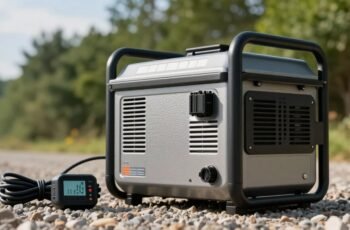
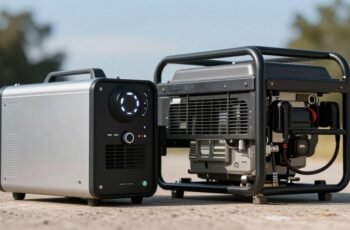
Imagine setting up your campsite as the sun dips low, and reliable power becomes essential for your devices and appliances. Selecting the right portable generator involves careful consideration of multiple technical features—size, noise level, safety mechanisms, fuel efficiency, and more. Each factor impacts your outdoor experience and safety, making it vital to understand what specifications truly matter. As we explore these elements, you’ll find it easier to choose a generator that balances performance with convenience in your outdoor adventures.
Key Takeaways
- Ensure the generator’s wattage exceeds your essential device power needs, including surge capacity for startup demands.
- Opt for lightweight, compact units with convenient handles or wheels for easy transport and setup.
- Choose a generator with low noise levels (50-60 dB) to maintain outdoor tranquility during camping.
- Consider fuel efficiency, runtime per tank, and fuel type options like gasoline, propane, or dual-fuel for extended use.
- Look for safety features such as overload protection, low-oil shutdown, and weather-resistant construction for reliable outdoor operation.
What Are the Most Important Features of Portable Camping Generators?
When selecting a portable camping generator, understanding its key features is essential to guarantee it meets your power needs and withstands outdoor conditions. First, consider wattage capacity, which determines the total power output for your appliances and devices; make certain it exceeds your maximum load requirements. Noise level is also critical, especially in quiet camping areas—look for models with decibel ratings below 60 dB. Durability features, such as weather-resistant casing and corrosion-resistant components, ensure longevity in outdoor environments. Fuel efficiency impacts runtime and refueling frequency; opt for generators with advanced engine technology that minimizes consumption. Additionally, look for multiple outlets with different configurations to accommodate various devices, and include safety features like automatic shutoff and overload protection to prevent damage.
How Does Size and Portability Impact Your Camping Experience?
Have you considered how the size and weight of a portable generator can directly influence your camping experience? Smaller, lighter units are easier to transport and set up, reducing physical strain and enabling more flexible site selection. Conversely, larger generators often provide higher power output but can be cumbersome, limiting mobility.
Choosing the right size and weight of a generator enhances mobility and convenience during your camping trip.
Key factors include:
- Transportability: Compact units fit easily into vehicle trunks or backpacks, facilitating quick relocation.
- Setup time: Smaller generators typically require less assembly and can be operational faster.
- Storage: Light, compact models occupy less space in your vehicle or storage area.
- Stability: Larger, heavier units tend to be more stable during operation, minimizing vibrations and noise.
Balancing size and portability ensures convenience without sacrificing necessary power, directly shaping your overall camping experience.
Why Fuel Efficiency Matters for Extended Outdoor Adventures
Why does fuel efficiency play a essential role during extended outdoor adventures? It directly impacts operational duration, cost, and environmental footprint. A generator with high fuel efficiency minimizes refueling frequency, guaranteeing continuous power supply without interruption. This is imperative when access to fuel sources is limited or remote. The following table illustrates key aspects:
| Feature | Impact | Consideration |
|---|---|---|
| Fuel Consumption Rate | Determines runtime per tank | Lower rates enhance endurance |
| Fuel Tank Capacity | Influences total operational hours | Larger tanks reduce refueling needs |
| Engine Efficiency | Affects fuel-to-power conversion rate | Higher efficiency yields savings |
Prioritizing these factors ensures extended operation, cost-effectiveness, and environmental responsibility during prolonged camping trips.
What Noise Levels Should You Expect From a Camping Generator?
Camping generators typically produce noise levels between 50 and 70 decibels, comparable to a conversation or background music. Reduced noise levels can substantially improve campsite comfort, especially in quiet or wildlife-sensitive areas. Implementing noise reduction techniques, such as soundproof enclosures or choosing inverter models, can further minimize disturbance.
Typical Noise Range
When evaluating the noise levels of portable generators for camping, it’s essential to understand that these devices typically produce sound in a range that can impact the outdoor experience. Most portable generators operate between 50 and 80 decibels (dB), with smaller, inverter models leaning toward the lower end. To contextualize:
- 50-60 dB: Comparable to normal conversation or background music, suitable for quiet camping environments.
- 60-70 dB: Similar to a vacuum cleaner or city traffic, may be noticeable but generally manageable.
- 70-80 dB: Close to loud conversation or a hairdryer, likely to disturb peaceful settings.
- Above 80 dB: Similar to a lawnmower or motorcycle, potentially disruptive and less desirable for serene camping.
Understanding these ranges helps in selecting a generator that balances power and noise limitations.
Quiet Operation Benefits
Choosing a generator with quiet operation capabilities can substantially enhance the outdoor experience by minimizing noise disturbances. Lower noise levels—typically between 50 and 65 decibels—are ideal for camping scenarios, as they prevent disruption to both your group and surrounding wildlife. These generators often incorporate advanced muffler systems, sound-dampening enclosures, and inverter technology to deliver smoother, quieter power. A generator operating at or below 60 decibels is generally considered peaceful enough for campsite use without compromising performance. Precise noise measurements are vital, as they provide objective data on sound output. Selecting a model within this range ensures compliance with campground noise regulations and enhances overall comfort, allowing conversations and outdoor activities to proceed undisturbed.
Noise Reduction Tips
Understanding the typical noise levels produced by camping generators is essential for selecting a unit that minimizes disturbance. Most portable generators emit between 50 and 80 decibels, comparable to conversation or background music, but some models can reach higher levels, causing discomfort. To reduce noise impact, consider the following tips:
- Opt for inverter generators, which typically operate at lower decibel levels due to advanced technology.
- Place the generator on a flat, non-vibrating surface to dampen sound transmission.
- Use sound-absorbing barriers, such as fences or thick vegetation, around the unit.
- Regularly maintain the generator to prevent increased noise caused by mechanical issues or loose components.
Applying these strategies ensures quieter operation, enhancing your camping experience while respecting fellow campers.
Which Safety Features Keep You and Your Gear Protected?
Grounding and bonding safety features prevent electrical shocks by guaranteeing proper connection to the earth, reducing the risk of arc faults. Automatic shutoff systems detect abnormal conditions such as overloads or fuel leaks, halting operation to protect users and equipment. Understanding these mechanisms helps guarantee safe and reliable generator performance during camping trips.
Grounding and Bonding Safety
Proper grounding and bonding are essential safety features in portable generators, especially when used for camping. Proper grounding minimizes the risk of electrical shock by providing a safe path for fault currents, while bonding ensures that all metal parts are electrically connected, preventing potential differences that could cause shocks. A generator with a grounding terminal allows for proper connection to a grounding rod or system. Bonding typically involves connecting the generator’s frame to the neutral wire, ensuring stable operation and safety. Key considerations include:
- Grounding terminal for secure connection
- Bonding strap or wire between frame and neutral
- Compliance with electrical safety standards
- Clear instructions for proper grounding procedures
These features reduce shock hazards and protect both users and equipment.
Automatic Shutoff Features
Automatic shutoff features are critical safety components that help prevent damage to the generator and protect users from potential hazards. These systems detect abnormal conditions such as overloads, overheating, or low oil levels, and automatically shut down the unit to prevent component failure or fire risk. Overload protection ensures the generator ceases operation when power demands exceed its capacity, safeguarding electrical components. Overheat sensors monitor internal temperatures, triggering shutdowns before damage occurs. Low oil shutdowns detect insufficient lubrication, preventing engine seizure. These features are essential for safe, reliable operation, especially during extended camping trips where manual intervention may be delayed. Incorporating automatic shutoff mechanisms enhances safety, prolongs generator lifespan, and minimizes the risk of accidents caused by electrical or mechanical failures.
How Do Power Output and Voltage Affect Your Equipment Compatibility?
Understanding how power output and voltage influence your equipment’s compatibility is essential when selecting a portable generator for camping. Power output, measured in watts, determines whether the generator can handle your devices’ startup and running demands. Voltage, typically 120V or 240V, must match your equipment’s requirements to prevent damage or malfunction. Incorrect matching can result in insufficient power supply or electrical failure.
Key considerations include:
- Surge power: Ensures the generator can handle brief power spikes during device startup.
- Rated power: Continuous wattage available for running appliances.
- Voltage compatibility: Matching the device’s voltage to avoid under- or over-voltage issues.
- Power factor: Ensures the generator’s capacity aligns with the equipment’s load, especially for inductive loads.
Proper alignment of these factors guarantees safe, efficient operation of your camping equipment.
What Are the Best Fuel Types for Camping Generators?
Choosing the right fuel type for your camping generator directly impacts its efficiency, convenience, and environmental footprint. Gasoline is the most common, offering widespread availability and quick start-up, but it has a shorter shelf life and produces higher emissions. Propane provides cleaner emissions, easier storage, and longer shelf stability, though it may require a dedicated tank or connection. Diesel generators tend to be more fuel-efficient and durable, suitable for extended use, but are generally heavier and noisier. Some models operate on dual fuels, allowing switchability between gasoline and propane, providing flexibility in fuel sources. Each fuel type varies in energy density, accessibility, and environmental impact, so selecting the optimal option depends on your specific camping needs, duration, and local fuel availability.
How Important Are Run Time and Refill Frequency?
Run time and refill frequency directly affect the efficiency of a camping generator, influencing how long it can operate continuously and how often it needs attention. Longer run times reduce the number of refills, minimizing interruptions and maximizing energy availability during extended use. Balancing power output with runtime is vital to guarantee the generator meets both energy demands and operational convenience.
Extended Use Duration
Extended use duration is a critical factor when selecting a portable generator for camping, as it determines how long the unit can operate continuously without refueling. Longer run times reduce the need for frequent stops, ensuring reliable power during extended stays. To evaluate this feature effectively, consider factors such as:
- Tank capacity: Larger tanks typically provide longer operation before refueling.
- Fuel efficiency: More efficient engines consume less fuel per hour, extending run time.
- Power load: Operating closer to the generator’s maximum capacity decreases overall runtime.
- Engine design: Advanced cooling systems and optimized combustion improve efficiency and endurance.
Prioritizing these technical aspects guarantees sustained performance, minimizing interruptions and maximizing the generator’s utility during prolonged camping trips.
Refuel Frequency Impact
Understanding how often a generator needs refueling is essential because it directly impacts the convenience and reliability of power during camping trips. The refuel frequency depends on the generator’s fuel tank capacity and its fuel consumption rate, which varies based on load and efficiency. A smaller tank requires more frequent refills, increasing maintenance interruptions, while larger tanks extend runtime but add weight and size. For extended camping stays, generators with higher fuel efficiency reduce the number of refills needed, improving operational continuity. Precise calculations of runtime per tank are critical for planning, especially in remote areas where fuel access is limited. Therefore, selecting a generator with a suitable balance between fuel capacity and consumption ensures dependable power supply without excessive refueling disruptions.
Balance Power and Runtime
Balancing power output with runtime is a key consideration when selecting a portable generator for camping, as these factors directly influence both performance and convenience. Longer runtimes reduce the need for frequent refueling, which is especially valuable in remote locations, while sufficient power guarantees your devices operate reliably. To optimize this balance, consider the following:
- Fuel tank capacity: Larger tanks provide extended operation but add weight and size.
- Engine efficiency: More efficient engines deliver more power per unit of fuel, extending runtime.
- Power output needs: Match generator wattage to your essential devices to avoid overloading and unnecessary fuel consumption.
- Refill accessibility: Easy-to-reach refueling points facilitate quick top-ups, minimizing downtime.
Prioritizing these factors ensures a generator that delivers reliable power without constant attention.
What Additional Features Should You Consider for Convenience?
When selecting a portable generator for camping, considering additional features that enhance convenience can considerably improve your overall experience. Features like an automatic idle control reduce noise and fuel consumption by adjusting engine speed based on load. Multiple outlets, including AC, USB, and 12V DC ports, offer versatile power options for various devices. A built-in voltmeter allows real-time monitoring of output voltage, ensuring device safety. A low-oil shutdown automatically turns off the generator to prevent engine damage during oil deficits. Ease of transportation is enhanced by integrated handles or wheels, facilitating mobility across uneven terrain. Additionally, a compact, lightweight design minimizes storage space and handling effort. These features collectively streamline operation, increase safety, and promote efficiency during extended camping trips.
How Do Price and Brand Influence Your Generator Choice?
Price and brand considerably influence your choice of a portable generator because they often serve as indicators of quality, durability, and reliability. Higher-priced models from reputable brands typically undergo rigorous testing, use superior components, and offer better warranties. Conversely, lower-cost options may lack long-term dependability or peak performance, risking frequent breakdowns or inefficiency. When evaluating brand influence, consider:
- Reputation for durability and customer satisfaction
- Availability of replacement parts and service support
- Warranty duration and coverage specifics
- Product reviews and expert evaluations for reliability insights
Choosing based solely on price can lead to compromised quality, while brand recognition often correlates with consistent engineering standards. Balancing both factors ensures a dependable, cost-effective generator tailored to your camping needs.
Frequently Asked Questions
Are There Eco-Friendly or Solar-Powered Portable Generators Available?
Yes, eco-friendly and solar-powered portable generators are available, featuring photovoltaic panels, high-capacity batteries, and efficient energy conversion. They reduce emissions, operate quietly, and provide sustainable power, making them ideal for environmentally conscious campers.
How Do Weather Conditions Affect Generator Performance and Safety?
Weather conditions can impact generator performance and safety by causing moisture ingress, overheating, or fuel issues; we recommend using weatherproof covers, avoiding rain or extreme cold, and ensuring proper ventilation to maintain ideal operation and safety.
Can Portable Generators Power Large Appliances or Just Small Devices?
We find that portable generators can power large appliances if they deliver sufficient wattage and proper outlets, but for most camping needs, they’re ideal for small devices. Always check the generator’s power capacity and compatibility.
What Maintenance Is Required to Keep the Generator in Optimal Condition?
We regularly check and change oil, clean or replace air filters, inspect spark plugs, and test safety features. Proper storage, load management, and following manufacturer guidelines guarantee our portable generator remains dependable and in peak condition.
Are There Portable Generators With Built-In USB Charging Ports?
Like a trusty steed from the 19th century, many portable generators now feature built-in USB charging ports, allowing us to conveniently power small devices directly, ensuring seamless connectivity and charging during camping adventures.
Conclusion
As we pack up our lightweight, compact generator, we envision a quiet morning by the lakeside, power humming softly to keep our devices charged. Selecting a model with ideal safety features, fuel efficiency, and enough runtime guarantees our adventure remains smooth and worry-free. With the right balance of portability and performance, we can focus on the beauty around us—serene sunsets, crackling fires—knowing our power needs are met reliably, safely, and efficiently in the great outdoors.