Did you know that up to 80% of generator failures are linked to poor maintenance rather than breakdowns? We’re here to map out a practical, methodical approach that covers duty, uptime reserves, and routine checks—from daily fuel and battery health to monthly tests and quarterly calibrations. We’ll document everything in a centralized calendar with milestones and spare parts, and we’ll outline clear cues for when expert service is needed. Let’s start building the framework that keeps power reliable and predictable.
Key Takeaways
- Establish a centralized maintenance calendar mapping daily, weekly, monthly, quarterly, and annual tasks with owners and completion criteria.
- Regularly monitor and document fuel, oil, and battery health, including contamination checks, fluid levels, and voltage tests.
- Perform routine inspections of belts, hoses, alarms, transfer switches, and starting systems with documented test results.
- Schedule seasonal care: fuel stabilization, storage rotation, filter changes, and backfill with fresh fuel/oil per manufacturer guidelines.
- Maintain a continuous improvement loop by reviewing logs quarterly, adjusting cadence, and ensuring spare parts and logs are centralized.
Identify Your Generator’s Critical Duty and Uptime Needs
Determining your generator’s critical duty and uptime needs starts with a clear picture of what must stay online and for how long. We map essential loads, distinguishing mission-critical systems from ancillary equipment. We quantify uptime in percent and hours, then translate that into runtime reserves and automatic startup sequences. We consider seasonal demand, peak usage, and maintenance windows, documenting expectations for power quality, transfer times, and redundancy. We list nonnegotiables—critical circuits, emergency lights, cooling, and communication links—while labeling irrelevant topic or nonessential idea items to keep the scope tight. We review environmental constraints, fuel viability, and expected battery health to ensure reliability under stress. By compiling this baseline, we create a framework that guides component selection, testing frequency, and response protocols without drift.
Daily Checks to Keep Fuel, Oil, and Batteries Healthy
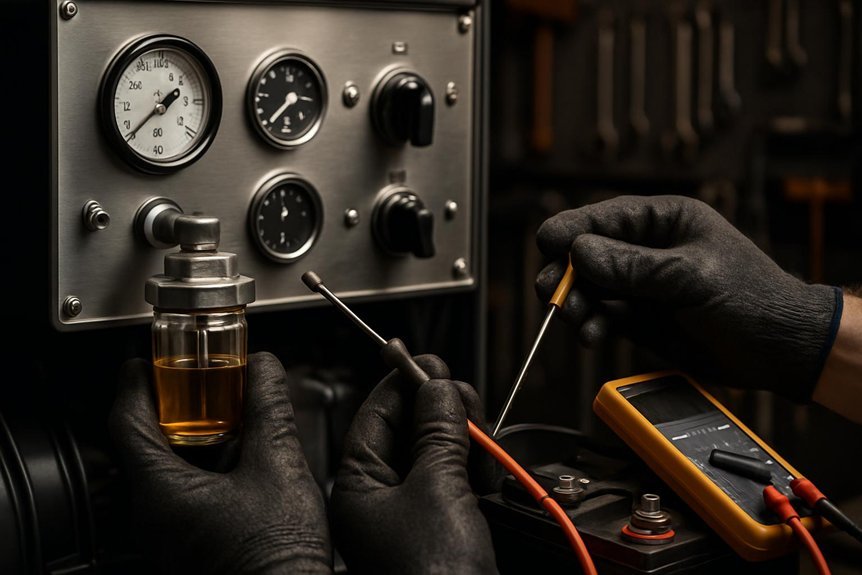
How do we keep fuel, oil, and batteries in peak shape day to day? We start with a quick, systematic routine that fits our generator maintenance checklist. Daily checks: confirm the fuel level, inspect for contamination or stale fuel, and note any odd odors or color changes. Assess fuel health by looking for water or sediment in the tank and drain if needed. For oil care, check dipstick readings, replace if low, and ensure the oil isn’t milky or sludgy. Batteries maintenance means clean terminals, test voltage, and verify no corrosion or loose connections. Log findings, top off fluids, and run a brief test cycle to verify operation. This disciplined cadence minimizes surprises and sustains reliability.
Weekly Inspection for Belts, Hoses, and Connections
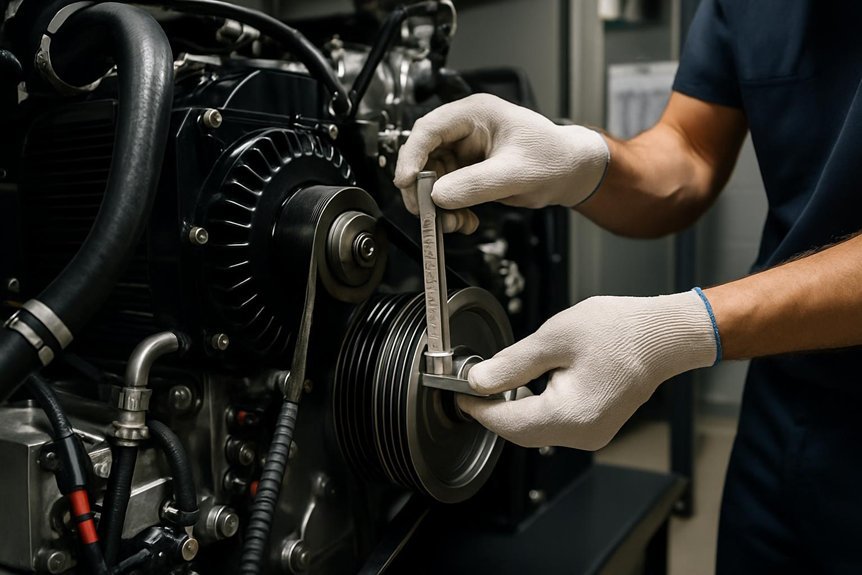
Why wait for a breakdown when a quick weekly check can prevent one? We approach belts, hoses, and connections with a methodical, hands-on mindset. We begin with belt tension, ensuring flex is smooth and that no glazing or cracks show. If the belt feels loose or glazed, we note the tension and adjust per spec, then recheck alignment. Next, inspect hose routing for kinks, routing against sharp edges, and signs of wear or oil contamination. Trace every hose from connection to service point, looking for cracks, abrasion, or loose clamps. Check connections for corrosion, secure clamps, and tightness. Verify that hoses aren’t rubbing on nearby components or pulleys. Document findings, replace damaged parts promptly, and reset any protective covers to prevent debris intrusion. Maintain clear, consistent records for next inspection.
Monthly Testing for Alarms, Transfer Switches, and Starting Systems
We’ll walk through monthly tests of the alarm system, transfer switch, and starting sequence to verify functionality and timing. We’ll confirm alarms trigger correctly, switches transfer as designed, and starting systems engage promptly under normal and simulated fault conditions. If any issue arises, we’ll document findings, note the exact steps, and schedule corrective actions.
Alarm System Checks
We start with a concise check of the alarm system to confirm reliability across monthly testing for alarms, transfer switches, and starting systems. We then verify audible and visible indicators, recording latching conditions and reset procedures. We test annunciators at the panel, ensure battery-backed alarms respond within spec, and confirm power loss notifications trigger promptly. We simulate a fault to confirm alarms initiate the appropriate alert, then restore normal status and log response times. We inspect wiring integrity, verify grounding continuity, and confirm that maintenance alarms are cleared after service. We review documentation for date stamps, technician initials, and any fault histories. We verify that audible beeps are distinct from background noise and that reset cycles don’t produce false trips. Finally, we update the maintenance log and prepare for next monthly checks.
Transfer and Start Validation
To validate transfer and starting functions, we perform a structured, monthly test that covers alarms, transfer switches, and starting systems in a stepwise sequence. We begin by verifying audible and visual alarm indicators, then confirm battery voltage and control power presence. Next, we simulate a utility outage and observe the transfer switch operation, noting transfer delay, contact integrity, and engine start readiness. We ensure starting systems engage without faults, checking cranking current, fuel timing, and auto-start sequencing. After return to normal, we recheck alarm reset and system lockouts. Document any anomaly, then reset test points and re-verify. If a finding seems irrelevant topic or off topic, we still log it for completeness and assess impact. This disciplined approach preserves reliability and facilitates scheduled maintenance.
Seasonal Fuel and Oil Management for Long-Term Protection
We’ll review seasonal fuel practices and long-term oil preservation to keep generators ready when you need them. We’ll cover fuel stability, additives, storage, and the best oils for extended dormant periods, plus how to rotate supply and monitor for contamination. By sticking to clear steps and checks, you’ll reduce degradation risk and extend equipment life.
Seasonal Fuel Best Practices
Seasonal fuel and oil management is essential for long-term protection, especially when fuel sits unused for extended periods. We’ve organized practical steps to keep fuel reliable and ready. First, inspect containers for cracks or leaks, and replace damaged seals. Then, stabilize fuel with a reputable additive according to label directions, mixing thoroughly. Store fuel in approved, labeled cans away from heat sources and direct sunlight. When seasonally unused, run the generator briefly to circulate stabilized fuel, then shut down and drain or stabilize again as recommended by the manufacturer. Maintain clean supply lines by replacing aged fuel filters and keeping a small inventory of fresh fuel for emergencies. Document dates of stabilization, storage, and inspections to ensure ongoing readiness. seasonal fuel and best practices guide our routine checks.
Long-Term Oil Preservation
As we’ve covered seasonal fuel and storage, we now turn our focus to Long-Term Oil Preservation to keep the generator’s internals protected during extended layups. We’ll preserve lubrication by selecting the right oil grade, adjusting for ambient temps, and ensuring clean, dry storage to prevent varnish and corrosion. This approach minimizes wear and sustains hydraulic cohesion, so startup is smoother.
- Use fresh, manufacturer-recommended oil with an appropriate viscosity for anticipated temperatures
- Run the engine briefly to circulate oil before storage, then idle operation periodically to maintain film
- Check for moisture, drain condensate, and seal openings to deter water ingress
- Implement noise reduction measures like proper exhaust and quiet mounting to reduce corrosion risk
Filter and Exhaust Care to Prevent Buildup and Clogs
Regular maintenance hinges on clear airflow and clean components, so we start with thorough filter and exhaust care to prevent buildup and clogs. We inspect, clean, or replace filters promptly, ensuring a snug seal and no airflow obstruction. For filter maintenance, we document runtimes and replacement intervals, checking for tears or collapsed media, then dispose of used parts safely. Next, we examine exhaust paths for leaks, obstructions, and carbon buildup, brushing away debris and vacuuming crevices with a soft attachment. We clear exhaust outlets and heat vents to maintain optimal flow, testing for proper backpressure. We verify seals on gaskets and housings, resealing as needed. Finally, we log findings, schedule the next cycle, and remind occupants that exhaust cleanliness protects performance and safety.
Battery Maintenance Steps to Maximize Reliability
We begin with a practical battery maintenance routine to maximize reliability: we inspect terminals for corrosion and secure connections, then clean with a non-abrasive solution and re-tighten fastenings to the manufacturer’s torque specs. We protect battery health by testing voltage, ensuring electrolyte levels are correct, and noting any abnormal readings. We perform preventive steps that reduce failure risk, focusing on corrosion prevention and clean, solid contact.
- Inspect terminals and cables for looseness and signs of corrosion; clean and reseal as needed
- Measure voltage under load and verify charge efficiency with a multimeter
- Check electrolyte levels and cap seals, topping as specified
- Document findings and schedule next check to sustain battery health
This routine emphasizes reliability, clarity, and repeatability.
Documentation and Scheduling: Building a Dependable Maintenance Calendar
How can we turn scattered notes into a dependable maintenance calendar that actually works? We start by consolidating every observation, reminder, and trigger into one central log. We map routine tasks to fixed dates, using a simple cadence: weekly checks, monthly inspections, quarterly tests, and annual overhauls. We establish standard durations, assign owners, and note success criteria to reduce ambiguity. Next, we track journal timing for each activity—record completion, anomalies, and timing drift—so patterns emerge and adjustments are immediate. We also formalize a spare parts inventory plan, listing critical items, reorder points, lead times, and minimum stock levels to prevent downtime. Finally, we review the calendar quarterly, updating priorities, dependencies, and reminders to keep the system lean and actionable.
Troubleshooting Signs That Show It’s Time for Professional Service
Dealing with generator issues early saves time and money, so recognizing clear signals that professional service is needed matters. We’ll look for clear trouble indicators that demand expert eyes, preventing costly downtime and safety risks. Signs include persistent starting fails, unusual noises, excessive smoke, or frequent surges under load. If performance dims during peak demand or weather constraints push the system, it’s a cue to diagnose with precision. We’ll outline concrete checks that guide decision-making before you reach significant downtime.
- Repeated hard starts or failure to reach full RPM
- Unexplained vibration, knocking, or routing leaks
- Black or blue smoke and temperature alarms
- Odd fluctuations in output or protection trip events
Frequently Asked Questions
How Often Should Generator Bearings Be Inspected for Wear?
We inspect bearings at least every 6 months, and more often if usage or conditions demand. Our bearing inspection emphasizes wear detection, lubrication checks, and mounting integrity, documenting findings and proactively scheduling maintenance before any wear threatens performance.
What Noise or Vibration Indicates Imminent Generator Failure?
Noise indicators include grinding, squealing, knocking, or rumbling, while abnormal vibration patterns show asymmetry, era‑clacking, or rapid amplitude shifts; these warn of imminent failure, so we inspect mounts, bearings, and electrical connections, then shut down safely if needed.
What Is the Recommended Practice for Battery Reconditioning?
We recondition batteries by testing voltage, sulfation levels, and capacity loss, then follow a documented cycle; studies show 15% efficiency gain from proper care. We also emphasize battery reconditioning with strict fuel additive safety and procedures.
How Can I Identify Unsafe Fuel Additives Risks?
Unsafe fuel additives risks arise when we smell fuel or notice engine misfires, so we test quality, check labels, verify supplier data, and track storage; unreliable fuel quality prompts us to switch suppliers and document each step.
When Should a Generator Be Professionally Serviced Beyond Routine Checks?
We should seek professional service whenever performance issues, unusual noises, or after extended use indicate wear; follow maintenance scheduling, documenting findings and timelines. We’ll coordinate with you, outlining scope, parts, labor, and safety considerations for reliable power.
Conclusion
We’ve laid out a practical, repeatable maintenance rhythm you can trust. By identifying critical duty, scheduling daily to quarterly checks, and centralizing everything in a calendar, you minimize downtime and extend asset life. Example: a facility that migrated from ad hoc checks to a structured calendar cut unscheduled outages by 40% in a year. Start with a simple milestone list, assign responsibilities, and log every action—your system’s reliability depends on consistent, disciplined execution.