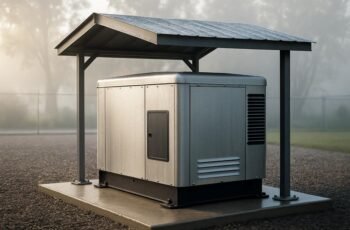
Did you know that a portable generator left unchecked can degrade by up to 40% in efficiency after just a year of idle use? We’ll guide you through a disciplined, season-by-season routine—starting with a thorough pre-use inspection, then fuel, oil, and air system maintenance, followed by battery and electrical checks, and finally off-season care—so you can keep it reliable when you need it most. Stay with us as we outline a clear plan you can implement now to prevent deterioration and ensure rapid recovery from any hiccup.
Key Takeaways
- Perform regular pre-use inspections of all structural, fuel, exhaust, and fluid systems to catch wear, damage, or corrosion early.
- Follow manufacturer maintenance schedules for fuel, oil, air, and filtration to ensure reliability and proper engine cooling.
- Maintain battery, spark plugs, and electrical wiring; test charging circuits and replace degraded components as needed.
- Use proper seasonal storage practices: stabilize fuel, dry, clean, lubricate moving parts, and store in a cool, dry location.
- Establish a rapid troubleshooting plan with documented steps, checklists, and a contact tree for emergencies and restart procedures.
How to Inspect Your Generator Before Each Use
Before each use, we perform a quick, systematic inspection of the generator to verify it’s in ready-to-operate condition and free of obvious issues. Our pre use inspection focuses on structural integrity, fasteners, and cord connections, ensuring no cracks, corrosion, or loose components exist. We check the fuel valve, battery status (if applicable), and electrical outlets for damage or moisture. We verify the exhaust path is clear and that preventive guards are intact. We assess fluids and hoses for leaks, cracks, or signs of wear. We confirm the recoil or starter system engages smoothly. We document any anomalies and address them promptly. Safety considerations guide our actions, including wearing eye protection and keeping the area ventilated. We conclude with a test run to confirm stable voltage, listening for abnormal sounds.
Perform Regular Fuel, Oil, and Air System Maintenance
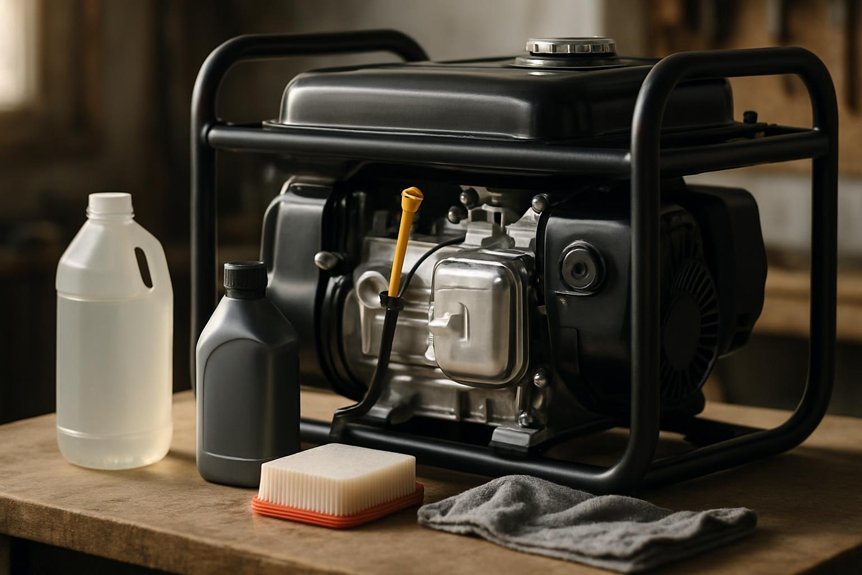
To keep a portable generator reliable, we perform systematic fuel, oil, and air system maintenance on a schedule that aligns with manufacturer guidance; this guarantees consistent performance and minimizes downtime. We begin with fuel stabilization, ensuring storage fuel remains free of phase separation and moisture for at least the advised period. We drain and replace fuel according to hours of operation or calendar intervals, and we add stabilizer as specified. For oil, we verify level, inspect for contamination, and perform oil filtration when needed to remove particulates. Air filtration receives direct attention: we inspect, clean, or replace the filter to maintain proper charge and cooling. We document all service events for traceability and future maintenance planning.
Battery, Spark, and Electrical Checks for Reliability
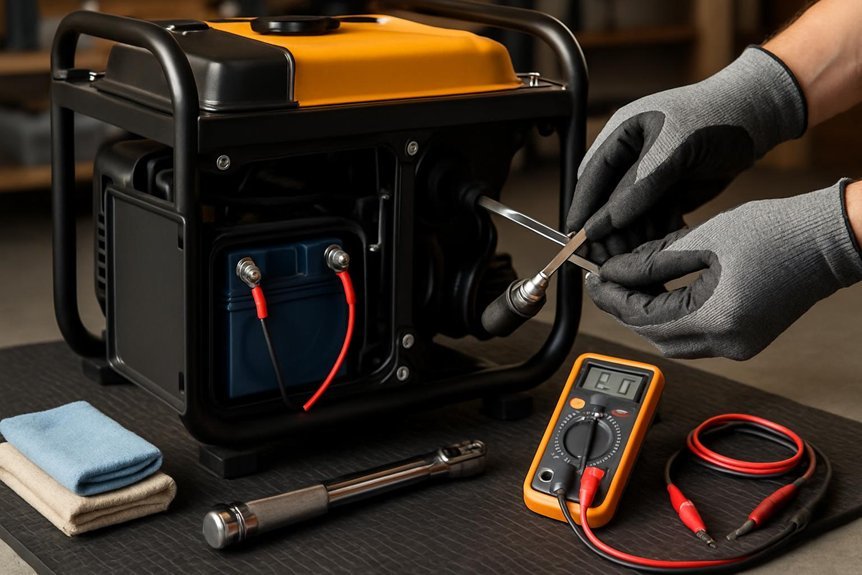
What’s the quickest way to guarantee a portable generator starts reliably and runs cleanly? We approach battery, spark, and electrical checks with a disciplined, stepwise method. First, we verify battery maintenance: inspect terminals for corrosion, clean with a wire brush, and ensure proper voltage with a multimeter per manufacturer spec. Next, we test the charging circuit and connections, confirming alternator output meets rated values and cables are intact. For spark checks, remove and inspect the spark plug(s); gap them to spec, and perform a spark test to confirm consistent ignition—no misfires. Inspect wiring harnesses for fraying, chafing, or loose connectors; reseat and secure all plugs. Finally, document results, replace degraded components, and establish a routine cadence to sustain reliability.
Seasonal Storage and Off-Season Care to Prevent Deterioration
Seasonal storage requires a disciplined, methodical approach to prevent deterioration; we start by establishing a clean, dry baseline before shutdown. We follow a defined sequence: inspect, clean, and dry all surfaces; drain or stabilise fuels as appropriate; disconnect accessories that may trap moisture. For seasonal storage, remove corrosion-prone components, lubricate moving parts, and apply a breathable, protective coating to metal finishes. Store upright in a cool, blackout-free location with minimal temperature fluctuations and low humidity. Off season care includes periodic inactivity checks: verify battery condition if applicable, test fuel integrity, and confirm oil levels remain within spec. Use manufacturer-recommended preservatives and sealants, and maintain a documented log. This approach ensures seasonal storage viability and preserves long-term reliability without unnecessary use or risk.
Troubleshooting and Readying for Emergencies With a Simple Plan
When trouble or outages strike, we shift from storage discipline to rapid, structured response. We present a concise, practical framework for emergency preparedness, built on a simple plan that you can follow without delay. Our approach emphasizes quick diagnostics, prioritized actions, and clear communication with stakeholders. We verify fuel, oil, and spark for reliability, then deploy essential safety checks, load management, and restart procedures. Documentation is kept current, with a checklist and a contact tree to reduce confusion during stress. The table below illustrates the core steps, responsibilities, and timing, helping you visualize progress and stay aligned with best practices.
| Step | Responsibility | Timing |
|---|---|---|
| Step 1 | Verify essentials | Within 15 minutes |
| Step 2 | Assess safety | Within 5 minutes |
| Step 3 | Initiate restart | Within 20 minutes |
| Step 4 | Communicate status | Ongoing |
Frequently Asked Questions
How Often Should I Run a Generator Under Light Load?
We should run it under light load about once a week for 20–30 minutes to keep internal components lubricated and test the system. This long term maintenance practice establishes a steady generator usage cadence and reliability.
What Gauge of Fuel Stabilizer Is Best?
We recommend a fuel stabilizer appropriate for ethanol blends as a preventative measure, using the manufacturer’s guide; our approach ensures fuel stabilizer is mixed per instructions, and oil mixed ratio remains accurate for optimal performance.
Can I Store a Generator With Fuel in It?
We can’t store a generator with fuel in it; drain fuel, run carbureted systems dry, then store. For storage safety, follow fuel handling protocols, ventilate, and disconnect batteries to reduce condensation and corrosion risks.
How Long Can Battery Life Last in Storage?
We can expect battery life to last months in storage, depending on maintenance scheduling and storage conditions, with fuel stability and corrosion prevention key; we monitor battery degradation, implement cold weather storage guidelines, and adjust generator storage protocols regularly.
What Loudness Level Is Safe for Household Use?
Loudness limits: we suggest staying under 60 decibels for household usage. We assess safety, sensitivity, and sound management; we advise precise measurement and monitoring. We prioritize loudness safety, household usage, and consistent, prudent usage.
Conclusion
We’ve laid out a precise, methodical approach to keeping a portable generator reliable year after year. By inspecting before each use, maintaining fuel, oil, and air systems, checking batteries and electricals, and giving seasonal care, you minimize downtime and extend life. When issues arise, follow a clear troubleshooting plan and restart procedure. Think of your routine as a well-tuned engine: every part synchronized, each task a cog that keeps the whole system running smoothly under pressure.