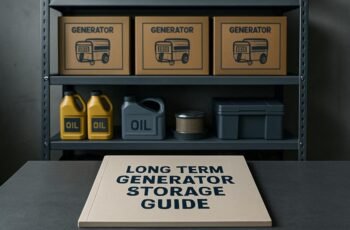
We pursue generator longevity with a disciplined, data-driven routine. We’ll align maintenance cadences to manufacturer guidance, monitor fluid quality, and follow a conservative oil and filter schedule based on load, runtime, and conditions. We’ll log every inspection, review trends monthly, and trigger condition-based actions. Prioritizing fuel integrity, cooling, lubrication, and electrical reliability keeps critical subsystems intact, and we’ll validate safety tests and post-repair performance before we push further.
Key Takeaways
- Establish a proactive maintenance cycle with condition-based triggers for fluids, filters, and electrical integrity to maximize uptime and long-term performance.
- Define fixed oil/change cadences based on load, runtime, and ambient conditions; verify level and quality at every service.
- Implement centralized logs with timestamps for inspections, run-time counters, and battery health; review monthly for trends and action triggers.
- Prioritize critical subsystems (fuel integrity, cooling, lubrication, electrical reliability) with standardized tests and benchmark verification.
- Conduct safety and load testing under real conditions, document outcomes, and ensure repeatable, traceable results to inform calibrations and intervals.
Identify Your Generator’s Longevity Priorities
Identifying your generator’s longevity priorities starts with a clear set of goals. We align our plan to maximize uptime, reliability, and long-term performance, then translate those aims into actionable steps. First, we map operating conditions—load profiles, ambient temperature, and duty cycles—to identify stress points impacting generator longevity. Next, we define acceptance criteria for failures you’ll tolerate, balancing downtime costs against component life. We adopt a maintenance mindset that emphasizes proactive checks over reactive fixes, focusing on lubrication, filtration, and electrical integrity as anchors. We quantify risk tolerance to prioritize critical subsystems and document performance baselines for early anomaly detection. Finally, we establish review cadences and communication paths so every stakeholder shares the same expectations and standards.
Schedule Regular Maintenance Milestones
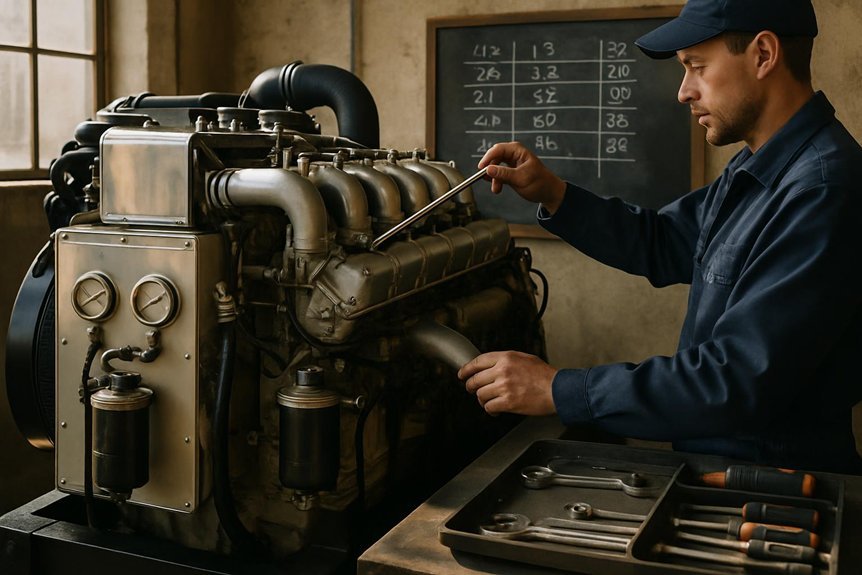
We schedule tougher checkups and set clear regular milestones to track generator health. By recording each milestone, we create a precise maintenance log that guides future inspections. This disciplined approach helps us anticipate issues before they impact performance.
Schedule Tougher Checkups
Schedule tougher checkups by anchoring them to clear milestones and predefined intervals. We approach generator maintenance as a structured cycle, not a single event. We establish a cadence that pairs routine diagnostics with condition-based triggers, so deviations are caught early. We document each milestone, track performance metrics, and adjust timing as needed to support longevity planning. Our checks emphasize critical subsystems: fuel integrity, cooling efficiency, lubrication quality, and electrical reliability. We standardize test procedures, use calibrated tools, and verify fuel and oil sample results against benchmarks. Any anomaly prompts a deeper inspection before it ripples into downtime. This disciplined cadence reduces surprise failures, optimizes maintenance spend, and keeps reliability high. We communicate findings clearly, empowering ongoing stewardship of the asset.
Record Regular Milestones
What milestones matter most, and how do we capture them consistently? We document and synchronize every maintenance checkpoint, aligning the schedule with manufacturer recommendations and historical performance. We establish a centralized log that timestamps inspections, fluid levels, filter changes, battery health, and run-time counters, then review monthly for trends. We set clear pass/fail criteria and trigger actions before issues escalate. We integrate milestone data into our maintenance budgeting process, ensuring funds align with anticipated parts, labor, and downtime costs. We standardize data entry to reduce variance and enable quick comparisons across units and sites. For storage, we apply best practices: track exposure, moisture, and corrosion potential; store spare parts and consumables in labeled, orderly bins. This disciplined approach sustains reliability and predictability.
Perform Thorough Oil and Filter Protocols
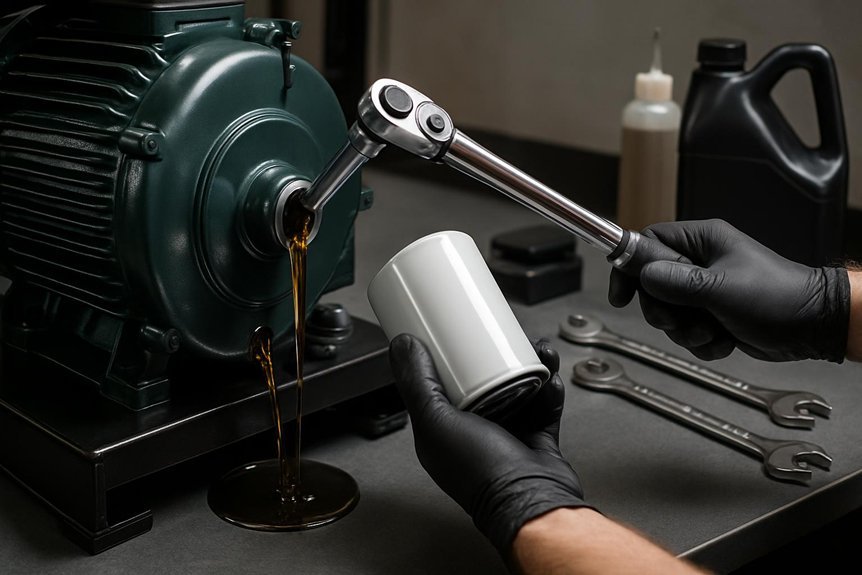
We perform a disciplined oil change cadence, align it with engine load, and verify change intervals against operating conditions. We assess filter quality regularly, replacing filters when micron capture or flow indicators warrant, to maintain clean lubrication. We implement a contaminant monitoring protocol to detect moisture, particulates, or fuel intrusion early and prevent long-term wear.
Oil Change Cadence
Oil changes are the backbone of longevity for a generator, so we establish a precise cadence and thorough protocols for both oil and filter. We define maintenance intervals based on load, runtime, and ambient conditions, then apply a fixed schedule to avoid guesswork. Our approach favors a conservative cadence that minimizes wear while maximizing protection, with explicit milestones for oil changes and filter replacements. We select oil viscosity aligned with engine spec and seasonal demands, adjusting only when manufacturer guidance or real-world performance warrants it. We verify oil level and condition at each service, discarding contaminated oil promptly. Documented records ensure traceability, enabling trend analysis and proactive adjustments. This disciplined cadence yields consistent lubrication, reduced engine stress, and extended generator life.
Filter Quality Checks
Filter quality checks are the next step after establishing our oil-change cadence; we’ll apply the same disciplined approach to verify filtration performance. We inspect filter suitability, seal integrity, and installation torque, then confirm oil cleanliness meets spec. We track pressure differentials, filter age, and replacement intervals to ensure reliability within generator maintenance plans. Our aim is to detect bypass, leaks, and contamination risk early, preserving longevity planning goals. We document findings, calibrate routines, and adjust maintenance calendars accordingly. This focused protocol minimizes downtime and maximizes mean time between failures. It’s practical, repeatable, and asset-specific, aligning with our maintenance philosophy.
| Step | Action | Outcome |
|---|---|---|
| Inspect | Visual seal check | Prevents leaks |
| Validate | Torque, fit | Ensures seal integrity |
| Monitor | Differential, color | Confirms cleanliness |
| Record | Log, schedule | Improves planning |
Contaminant Monitoring Protocol
Contaminant monitoring hinges on a disciplined, end-to-end protocol that starts with sampling and ends with actionable maintenance actions. We approach ignition risks and wear by standardizing oil and filter procedures, documenting results, and enforcing traceable steps. We systematically collect oil samples at defined intervals, inspect filters for differential pressure, and record particulates, moisture, and fuel traces. We pair sampling with sensor calibration checks to verify measurement accuracy, scheduling calibration after maintenance windows or field shocks. When anomalies appear, we isolate sources, reseal connections, and replace compromised components promptly. Our protocol emphasizes cleanliness, proper handling, and waste containment to prevent cross-contamination. Regular trend analysis guides replenishment, filter changes, and oil type selection aligned with generator contamination risk and service life.
Inspect and Clean the Air and Fuel Systems
Have you checked the air and fuel paths lately to guarantee consistent performance? We start with a calm audit of the air intake route, removing debris and confirming seals are intact. Next, we inspect the fuel line for kinks, leaks, or deterioration, guarding against restrictions that sap power. We replace or service filters according to spec, noting fuel filtration efficiency and replacement intervals. We inspect fittings for tightness and corrosion, testing for vacuum or pressure drops that flag blockages. We test the fuel pump’s operation without strain, listening for unusual noise. After inspection, we clean surfaces to prevent buildup and reattach components with correct torque. We document findings, schedule next checks, and ensure the system remains free of contaminants.
Check Cooling, Exhaust, and Electrical Components
We begin by verifying the cooling, exhaust, and electrical systems to prevent overheating and guarantee reliable operation. We inspect radiator or fan setups, coolant levels, hoses, and thermal sensors for signs of leakage or wear. Next, we assess cooling efficiency by checking airflow, fin cleanliness, and thermostat function, correcting obstructions and replacing worn components as needed. We listen for abnormal exhaust noise, identify sources like loose mounts, exhaust clamps, or damaged manifolds, and remedy promptly. We examine wiring, battery connections, and fuses, ensuring secure terminals and proper insulation. We test relays and switches for consistent engagement without arcing. All measurements and observations are documented, and corrective actions are prioritized to minimize downtime and extend generator life, without compromising safety or performance.
Test Safety Features and Load Handling
How do safety features perform under load, and can the system sustain expected demand without fault? We assess safety testing under real load conditions, focusing on response times, trip thresholds, and fault isolation. Our approach verifies that protective circuits activate promptly and that shutdowns prevent damage without cascading failures. We evaluate load handling by applying staged loads that mimic peak combined heat, voltage, and current stresses, ensuring alarms trigger as designed and redundant paths remain isolated. Data is logged for repeatability, and we validate that emergency stops, overcurrent protections, and temperature limits operate within spec. Results guide adjustments, calibrations, and maintenance intervals to sustain reliability and safety.
- Safety testing outcomes under varying load levels
- Confirmed trip accuracy and fault isolation
- Documentation for ongoing load handling validation
Optimize Fuel Storage and Stabilization Practices
Optimizing fuel storage and stabilization practices is essential to maintain system reliability and safety under variable operating conditions. We approach fueling as a controlled process, not an afterthought. First, we protect against moisture and contaminants by using sealed containers, proper filtration, and clean transfer procedures. Next, we implement a consistent fueling cadence to avoid prolonged storage cycles that degrade quality. Stable temperature, minimized exposure to air, and routine testing preserve fuel integrity, enabling reliable fueling when demand spikes. We label and track batches, rotate stocks, and follow manufacturer guidelines for additives and approved fuels. Periodic on-site audits verify containment, venting, and spill controls. Together, these measures extend life, reduce downtime, and support storage stabilization and dependable generator performance.
Plan Part Replacements and Component Upgrades
While monitoring performance, we plan part replacements and component upgrades proactively to minimize downtime and extend system life; when indicators reach predefined thresholds, we schedule upgrades to maintain reliability. Our approach centers on maintenance scheduling that aligns with operating cycles and manufacturer guidance, ensuring parts are swapped before failure risks escalate. We document historical wear, anticipate future needs, and validate compatibility with existing controls. We prioritize upgrades that yield measurable reliability gains while controlling total cost of ownership. Communication with operators remains clear, concise, and timely to minimize surprises during maintenance windows. This discipline keeps the generator responsive to load changes and environmental conditions without overservicing.
Maintain proactive maintenance cadence to boost reliability and minimize downtime.
- Establish replacement cadence based on data trends
- Track compatibility and firmware updates for control systems
- Schedule outages to minimize production impact
Troubleshooting Quick Fixes and When to Call a Pro
We start with quick, practical checks to distinguish minor faults from symptoms that require professional intervention. We present a concise techniques overview: first, verify fuel quality, air filters, and battery connections; then inspect belts, hoses, and mounting for wear. If basic cleanup or reseating connectors fixes the issue, document findings and monitor performance. If signs persist—unusual noises, vibration, reduced output, or intermittent starting—pause and escalate. Conduct a structured risk assessment: isolate the load, confirm proper cooling, and check safety interlocks. Do not bypass guards or operate at abnormal temperatures. For electrical faults, avoid voltage or continuity tests beyond nominal troubleshooting; consult a pro for calibration or complex diagnostics. We guide you to reserve professional service for uncertain or high-risk conditions to protect longevity and safety.
Frequently Asked Questions
How Often Should I Replace Spark Plugs for Longevity?
We replace spark plugs every 30,000 to 100,000 miles depending on model; we inspect for wear and gaps. For longevity driveability, we use high-quality plugs and torque correctly, checking timing and ignition system for optimum performance.
What’s the Ideal Oil Type for Extended Generator Life?
We recommend synthetic 5W-30 or 10W-30 high-quality oil, aligning with your maintenance schedule, to reduce engine wear signs; monitor oil quality and temperature effects, replace spark plug as needed, and consider accessories for longevity to curb engine wear.
How Can I Detect Internal Engine Wear Signs Early?
We flag early warning signs and engine wear by listening to odd knocks, changes in oil color, abnormal temps, and declining power. We, readers, monitor gauges deliberately, inspecting bearings, pistons, and belts, documenting data before failures strike.
Which Accessories Best Extend Overall Generator Longevity?
We prioritize precision testing and fuel stabilization to extend longevity, reader. We recommend high-quality filters, battery maintainers, and corrosion-resistant wiring, plus regular inspection intervals; we monitor oil, coolant, and spark timing to guarantee consistent performance and durability.
How Do Temperature Changes Affect Long-Term Reliability?
Temperature changes undermine long-term reliability: temperature stability matters, heat cycles stress parts, and lubrication quality governs wear indicators. We notice coincidences: gradual shifts align with failure hints, so we monitor, log, and adjust operation to protect longevity.
Conclusion
We’ve laid out a methodical, data-driven plan to keep your generator reliable and long-lasting. By tracking fluid quality, scheduling based on load and ambient conditions, and prioritizing fuel, cooling, lubrication, and electrical integrity, we turn maintenance into a proactive discipline. Keep a centralized log, review trends monthly, and trigger condition-based actions. Think of your assets as a well-tuned orchestra; when each instrument plays in harmony, longevity follows.