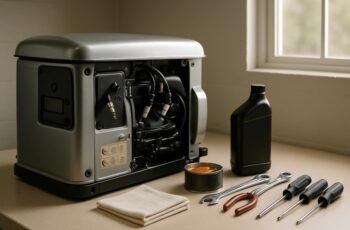
We’ll walk through winter generator storage with you, mapping duty cycles to size, verifying unit profiles against expected loads, and estimating runtime under cold-fuel conditions. We’ll cover fuel stabilization, oil viscosity, and battery conditioning, plus keeping batteries warm and dry. Moisture control, vented enclosures with silica gel, and corrosion checks matter. We’ll outline monthly quiet runs, line inspections, and water drains. Document every check and use approved parts, so surprises don’t derail you when the next storm hits.
Key Takeaways
- Assess winter storage by mapping duty cycles, outages, and startup timing to ensure capacity and runtime align with cold-weather needs.
- Prepare fuel, oil, and batteries: stabilize fuel, check oil viscosity, condition terminals, and store batteries in warm, dry spots.
- Use moisture-control and vented, weatherproof enclosures to prevent condensation and corrosion; rotate vents and add silica gel packs.
- Establish practical cold-start routines: verify fuel stability, ensure oil pressure, perform deliberate cooldown, and schedule monthly test runs.
- Follow a quick winter troubleshooting checklist: verify battery and fuel, test choke and idle control, run a brief load test, and document all actions.
How to Assess Your Winter Generator Storage Needs
Assessing your winter generator storage needs starts with a clear picture of how you’ll actually use the unit. We’ll map duty cycles, outages, and startup timing to inform capacity decisions. First, determine capacity by listing expected load and peak surges, then verify if your unit’s rating matches that profile. Next, estimate runtime under realistic winter fuel conditions to avoid empty tanks mid‑storm. Consider cold weather considerations that affect performance, such as reduced battery output and thicker lubricants, and plan accordingly. Fuel stabilization becomes essential for prolonged storage, while battery conditioning ensures dependable starts after cold spells. We’ll document these factors, translate them into a practical storage plan, and set maintenance checkpoints so you’re prepared, not surprised, when winter tests or outages arrive.
Prep Steps to Protect Fuel, Oil, and Batteries in Cold Weather
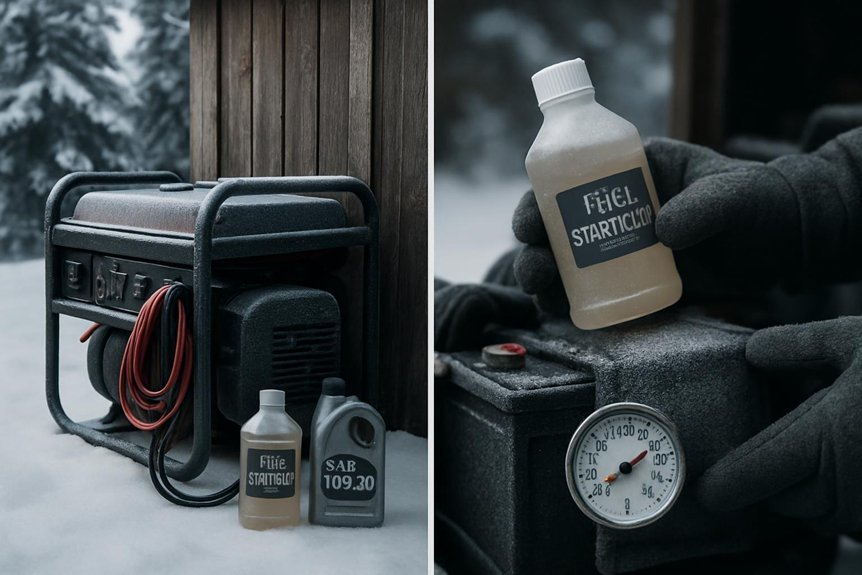
We’ve mapped out how winter conditions can affect your generator’s performance, and now it’s time to shield the heart of the unit: fuel, oil, and batteries. We’ll focus on practical prep steps you can take now. Start with fuel stabilization: top off with clean fuel, add stabilizer, and run the engine briefly to circulate it. For oil, check viscosity recommendations for cold starts and change if needed; ensure level is within marks. Battery conditioning matters too: clean terminals, test a healthy charge, and disconnect if long idle periods loom. Keep batteries in a warm, dry spot, away from freezing temps, and apply a charger periodically. Finally, inspect fuel lines for cracks and replace aging components before cold snaps bite.
Safe Storage Practices to Prevent Moisture and Corrosion
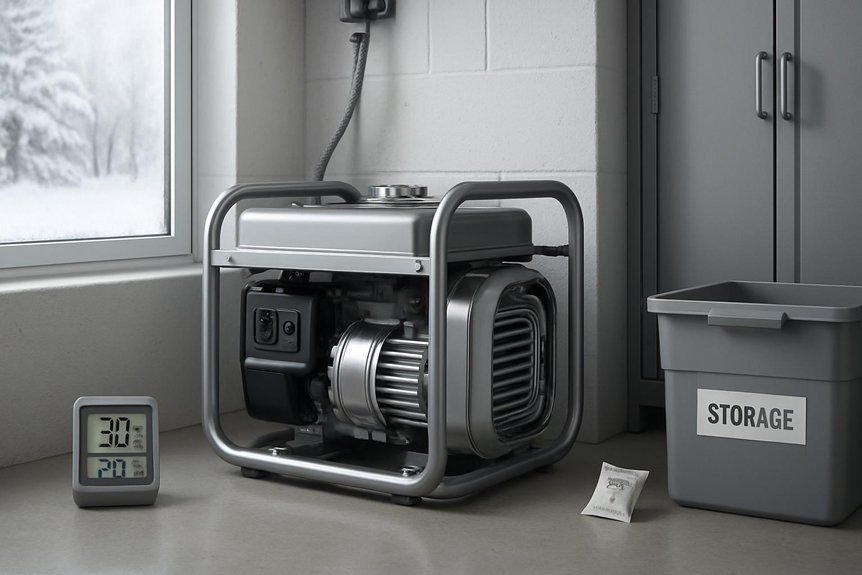
Could moisture and corrosion threaten your generator when it’s stored? Yes—if we don’t lock down safe storage. We’ll prioritize moisture control, seal gaps, and keep air dry. A weatherproof enclosure helps, but it must be vented to prevent condensation. Clean surfaces, apply corrosion prevention spray, and remove moisture-prone components before long storage. Check seals, lids, and wire connections for rust hints. Rotate vents, use silica gel packs, and store off the floor on shelves. Regularly inspect for leaks and damp patches.
| Area | Action | Result |
|---|---|---|
| Enclosure | Weatherproof with ventilation | Reduces moisture buildup |
| Surfaces | Clean, apply corrosion prevention | Prevents rust |
| Environment | Silica gel, off-floor storage | Controls humidity |
Practical Cold-Start and Maintenance Routines Before Snow
Cold starts demand a quick, dependable routine to prevent winter surprises. We’ll walk you through practical steps that keep your generator ready, without guesswork. First, we check fuel stability, ensuring the line is clean and yesterday’s fuel isn’t forming varnish. We’ll run the engine briefly to confirm oil pressure and temperature rise smoothly, then extinguish before fatigue sets in. We perform a deliberate cooldown and inspect for leaks, cracks, or loose connections. We’ll top off additives only as recommended, mindful of fuel stability and potential winterization pitfalls. Battery health gets a high-priority check; terminals clean, charge maintained, and electrolyte levels verified. Finally, we schedule a quiet monthly run to verify operation and sound cooling. This disciplined routine reduces surprises and preserves performance.
Quick Troubleshooting Checklist for Winter Readiness
As we finish up our winter prep routines, we’re ready to tackle quick troubleshooting that keeps your generator reliable when temperatures drop. We focus on the core failure modes that most commonly derail cold starts and operation, so you can act fast and minimize downtime. Be mindful of warranty implications—document checks and repairs, and use approved parts.
1) Confirm battery charge and clean terminals to prevent hard starts.
2) Inspect fuel quality, drain water, and refresh stabilizer for winter storage.
3) Test the choke, surge limit, and idle control to prevent stalls.
4) Verify outlets and circuit protection, then run a brief load test.
Frequently Asked Questions
How Long Can a Generator Sit Unused in Winter Without Issues?
We can’t let it sit unused too long; typically, a winter idle should be limited to 30 days with proper fuel stabilization. We maintain generator maintenance and fuel stability, periodically testing, and ensuring battery and oil levels stay optimal, using the best possible performance.
What Fuel Additives Prevent Gelling in Extreme Cold?
We prevent fuel gelling with fuel stabilizers and choosing proper fuel additives; they protect fuel in extreme cold and improve fuel efficiency, letting us start reliably while avoiding varnish and clogging even when temperatures plummet.
Can I Store a Generator Outdoors in Freezing Temperatures?
Yes, we don’t recommend it: outdoor storage in freezing temperatures risks fuel damage and corrosion. We’ve seen 1 in 3 generators fail after cold starts. We’ll prioritize electrical safety and protect from moisture when storing outdoors.
Do Cold Starts Require Special Priming or Chokework?
We answer: cold starts don’t require special priming beyond normal priming requirements, and choke operation is standard. We’re concerned and precise, guiding you: follow manual, don’t rush, check fuel, carbs, and battery before starting, then test carefully with supervision.
How Often Should I Run a Generator During Prolonged Storage?
We treat maintenance like a seasoned compass: we run the generator weekly during storage, then schedule maintenance at milestones, storage best practices followed, to keep readiness intact. We stay concerned, precise, practical, and guided with you.
Conclusion
We’ve mapped your winter readiness step by step, and you can trust our plan to keep the generator reliable when you need it most. With careful sizing, steady fuel, oil, and battery conditioning, and thoughtful moisture control, you’ll dodge mid-storm failures. Follow the monthly quiet run and storage checks, keep parts approved and documented, and stay ahead of corrosion and cold starts. In short, we’ve got it covered—don’t bite off more than you can chew, stay prepared.