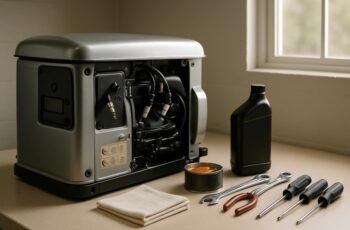
Last winter, we stored a portable generator in a dry shed away from living spaces, but we learned that good ventilation and fuel stabilization matter more than size or location. We’ll guide you through a careful, rule-based approach to safe storage, from drainage and oil changes to securing covers and documenting maintenance. If we’re thorough now, we’ll avoid costly mistakes and ensure a reliable restart when you need power again—but there are critical steps you shouldn’t skip, so let’s proceed with care.
Key Takeaways
- Cool the unit, drain or stabilize fuel, and check for leaks; secure oil and cap to prevent air ingress before storage.
- Store in a dry, well-ventilated area with clear access, away from living spaces and heat sources.
- Use approved fuel containers, label clearly, rotate stock, and run engine briefly to distribute stabilizer if used.
- Protect with breathable covers, use secondary containment, keep vents clear, and elevate on level non-slip pads.
- Disconnect accessories, perform quick-start checks, and document any anomalies after storage and prior to next use.
How to Cool and Drain a Portable Generator Safely
To cool and drain a portable generator safely, we start by letting the engine run until it reaches a stable idle and the exhaust cools, then shut it off and disconnect any loads. We next allow the unit to cool further for roughly 15 minutes, minimizing the risk of burns. Our cooling techniques focus on safe air flow and a level surface, avoiding heat buildup beneath the housing. For draining procedures, we place a tray beneath the drain plug, remove the cap slowly, and let oil drain completely before reinstalling. We inspect for leaks, wipe spills, and replace the cap to avoid air ingress. We never bypass safety guards. Finally, we store drained units only after confirming coolant levels and manufacturer guidance are followed.
Choosing a Storage Location: Ventilation, Moisture, and Security
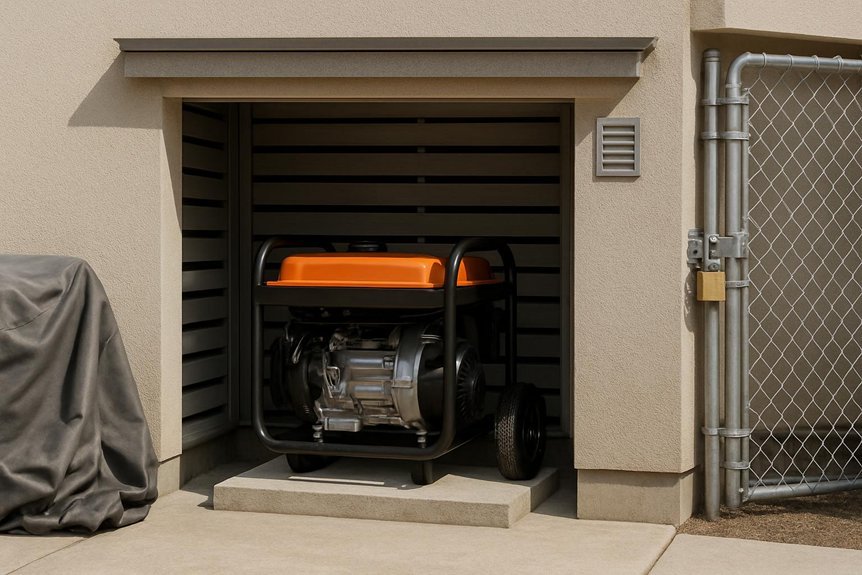
Where should you store your portable generator for maximum safety and longevity? We choose a dry, well-ventilated location away from living spaces, doors, and vents to minimize exposure to exhaust and fumes. Prioritize airflow that avoids stagnation; clearance around the unit should meet manufacturer guidelines, with ventilation considerations as a central criterion. Keep the area free of moisture, spills, and condensate by elevating the unit on a stable surface and using drip pans if needed. Protect it from weather while ensuring accessibility for startup and maintenance. Implement security measures that deter theft and tampering—lockable storage, sturdy enclosure, and monitored access. Finally, maintain a clear, organized space, documenting placement, inspections, and safety checks for ongoing compliance.
Fuel Handling and Reservoir Management for Long-Term Storage
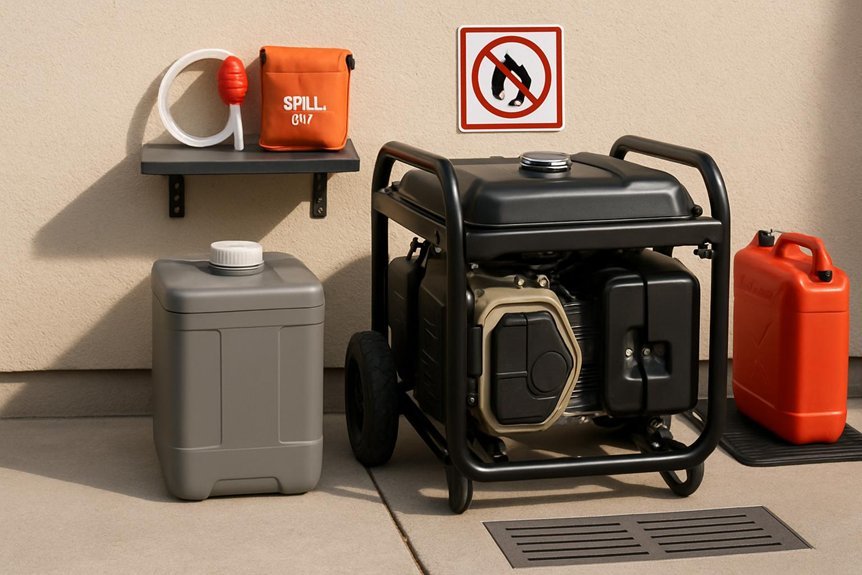
Fuel that sits in a portable generator’s tank or in its carburetor bowls can degrade, foam, or varnish over time, so we drain, stabilize, or refill as part of long‑term storage. We begin by confirming fuel compatibility with the engine’s design and local regulations, then choose a quality stabilizer that matches the fuel type. For gasoline, add the recommended stabilizer proportion and run the engine briefly to circulate. For ethanol blends, prioritize stabilizers formulated for ethanol and consider a partial fill to minimize air. Store stabilized fuel in approved containers, clearly labeled, and keep containers away from heat sources. Document dates and rotate stock as needed, and periodically inspect for sediment, moisture, or cloudiness that signals replacement is prudent. Prioritize fuel stabilization practices to preserve performance.
Protective Covers, Containment, and Corrosion Prevention
Should we shield your generator from environmental threats with purpose-built covers and containment? We say yes, and we approach this systematically. Protective covers guard against dust, moisture, UV, and debris; choose breathable fabrics rated for outdoor use and ensure vents don’t trap heat. Containment prevents fuel leaks from reaching soil or water, using secondary containment pans, sturdy shelving, and spill-kerb setups. We position units on level, non-slip pads to minimize tipping and vibration, with clear access for ventilation. Corrosion prevention hinges on dry storage and minimal exposure to condensate; we remove dead batteries, wipe metal surfaces, and apply a light protective coating where appropriate. Fuel handling remains critical—inspect lines, seal caps, and store fuel away from heat sources to reduce risk.
Maintenance Checklists Before Storage and Quick-Start After Storage
We begin with a concise maintenance checklist to perform before storing a portable generator, then outline a quick-start protocol for restart after storage. First, drain fuel or add stabilizer, run engine to distribute stabilizer, and replace oil per manufacturer specs. Check air filter, spark plug gap, and battery condition; clean cooling vents and rust-prone surfaces. Confirm fuel shutoff, choke position, and oil level, ensuring no leaks. Disconnect accessories and store in a dry, ventilated area away from heat. For quick start procedure after storage, reconnect fuel, inspect for corrosion, and pull the starter cord or engage the electric start until ignition occurs, then idle briefly to stabilize. Re-test load connections, then resume normal operation, documenting any anomalies for future maintenance.
Safety and Liability: Safeguarding Your Home and Family While Stored
Safeguarding your home and family starts long before you use a portable generator: it begins with deliberate placement, secure storage, and clear household routines that minimize risk. We establish strict boundaries for when and where the generator lives, away from doors, vents, and damp areas, with a stable surface and proper ventilation. We implement lockable enclosures, fuel separation, and clearly labeled shutoffs. We perform regular safety drills with all household members so everyone knows who does what during tests, outages, or emergencies. We document liability coverage details, including who’s responsible for maintenance and incident reporting. We enforce no unauthorized use, mandatory fuel discipline, and immediate repair of damaged cords. We review procedures annually to ensure compliance, reduce exposure, and protect lives and property.
Frequently Asked Questions
How Long Can You Safely Store a Generator Without Moving It?
We can store it safely for about 12 months if we follow routines, avoiding rust and battery maintenance remains critical; we regularly inspect, rotate, and start it briefly to keep fluids circulated while keeping it dry and sheltered.
What’s the Best Way to Label and Inventory Stored Units?
We label and inventory stored units using labeling conventions and inventory tagging, ensuring each generator has a unique ID, location, date, and condition. We maintain a centralized log, review quarterly, and enforce standardized naming for quick audits.
Can You Store a Generator With a Dead Battery?
Yes, we can, but not safely—leaving a dead battery in a generator is like inviting corrosion. We’ll perform generator maintenance first, remove the dead battery, and arrange proper battery disposal before storing to prevent damage.
Is a Generator Allowed in Apartment Storage Spaces?
We can’t guarantee generator placement in apartment storage spaces; use only compliant, dedicated outdoor areas. We’ll follow generator safety rules and storage compliance guidelines, verifying local codes, landlord policies, ventilation, fuel handling, and fire suppression before any use.
What Are Signs of Fuel Degradation During Long-Term Storage?
Do you know what signs of degradation look like? We notice varnish, gum, or smells signaling fuel degradation during long term storage risks. We’ll inspect, drain, and refresh fuel to prevent engine damage and corrosion.
Conclusion
We treat storage like tending a quiet lighthouse on shore: steady, deliberate, and vigilant. We keep the generator dry, ventilated, and away from homes, its fuel tamed and fault-free like a guarded beacon. We log every check, seal every risk, and rotate our stock as a prudent crew would. When storms pass, we find it ready—quiet, reliable, and protected—so our family remains safe, and our power is there, calm and certain, whenever we need it.