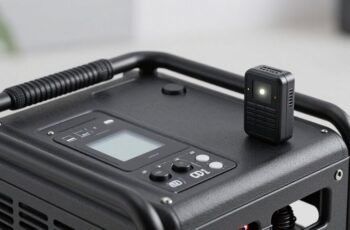
Selecting the appropriate portable generator within the 1,000 to 5,000-watt range requires a clear understanding of your specific power demands. Accurate calculations of your essential appliances’ starting and running wattages are critical to guarantee reliable operation without overloading or underpowering your setup. As we explore the different capacity options, we’ll highlight key considerations that can influence your choice, ultimately helping you make an informed decision tailored to your needs.
Key Takeaways
- Calculate total startup and running wattages of all devices to determine the minimum generator capacity needed.
- Match generator size to specific needs: 1,000–2,000W for small appliances, 3,000–4,000W for home use, up to 5,000W for heavy-duty tasks.
- Prioritize essential devices and add surge capacity to avoid overload during startup.
- Select generators with safety features, multiple outlets, and fuel efficiency for reliable long-term use.
- Ensure capacity is slightly above calculated load to maintain performance and accommodate future power needs.
What Size Portable Generator Do You Need for 1,000 to 2,000 Watts?

When selecting a portable generator for tasks requiring 1,000 to 2,000 watts, it’s vital to take into account the specific appliances and devices you’ll need to power. We recommend choosing a generator with a continuous wattage rating slightly above your total load to guarantee reliable operation and prevent overloads. For example, if you plan to run small appliances, lights, or a refrigerator, calculate their combined starting and running wattages. Typically, a generator in the 1,200 to 2,000-watt range suffices for these needs. Prioritize models with stable power output, sufficient outlets, and safety features like overload protection. Accurate power assessment assures the generator can handle your essential devices efficiently without risking damage or interruption.
How to Determine if a 2,000 to 3,000-Watt Generator Fits Your Power Needs
To determine if a 2,000 to 3,000-watt generator meets your needs, we must accurately assess the combined running wattage of essential appliances. It’s also critical to account for surge and startup loads, which can temporarily exceed running wattages during device startup. This guarantees the generator can handle both continuous operation and initial power demands effectively.
Essential Appliance Power Needs
Determining whether a 2,000 to 3,000-watt generator can meet your essential appliance needs requires calculating the combined wattage of the devices you plan to operate. Start by listing each appliance, noting its running (rated) wattage, which is usually specified on the label or in the user manual. Sum these wattages to establish your total continuous power requirement. Focus on critical devices such as refrigerators, lights, communication equipment, and small medical devices. Avoid including surge wattages at this stage, as these are addressed separately. Ensuring the total does not exceed the generator’s rated capacity guarantees consistent operation. This precise calculation helps determine if a 2,000 to 3,000-watt generator provides sufficient power for your essential appliances, avoiding overloads and ensuring reliable performance.
Surge and Startup Loads
Surge and startup loads are critical factors in evaluating whether a 2,000 to 3,000-watt generator can meet your power requirements, as many appliances draw considerably higher wattage during initial startup. This transient surge can be two to three times the appliance’s running wattage, potentially exceeding the generator’s rated capacity if not properly accounted for. To determine if a generator suffices, identify the startup wattage of each device—often listed on labels or in manuals—and compare the highest surges to the generator’s surge capacity. Prioritize appliances with high startup wattages, such as refrigerators or power tools, ensuring the combined surge loads stay within the generator’s peak output. Properly evaluating these loads guarantees reliable operation without overloading or damaging the generator.
Choosing a 3,000 to 4,000-Watt Generator for Home Backup and Outdoor Events
When choosing a 3,000 to 4,000-watt generator for home backup or outdoor events, accurately evaluating your power requirements guarantees ideal performance. We must consider the total wattage of essential devices and appliances to avoid overloads. Additionally, portability and ease of transport are critical factors, especially for outdoor use where mobility is often necessary.
Power Needs Assessment
How do we accurately assess our power needs to select the right 3,000 to 4,000-watt generator for home backup or outdoor events? The process involves calculating total power consumption based on essential devices and their startup surges. First, list all appliances and tools, noting their running wattage and surge requirements. Second, sum the continuous wattages to determine baseline power needs. Third, add the highest startup surge among devices to guarantee the generator can handle initial startup loads. For example, a refrigerator, lights, and a small power tool might total 2,500 watts, with a refrigerator’s surge of 1,000 watts. In this case, selecting a generator rated for at least 3,500 watts guarantees reliable operation, accommodating both continuous load and surge requirements without overload.
Portability and Ease
Choosing a portable generator within the 3,000 to 4,000-watt range requires careful consideration of its weight, size, and design features to guarantee ease of transport and setup. For home backup or outdoor events, mobility is essential, so lightweight models with compact dimensions are preferable. Look for generators with integrated handles, foldable or retractable components, and sturdy wheels for effortless maneuvering over various terrains. Consider the overall design, including the placement of control panels and fuel access, which impacts setup speed. Additionally, durability features like corrosion-resistant finishes and vibration damping enhance portability and longevity. A well-designed generator minimizes effort during transport and installation, ensuring reliable power delivery with minimal logistical challenges.
Is a 4,000 to 5,000-Watt Portable Generator Right for Construction Sites?
A 4,000 to 5,000-watt portable generator often provides sufficient power for many construction site applications, but its suitability depends on specific equipment and operational needs. For example:
- Heavy-duty tools like circular saws or small welders typically require 2,000 to 3,500 watts, which this generator can supply reliably.
- Powering multiple devices simultaneously—such as lights, drills, and compressors—may approach or exceed its capacity, risking overload.
- For larger equipment like concrete mixers or air compressors, a higher wattage model may be necessary, as these often demand 4,000+ watts individually.
This range is ideal for medium-scale sites with moderate power demands but may fall short for more extensive, power-intensive operations.
Key Features to Look for in Generators Within the 1,000 to 5,000 Watt Range
When selecting a generator in the 1,000 to 5,000-watt range, identifying key features guarantees it meets the demands of your specific applications. Essential features include a durable engine with sufficient horsepower to sustain continuous load, and a reliable alternator providing stable power output for sensitive electronics. Look for low Total Harmonic Distortion (THD) to ensure clean energy delivery, minimizing risks to connected devices. Adequate outlets, such as multiple AC receptacles and a USB port, enhance versatility. A robust fuel capacity extends runtime, while an electric start simplifies operation. Safety features like circuit breakers and grounding are critical for protection against overloads. Finally, lightweight construction and portability features, like wheels or handles, facilitate transportation and positioning in various environments.
Common Mistakes to Avoid When Selecting a Portable Generator in This Wattage Range
Selecting a portable generator within the 1,000 to 5,000-watt range requires careful consideration, as common mistakes can compromise performance and safety. First, overestimating your power needs leads to unnecessary expense and increased fuel consumption; accurately evaluating load requirements is essential. Second, ignoring startup versus running wattage can result in selecting a generator unable to handle initial surge demands, risking damage or failure. Third, neglecting transfer switch compatibility or proper grounding risks electrical hazards and code violations. Ensuring the generator matches your actual power load, accounting for surge wattages, and adhering to safety standards are crucial. Avoiding these mistakes guarantees reliable operation, safety, and peak performance tailored to your specific power needs.
How to Calculate Your Essential Power Requirements Accurately
To accurately determine your essential power requirements, we must first identify all the appliances and devices you intend to run simultaneously. List each item’s starting wattage—often indicated on labels or in user manuals—and note their running wattages. Calculate the total starting wattage by summing the highest starting wattage among appliances with motors or compressors plus the running wattages of other devices. For continuous power needs, sum the running wattages of all equipment expected to operate concurrently. Prioritize essential devices such as refrigerators, lights, or medical equipment. Use this total to select a generator with a continuous wattage capacity slightly above your calculated load to guarantee reliable operation and accommodate surge demands. Precision in this process guarantees maximum generator performance without overestimating or underestimating your power needs.
Tips for Comparing Portable Generators to Find the Best Value
Comparing portable generators effectively requires analyzing multiple key factors to guarantee you get the best value for your investment. First, assess the wattage capacity to make certain it meets your essential power needs without excess. Second, evaluate the fuel efficiency and runtime, which directly impact operational costs and convenience. Third, scrutinize the build quality and safety features, such as circuit breakers and grounding, to make certain of durability and safety compliance. Additionally, consider noise levels for your environment and portability features like handle design or weight, which influence ease of use. By systematically analyzing these factors, you minimize overpaying for unnecessary features while ensuring reliable, cost-effective performance tailored to your specific needs.
Frequently Asked Questions
How Long Can a Portable Generator Run Continuously at Different Wattages?
We can typically run a portable generator continuously for 8 to 12 hours at 50% load, but runtime varies based on wattage, fuel capacity, and efficiency, so always consult the manufacturer’s specifications for precise endurance estimates.
What Safety Precautions Are Necessary When Operating a Portable Generator?
We guarantee safety by operating generators outdoors in well-ventilated areas, avoiding fuel spills, using proper grounding, wearing protective gear, and keeping children and pets away to prevent accidents and carbon monoxide poisoning.
Can I Connect Multiple Portable Generators for Higher Power Output?
We can connect multiple portable generators for higher power output if they’re specifically designed for parallel operation, using compatible connectors and following manufacturer instructions to guarantee safety and proper load sharing, preventing overloads or damage.
How Does Fuel Efficiency Vary Among Generators in This Wattage Range?
Fuel efficiency in generators from 1,000 to 5,000 watts varies based on engine design, load, and fuel type. We find inverter models tend to be more efficient at partial loads, reducing fuel consumption during typical use.
What Maintenance Is Required to Keep a Generator in Optimal Condition?
They say “a stitch in time saves nine,” and regular maintenance keeps your generator running smoothly. We check oil, clean filters, inspect spark plugs, and guarantee proper ventilation, preventing costly repairs and extending its lifespan effectively.
Conclusion
Choosing the right portable generator is like tuning a fine instrument—precision and understanding guarantee harmony in power. By carefully evaluating your needs within the 1,000 to 5,000-watt range, you’ll avoid the discord of undersized units or unnecessary expense. With a clear grasp of your essential loads and key features, you can confidently select a generator that performs reliably, like a well-calibrated instrument, ready to deliver power exactly when you need it most.