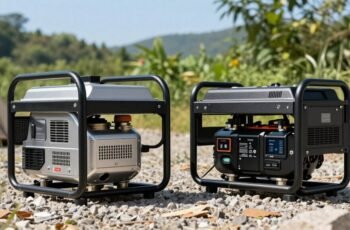
While many portable generators deliver power, not all provide the clean, stable energy essential for sensitive electronics. This distinction can substantially impact device safety and longevity. Ensuring your equipment receives ripple-free, pure sine wave output requires careful selection based on technical specifications. Understanding these nuances is vital for making an informed choice that balances performance, safety, and cost—an investment that could determine the reliability of your electronics in critical moments.
Key Takeaways
- Prioritize generators with pure sine wave output to ensure clean, stable power suitable for sensitive electronics.
- Check wattage and runtime to match your devices’ power needs and ensure continuous operation.
- Consider portability features like weight, handle design, and size for easy transportation and setup.
- Use surge protectors and proper outlets to safeguard devices from voltage spikes and fluctuations.
- Regular maintenance and load management extend generator lifespan and maintain consistent, safe power delivery.
Why Clean Power Matters for Your Electronic Devices
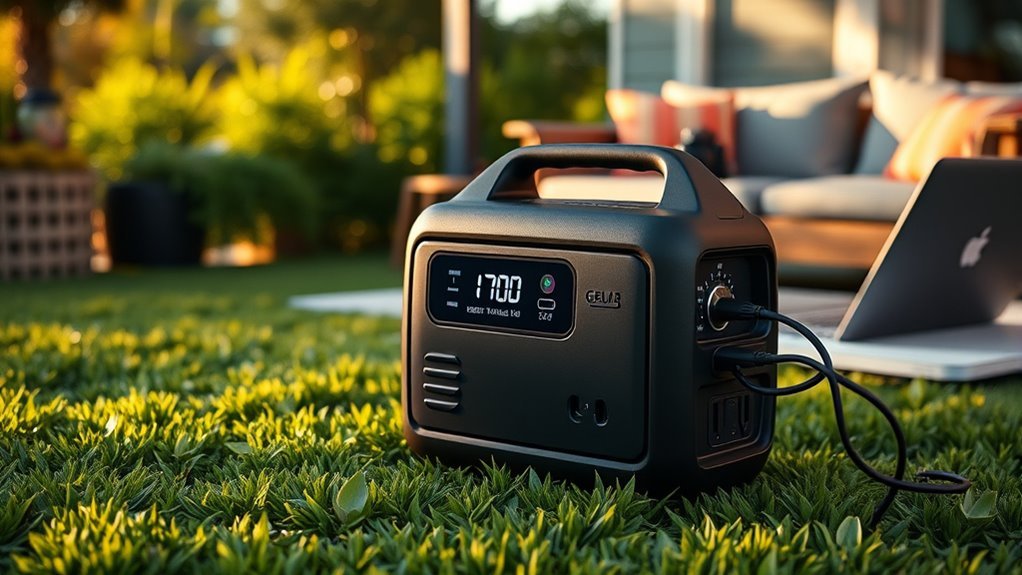
Because electronic devices are highly sensitive to power fluctuations, providing clean, stable electricity is vital for their ideal performance and longevity. Power quality directly impacts device operation, as irregular voltage or waveform distortions can cause malfunctions, data corruption, or hardware damage. Fluctuations such as voltage spikes or dips induce stress on internal components, accelerating wear and reducing lifespan. A stable power source with a low Total Harmonic Distortion (THD) guarantees smooth current flow and minimizes electromagnetic interference, preserving signal integrity. Reliable power delivery also prevents unexpected shutdowns and performance degradation. Consequently, selecting a generator with a clean, consistent output is essential to maintain the safety, efficiency, and durability of sensitive electronic equipment.
Key Features to Look for in a Portable Generator for Electronics
When choosing a portable generator for electronics, key features such as pure sine wave output, power capacity, runtime, port selection, and portability are essential. These specifications directly influence the quality, reliability, and convenience of power delivery to sensitive devices. Understanding these factors guarantees the best performance and safety for your electronic equipment.
Pure Sine Wave Output
Pure sine wave output is vital for guaranteeing that portable generators deliver clean, stable power suitable for sensitive electronic devices. Unlike modified sine wave or square wave outputs, pure sine wave generators produce a smooth, consistent waveform that closely resembles utility power. This waveform minimizes electrical noise and harmonic distortion, reducing the risk of damage to delicate components in devices such as laptops, smartphones, and medical equipment. Precise waveform replication ensures maximum performance and longevity of electronics, preventing overheating and performance issues. Selecting a generator with true, pure sine wave output guarantees compatibility and reliable operation, especially for high-precision or sensitive equipment. Hence, verifying the inverter technology that produces a pure sine wave is essential when choosing a portable generator for electronics.
Power Capacity and Runtime
Selecting a portable generator for electronics requires careful attention to power capacity and runtime to guarantee reliable operation. Power capacity, measured in watts, determines the maximum load the generator can support, while runtime indicates how long it can operate on a full tank. For sensitive electronics, a generator with a continuous output of at least 300W is recommended, with surge capacity to handle startup loads. Runtime varies based on load and fuel capacity. Consider the following specifications:
| Generator Model | Power Output (W) | Runtime at 50% Load |
|---|---|---|
| Model A | 500 | 8 hours |
| Model B | 300 | 10 hours |
| Model C | 1000 | 6 hours |
| Model D | 750 | 7 hours |
| Model E | 200 | 12 hours |
Choose a generator that balances sufficient capacity and desired runtime for your needs.
Port Selection and Portability
Choosing the right port selection and guaranteeing portability are critical factors when selecting a portable generator for electronics. Adequate ports, such as multiple AC outlets and USB charging ports, provide flexibility for powering various devices simultaneously without the need for adapters. Look for generators with standard 120V outlets for compatibility with most electronics, as well as dedicated USB ports for direct device charging. Portability hinges on weight, compact design, and handle quality; lightweight models with ergonomic handles facilitate easy transportation. Consider models with foldable or integrated handles and compact footprints to maximize mobility. A balanced combination of sufficient, versatile ports and a lightweight, durable frame ensures reliable, convenient power delivery in diverse settings—whether at home, on the go, or during emergencies.
Top Portable Generators With True Sine Wave Output
When reliable power quality is essential, especially for sensitive electronics, true sine wave output becomes a critical feature in portable generators. This waveform precisely mimics utility power, minimizing harmonic distortion and providing clean, stable energy transfer. Generators with true sine wave technology use advanced inverter circuitry to produce a consistent, ripple-free power signal. Such precision reduces the risk of damage to delicate components like microprocessors, audio equipment, and medical devices. Top models in this category include the Honda EU2200i, Yamaha EF2000iSv2, and Champion 2000-Watt inverter. These units offer high-quality sine wave output, compact design, and reliable performance. They are ideal for powering sensitive electronics safely, ensuring best operation without interference or transient fluctuations that could compromise device integrity.
Comparing Power Capacity and Runtime for Extended Use
Understanding the power capacity and runtime of portable generators is essential for ensuring they meet the demands of extended use. Power capacity, measured in watt-hours or surge and continuous watt ratings, determines the maximum load the generator can sustain. For prolonged operation, it’s critical to select a generator with sufficient continuous wattage to handle your essential electronics without overload. Runtime, typically specified in hours at a given load percentage, indicates how long the generator can operate before refueling or recharging. To compare models effectively, consider the total fuel capacity and efficiency at your typical load. Higher capacity generators may offer longer runtimes but often add weight and size. Precise assessment of your power needs and expected usage duration allows for ideal matching of capacity and runtime, ensuring reliable extended operation.
How to Ensure Safe and Stable Power During Your Trips?
To maintain safe and stable power during trips, we must use proper power outlets compatible with our generator’s specifications. Managing load and devices guarantees the power supply remains within safe limits, preventing overloads or fluctuations. Regularly inspecting equipment allows us to identify potential issues before they compromise safety or performance.
Use Proper Power Outlets
Have you verified that your portable generator’s power outlets are compatible with your electronic devices? Guaranteeing proper outlet selection is critical for safety and power quality. Use outlets rated for your device’s voltage and current specifications; mismatched outlets can cause damage or electrical hazards. Prefer grounded outlets to prevent electrical shocks and ensure proper grounding connections. Check that outlets are equipped with surge protection or circuit breakers designed for sensitive electronics. Using the correct outlet type—such as AC receptacles with appropriate amperage ratings—reduces the risk of overloads and ensures stable power delivery. Regularly inspect outlets for corrosion, damage, or loose connections before use. Proper outlet selection and maintenance are essential for reliable, safe operation during your trips.
Manage Load and Devices
Properly managing the load on your portable generator is essential to maintaining safe and stable power delivery to your electronic devices. To achieve this, always calculate the total wattage of connected devices and compare it to the generator’s rated output, ensuring it remains within safe limits. Distribute the load evenly across multiple outlets, avoiding overloading a single circuit. Use a power management system or surge protector to prevent voltage spikes that could damage sensitive electronics. Prioritize essential devices and disconnect non-critical equipment during peak power demands. Regularly monitor load levels using the generator’s display or external gauges, adjusting device usage as needed. Precise load management minimizes risks of overheating, voltage fluctuations, or shutdowns, ensuring continuous, reliable power during your trips.
Regularly Inspect Equipment
Regular inspections of your portable generator are critical to maintaining safe and stable power during your trips. Consistently checking key components—such as the fuel system, oil levels, and spark plugs—ensures peak operation and prevents unexpected failures. Examine electrical connections and wiring for signs of wear or corrosion, as compromised connections can cause power fluctuations or safety hazards. Verify that ventilation openings are unobstructed to prevent overheating. Conducting routine diagnostics with a multimeter helps identify voltage irregularities or grounding issues before they escalate. Additionally, inspect the generator’s frame and mounts for structural integrity, ensuring stability during operation. Regular, systematic inspections minimize risk, extend equipment lifespan, and guarantee the delivery of clean, stable power essential for sensitive electronics.
Tips for Maintaining Your Portable Generator and Extending Its Lifespan
To maximize the lifespan of your portable generator, consistent maintenance is essential. Regularly check and replace oil according to the manufacturer’s specifications, as proper lubrication reduces wear on internal components. Clean air filters diligently; clogged filters impair engine performance and increase strain. Inspect spark plugs for fouling or wear, replacing them when necessary to guarantee reliable ignition. Periodically examine fuel systems for leaks or deposits, and use fuel stabilizers if storing for extended periods. Keep ventilation areas free of debris to prevent overheating and secure ideal airflow. Conduct routine load testing to verify stable power output and identify potential issues early. Maintaining a detailed service schedule based on usage frequency and environmental conditions ensures longevity and dependable operation.
Making the Right Choice: Budget, Portability, and Performance Considerations
When selecting a portable generator, balancing budget constraints, portability needs, and performance requirements is essential to making an informed decision. Cost varies widely based on power output and features, so define your essential needs. Portability depends on weight, size, and design; lighter units facilitate transport but may compromise power. Performance hinges on wattage, runtime, and power quality, vital for sensitive electronics. Consider this comparison:
| Factor | Key Considerations |
|---|---|
| Budget | Price range, maintenance costs |
| Portability | Weight, size, handle design |
| Performance | Wattage, runtime, power stability |
| Use Case | Emergency, camping, outdoor events |
Prioritize based on your specific application for maximum balance of cost, ease of transport, and reliable power delivery.
Frequently Asked Questions
Can Portable Generators Power Sensitive Medical Equipment Safely?
Yes, portable generators can power sensitive medical equipment safely if they feature pure sine wave output, stable voltage, and low harmonic distortion, ensuring minimal interference and consistent power quality essential for critical medical devices.
Are Eco-Friendly or Solar-Powered Options Available for Electronics?
Yes, eco-friendly and solar-powered generators are available for electronics, offering clean, renewable energy. They utilize photovoltaic panels and advanced battery storage, providing stable power suitable for sensitive devices while reducing environmental impact.
How Loud Are These Portable Generators During Operation?
We find that noise levels vary, typically ranging from 50 to 70 decibels during operation. Modern generators incorporate noise reduction features, making them quieter, but actual sound levels depend on the specific model and load.
What Are the Best Practices for Storing a Generator Long-Term?
We recommend draining fuel, storing in a dry, temperature-controlled environment, and disconnecting batteries for long-term storage. Regularly inspect and run the generator periodically to prevent corrosion and guarantee readiness; neglecting this can lead to catastrophic failure.
Do Portable Generators Require Special Permits or Regulations?
Portable generators generally don’t require special permits, but local regulations may impose noise or emission restrictions. We recommend checking regional codes and obtaining necessary permits to guarantee compliance, especially for prolonged or large-scale use.
Conclusion
Choosing the right portable generator is like selecting a steady heartbeat for your electronic devices—reliable, consistent, and essential. A true sine wave ensures your devices receive clean energy, preventing damage and guaranteeing peak performance. By balancing capacity, runtime, and safety features, we can guarantee our electronics are shielded from power fluctuations. In this pursuit, precision and careful selection become our compass, guiding us toward a dependable power source that keeps our devices safe and operational, no matter where we are.