Imagine experiencing a power outage just as you’re about to start your outdoor project; a portable generator with remote start could be the solution. These devices combine convenience with technical reliability, but selecting the right model requires careful consideration of features, capacity, and safety. Understanding these factors is essential for making an informed choice that meets your specific needs, making it worth exploring the key aspects that set these generators apart.
Key Takeaways
- Understand the benefits of remote start for convenience, safety, and quick activation during power outages or emergencies.
- Consider key features like transmission range, power capacity, durability, noise levels, and safety protections.
- Match generator size and power output to your essential device requirements, accounting for future expansion.
- Factor in fuel type, runtime, maintenance needs, and budget to ensure reliable, cost-effective operation.
- Prioritize features like portability, control reliability, safety mechanisms, and overall value for informed purchasing decisions.
Why Choose a Portable Generator With Remote Start?
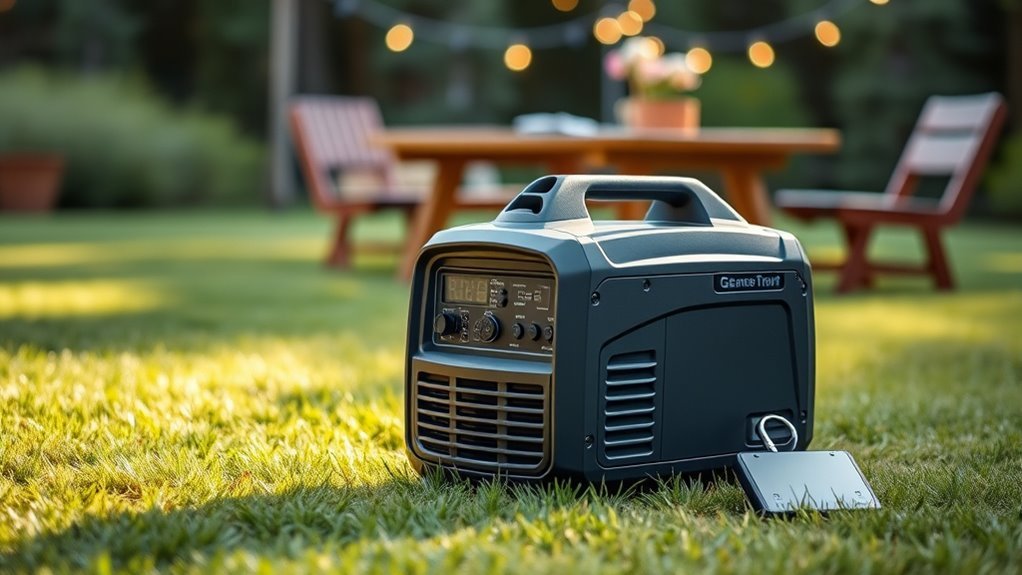
While traditional portable generators require manual startup, opting for a model with remote start offers significant operational advantages. Remote start systems enable quick activation from a safe distance, reducing the risk of injury or exposure to fumes during startup. They improve efficiency by allowing users to initiate power before approaching the unit, which is critical during emergencies or inclement weather. These systems also enhance convenience, especially when managing multiple devices or performing routine testing without physical interaction. Technically, remote start adds a layer of automation that minimizes human error and guarantees consistent operation. Ultimately, this feature streamlines power management, increases safety, and optimizes responsiveness, making remote-start portable generators a strategic choice for both emergency preparedness and everyday use.
Key Features to Look for in Remote Start Generators
Selecting the right remote start generator requires careful consideration of several key features that guarantee reliable and convenient operation. First, look for a robust remote control system with a proven transmission range, ensuring you can start the generator from a safe distance. Power output is crucial; verify the wattage aligns with your essential appliances’ requirements. Engine durability and low oil shutoff sensors enhance longevity and prevent damage under heavy loads. Fuel efficiency and tank capacity influence operational runtime, reducing refueling interruptions. Noise levels should also be assessed, especially for residential use, to avoid disturbances. Finally, safety features like automatic shutdown on overload and circuit protection are essential for protecting both the generator and connected devices. These technical factors are essential for dependable, safe remote operation.
Comparing Top Portable Generators With Remote Start Capabilities
When comparing top portable generators with remote start capabilities, it’s important to evaluate how they perform across key technical features. Critical factors include power output, fuel efficiency, noise levels, and durability.
Evaluating portable generators with remote start involves assessing power, efficiency, noise, and durability for optimal performance.
- Power Output: Confirm the generator provides sufficient wattage for your needs, whether for appliances or heavy tools.
- Fuel Efficiency: Look for models with optimized engine performance to maximize runtime and minimize refueling.
- Noise Levels: Consider decibel ratings; quieter units are more suitable for residential or camping environments.
- Build Quality and Durability: Check materials and design; rugged construction translates to longer lifespan and better resistance to environmental stressors.
How to Select the Right Size and Power Output for Your Needs
Determining the appropriate size and power output for your portable generator is vital to guarantee reliable performance without unnecessary expense or bulk. To do this, we analyze your critical appliances’ starting and running wattages, ensuring the generator can handle simultaneous loads. Calculating total wattage involves summing the starting wattages of high-demand devices plus the running wattage of continuous appliances. It’s important to consider future expansion, so selecting a generator with a margin—typically 20-25% above calculated needs—prevents overloads. We also evaluate whether the generator’s rated output aligns with your peak power requirements, avoiding underperformance. Proper sizing balances capacity with portability, ensuring you meet your energy demands efficiently while minimizing excess weight and cost. This analytical approach guarantees optimal, reliable operation tailored to your specific needs.
Understanding Fuel Types and Runtime for Remote Start Generators
Understanding the fuel types and runtime specifications of remote start generators is essential for ensuring reliable performance and operational efficiency. Different fuel options influence not only the generator’s power output but also its longevity and maintenance requirements.
Choosing the right fuel type ensures reliable performance and extends your remote start generator’s lifespan.
Consider these factors:
- Gasoline: Widely available, offering quick start-up but shorter runtime, typically 8–12 hours.
- Propane: Cleaner burning with longer storage life, often providing 10–15 hours of runtime.
- Diesel: More fuel-efficient for extended use, with runtimes exceeding 12 hours and higher durability.
- Dual-fuel systems: Flexibility to switch between fuels, optimizing runtime based on fuel availability and cost.
Analyzing these options helps determine the best fit based on your power needs, fuel availability, and operational duration.
Tips for Safe and Effective Use of Your Portable Generator
Effective use of your portable generator requires adherence to proper startup protocols to prevent damage and guarantee reliability. Managing power output safely involves understanding load capacity and avoiding overload conditions. By following these principles, we can optimize performance while minimizing safety risks.
Proper Startup Procedures
Before starting your portable generator, it’s essential to follow a systematic procedure to guarantee safety and ideal performance. Proper startup ensures equipment longevity and operator safety. First, inspect the unit for any fuel leaks, obstructions, or damage. Second, verify that the generator is positioned on a level surface, away from combustible materials. Third, ensure all electrical loads are disconnected before startup to prevent backfeeding or overloads. Fourth, turn on the fuel valve and set the choke if starting a cold engine. Using remote start, confirm the system’s status before initiating the process. Adhering to these steps minimizes operational risks, optimizes power delivery, and prolongs the generator’s lifespan. Precision and attention to detail are critical for safe, reliable operation.
Safe Power Management
Have you considered how proper power management can greatly enhance the safety and efficiency of your portable generator? Effective load management ensures you don’t overload the unit, preventing potential damage or fire hazards. Always prioritize balanced power distribution across connected devices, avoiding simultaneous high-wattage loads. Use a transfer switch or circuit breaker to isolate circuits and prevent backfeeding, which can endanger utility workers and damage appliances. Regularly inspect cords and connections for wear or faults, and avoid extension cords that exceed recommended lengths or gauges. Implementing these practices reduces the risk of electrical faults and prolongs your generator’s lifespan. Proper power management isn’t just about convenience; it’s critical for safe operation, operational reliability, and ensuring your generator performs at its best during critical times.
Maintenance and Troubleshooting Common Remote Start Generators
Maintaining and troubleshooting remote start generators requires a systematic approach to assure reliable operation and safety. Proper maintenance guarantees components function correctly and minimizes failure risks. Troubleshooting involves diagnosing issues efficiently to restore functionality promptly.
Key steps include:
- Regular inspection of remote control batteries and ensuring the signal is clear and unobstructed.
- Checking the generator’s electrical connections for corrosion or loose wiring, which can impair remote functionality.
- Verifying the ignition system and control module for faults through diagnostic tools or visual inspection.
- Monitoring fuel levels and oil quality, as poor fuel or oil can cause startup issues or damage internal parts.
Adhering to these steps assures consistent remote operation, reduces downtime, and extends the generator’s lifespan.
Budgeting for a Portable Generator With Remote Start Features
Budgeting for a portable generator with remote start features requires a thorough understanding of the key cost factors involved. First, note that remote start capability typically adds a premium, often increasing base costs by 20-40%, depending on the model and brand. Power output capacity directly impacts price; higher wattage units generally command higher prices due to their enhanced performance and durability. Additionally, features such as noise reduction, fuel efficiency, and advanced control systems influence overall costs. Installation and maintenance expenses should also be considered, as remote start units may require specialized setup or periodic servicing. Finally, warranty coverage can affect long-term value, with extended warranties adding upfront costs but potentially reducing future repair expenses. Accurate budgeting demands a all-encompassing assessment of these variables in relation to your specific power needs and budget constraints.
Making the Final Decision: What Factors Matter Most to You?
When choosing a portable generator with remote start, identifying the factors that matter most requires a clear understanding of your specific power requirements and operational priorities. Key considerations include:
- Power Output: Confirm the wattage capacity meets your essential device and appliance needs, avoiding overload risks.
- Run Time and Fuel Efficiency: Evaluate how long the generator can operate on a single tank, optimizing for longer outages.
- Portability and Weight: Consider size and weight for ease of transport, especially if mobility is a priority.
- Control and Safety Features: Look for remote start reliability, noise levels, and safety mechanisms to ensure user convenience and protection.
Prioritizing these factors enables a tailored decision aligned with your practical needs and operational context.
Frequently Asked Questions
How Long Does the Remote Start Battery Typically Last?
The remote start battery typically lasts between one to three years, depending on usage and storage conditions. We recommend regular testing and replacements when performance diminishes to guarantee reliable remote operation and avoid unexpected power failures.
Can Remote Start Generators Be Used in Cold Weather?
Remote start generators can operate in cold weather, but they require proper insulation and battery maintenance. Cold temperatures slow chemical reactions, so we recommend using heaters or battery warmers to guarantee reliable starting in freezing conditions.
Are There Any Compatibility Concerns With Smart Home Systems?
Yes, compatibility concerns arise with smart home systems; we recommend verifying generator integration capabilities, ensuring proper Wi-Fi or Bluetooth connectivity, and confirming compatibility with your specific smart home ecosystem to guarantee seamless operation and remote management.
What Is the Warranty Coverage for Remote Start Features?
We find that warranty coverage for remote start features typically varies by manufacturer, often including limited coverage for electronic components, but it’s crucial to review specific warranty terms to provide thorough protection against potential remote start malfunctions.
How Do I Troubleshoot Remote Start Malfunctions?
Think of troubleshooting remote start like diagnosing a complex system; we check the battery, remote connection, and control panel, ensuring no interference, and verify firmware updates, systematically eliminating potential issues to restore functionality efficiently.
Conclusion
As we weigh our options, one critical factor remains—how seamlessly your generator integrates into your power needs and future plans. Will it stand up to unexpected demands? The right choice hinges on more than just features; it’s about precision, reliability, and adaptability. The decision isn’t trivial, and overlooking key details could leave you unprepared when it matters most. Are you ready to select a generator that not only meets today’s needs but anticipates tomorrow’s challenges?