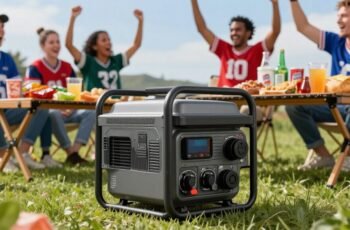
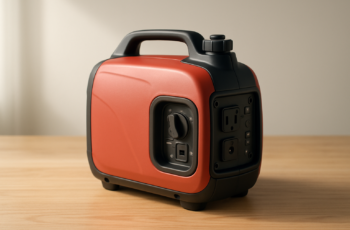
Imagine trying to carry a backpack filled with bricks—too heavy for easy transport, yet necessary to meet your needs. This analogy reflects the core challenge in choosing a portable generator: balancing size and weight with power output. Striking this balance requires careful assessment of your energy demands, future expansion plans, and mobility priorities. Understanding how to optimize this relationship can prevent overinvestment or underperformance, making it essential to explore the factors that influence generator size and capacity in greater detail.
Key Takeaways
- Match generator wattage ratings with your total starting and running power needs to prevent overloads.
- Consider portability by balancing generator size and weight with your typical transport and storage capabilities.
- Use lightweight materials and modular designs to optimize size, weight, and power output for easier handling.
- Oversize slightly for future expansion without sacrificing too much portability or efficiency.
- Understand peak (surge) versus rated power to ensure reliable operation during transient loads.
How Does Generator Size Affect Portability and Use?
Generator size directly impacts its portability and practical use, as larger units tend to be heavier and bulkier, making transportation more challenging. The physical dimensions and weight directly influence how easily a generator can be moved, stored, and deployed in different environments. Smaller generators offer increased mobility, ideal for quick setups, remote locations, or emergency scenarios where ease of handling is essential. Conversely, larger models, while providing greater power capacity, compromise portability due to their weight and size, often requiring specialized equipment or multiple people for transportation. This size-power relationship requires careful assessment of user needs—whether prioritizing portability or power capacity—since increasing one generally reduces the other. Ultimately, understanding these trade-offs helps determine the most suitable generator for specific applications.
Understanding Power Output Ratings and What They Mean
Understanding power output ratings requires clarity on peak versus running power, as each indicates different operational capacities. We also analyze wattage and voltage to determine how they influence performance and compatibility with devices. Additionally, examining power ratings alongside duration helps us assess a generator’s reliability for continuous use.
Peak vs. Running Power
While peak and running power ratings both indicate a generator’s capacity, they serve different functions and are essential for selecting the right unit. Peak power, or surge power, reflects the maximum load a generator can handle momentarily—such as starting motors. Operating power, or rated power, indicates continuous, sustainable output under normal conditions. Understanding this distinction helps prevent overloads and equipment damage. The table below summarizes their differences:
| Power Type | Description | Duration |
|---|---|---|
| Peak Power | Max output during transient load spikes | Short-term (a few seconds) |
| Running Power | Continuous power for steady operation | Long-term |
Accurate knowledge of both ratings ensures proper generator selection for specific applications.
Wattage and Voltage Explained
Wattage and voltage are fundamental metrics that define a generator’s power output, providing a clearer picture of its capabilities beyond peak and running ratings. Wattage, expressed in watts (W), indicates the total electrical power the generator can supply, reflecting both the current it delivers and the voltage at which it operates. Voltage, measured in volts (V), signifies the potential difference that drives current through connected devices. Understanding these ratings helps determine if a generator can handle the combined load of your appliances. For example, a higher wattage rating means the generator can support more or larger devices simultaneously. While wattage describes the overall power capacity, voltage guarantees that the electrical potential matches the requirements of your equipment, preventing undervoltage or overvoltage issues that could damage sensitive devices.
Power Ratings and Duration
Power ratings provide a critical benchmark for evaluating a generator’s true capacity and operational longevity. These ratings, typically expressed in watts or kilowatts, indicate the maximum power output a generator can sustain over a specific period. Continuous power ratings reflect the generator’s ability to operate reliably under load over extended periods, while surge or peak ratings denote short-term power spikes necessary for starting appliances. Duration ratings, often specified in hours, reveal how long a generator can supply its rated power before fuel depletion or component stress occurs. Understanding these metrics helps us assess whether a generator can meet our specific power needs without risking overload or premature failure. Precise knowledge of power ratings and duration ensures suitable pairing of generator capacity with intended applications, maximizing efficiency and lifespan.
Matching Generator Size to Your Power Needs: Key Factors to Consider
To accurately match generator size to your needs, we first conduct a detailed power requirements assessment, considering both essential and transient loads. We then evaluate whether a portable or stationary unit best fits your operational context, factoring in mobility and capacity constraints. Finally, we analyze potential future expansion to guarantee the generator can accommodate evolving power demands without requiring immediate replacement.
Power Requirements Assessment
How do we accurately determine the size of a generator needed for specific applications? The process begins with a detailed load analysis, identifying both starting and running wattage requirements of connected devices. We must account for surge currents from motors and appliances, which often exceed their rated power. Calculating the total continuous power allows us to establish a baseline generator capacity, guaranteeing it can handle peak loads without overloading. We also consider the diversity factor, recognizing that not all devices operate simultaneously at full capacity. Precise assessment involves reviewing manufacturer specifications and estimating startup versus operational power demands. This analytical approach ensures that the selected generator provides reliable performance, avoids unnecessary oversizing, and optimizes efficiency in meeting actual power needs.
Portable vs. Stationary Needs
Selecting the appropriate generator size hinges on understanding whether a portable or stationary model best suits your operational demands. Portable generators excel in versatility, offering mobility for temporary or fluctuating power needs, such as job sites or outdoor events. They typically feature lower capacities, making them suitable for specific appliances or moderate loads. Conversely, stationary generators are designed for continuous, high-capacity power supply, often integrated into backup systems for homes or facilities. They require a fixed installation and provide reliable, long-term energy support. When matching size to needs, consider not only the total power output but also the operational context—mobility, load stability, and future scalability. Proper alignment guarantees efficiency, minimizes unnecessary costs, and guarantees the generator’s ability to meet your precise operational requirements.
Future Expansion Possibilities
Considering future expansion possibilities is essential when choosing a generator size, as it directly impacts long-term operational flexibility. A well-planned selection accounts for potential increases in power demand caused by equipment upgrades or additional devices. Oversizing slightly can accommodate future loads without requiring immediate replacement, reducing lifecycle costs. Conversely, undersizing risks operational interruptions and limits scalability. When evaluating expansion potential, evaluate the maximum anticipated load, the capacity of existing electrical infrastructure, and the generator’s ability to handle additional power via parallel connections or higher output units. This ensures seamless integration and reliable performance over time. Ultimately, balancing current needs with projected growth helps optimize investment, prevent bottlenecks, and maintain system resilience, making future expansion a critical factor in generator sizing decisions.
Common Size and Power Output Combinations for Different Activities
Different activities demand specific combinations of generator size and power output to guarantee reliable operation without unnecessary excess. For small-scale tasks like camping or tailgating, a portable generator with a capacity of 1,000 to 2,000 watts suffices, supporting essential appliances and lighting. Home backup scenarios for critical devices typically require 3,000 to 5,000 watts, enabling operation of refrigerators, sump pumps, and communication devices. Construction sites with power tools such as drills and saws benefit from 5,000 to 7,500-watt units, providing ample overhead for simultaneous operation. Larger recreational activities like RV use may need 3,000 to 6,000 watts, accommodating appliances and entertainment systems. Understanding these common combinations ensures best performance while avoiding overcapacity, which could lead to inefficiency and unnecessary fuel consumption.
How to Calculate Your Power Requirements Before Choosing a Generator
Before choosing the right generator size, it’s important to accurately determine your power requirements. To do this, we analyze the starting and running wattage of all devices. Starting wattage is higher and needed for appliances with motors or compressors, while running wattage is the continuous power consumption. Here’s a quick reference:
| Device Type | Starting Wattage | Running Wattage |
|---|---|---|
| Refrigerator | 700W | 200W |
| Laptop | 60W | 60W |
| Power Tools | 1,200W | 800W |
Calculating total wattage ensures the generator provides sufficient power without overload, enabling a conducive balance between capacity and efficiency.
The Pros and Cons of Smaller vs. Larger Portable Generators
Choosing between smaller and larger portable generators involves evaluating trade-offs in capacity, portability, and operational efficiency. Smaller units excel in weight reduction and ease of transport, making them ideal for light loads or emergency use where mobility is priority. However, their limited power output constrains the range of appliances they support, often requiring multiple units for all-encompassing backup. Larger generators provide higher wattage capacity, enabling simultaneous operation of multiple devices and more extensive power needs. Conversely, their increased size and weight reduce portability and may lead to higher fuel consumption and maintenance costs. The decision ultimately hinges on balancing these factors against intended use, whether prioritizing mobility with smaller models or capacity with larger units. Analyzing these pros and cons ensures an informed choice aligned with specific power requirements.
Tips for Balancing Weight, Size, and Performance for Optimal Portability
Balancing weight, size, and performance in portable generators requires a strategic approach to optimize usability without compromising power output. To achieve this, we recommend prioritizing specific power needs and selecting models with efficient engine designs that deliver the required wattage while minimizing weight. Modular components, such as compact alternators and lightweight frames, can reduce overall size without sacrificing durability. Material choices, like using aluminum or composite plastics, help decrease weight while maintaining structural integrity. Additionally, integrating fuel-efficient engines extends runtime without increasing size. Regularly evaluating the trade-offs between portability and capacity ensures that you select a generator aligned with your primary use cases, enabling easier transport and setup while maintaining reliable power delivery.
Recognizing When a Generator Is Overpowered or Underpowered for Your Tasks
Understanding whether your generator is overpowered or underpowered hinges on accurately evaluating your specific power needs. An overpowered generator wastes energy and increases noise and fuel consumption, while an underpowered unit risks voltage drops, equipment failure, or inability to operate essential devices. To diagnose the balance:
- Check the total starting and running wattage of your essential appliances
- Compare these demands against your generator’s rated output
- Monitor performance during operation for signs of overload or underperformance
- Evaluate whether the generator’s size aligns with future expansion needs
How to Future-Proof Your Generator Choice for Changing Power Needs
As our power requirements evolve due to new appliances, increased usage, or potential expansions, it’s essential to select a generator that can adapt accordingly. Future-proofing involves choosing a model with a higher-than-current-rated capacity to accommodate growth without frequent upgrades. Consider generators with scalable features, such as modular design or adjustable power output. Analyzing load profiles and anticipating future needs allows for more accurate sizing, preventing underperformance or unnecessary overcapacity. Incorporate inverter technology for cleaner power quality, supporting sensitive electronics as demands shift. Additionally, evaluating fuel efficiency and runtime ensures sustained operation during extended use. By focusing on flexibility, upgradeability, and efficiency, we can make an informed decision that provides reliable power now and accommodates future changes seamlessly.
Frequently Asked Questions
How Does Altitude Affect Generator Performance and Size Considerations?
Altitude reduces air density, decreasing generator efficiency and power output. We account for this by choosing slightly larger units or adjusting fuel and cooling systems, ensuring reliable performance despite altitude-related performance drops.
Are There Portable Generators With Adjustable Power Output Settings?
Yes, some portable generators feature adjustable power output settings, allowing us to optimize fuel efficiency and match load demands precisely. This flexibility helps balance size and power needs, enhancing performance efficiency in varied applications and environments.
How Do Noise Levels Impact Generator Portability and Usability?
Noise levels markedly influence generator portability and usability by affecting comfort, compliance with regulations, and environmental impact. Lower noise emissions enhance outdoor usability, reduce disturbance, and facilitate easier transportation and operation in noise-sensitive areas.
Can Portable Generators Be Safely Used in Outdoor or Harsh Weather Conditions?
Portable generators are like resilient explorers, designed for outdoor use, but we must guarantee they’re rated for harsh weather, with proper enclosures and safety measures, to prevent damage and ensure reliable power in extreme conditions.
What Maintenance Factors Influence the Longevity of Different Generator Sizes?
Maintenance factors like regular oil changes, proper ventilation, and timely filter replacements greatly influence generator longevity across sizes. We recommend consistent inspections, load management, and adherence to manufacturer guidelines to guarantee peak performance and extended lifespan.
Conclusion
Ultimately, selecting the right generator size and power output isn’t just about immediate needs—it’s about strategic foresight. As your power demands evolve, so should your choice. Will you prioritize portability for now, or anticipate future expansion? Striking this balance requires careful analysis and precise calculations. The decision could considerably impact your efficiency and safety. Are you ready to choose a generator that adapts to your changing requirements, or will you risk being caught unprepared?