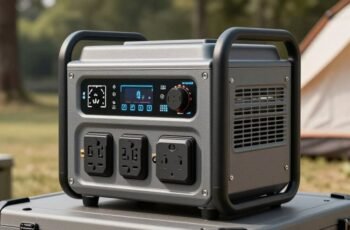
Choosing the right portable generator involves more than just selecting the most powerful model; it requires a thorough evaluation of multiple technical factors that can impact performance, safety, and long-term value. As we examine these critical considerations, you’ll discover the key elements that often go unnoticed but are essential for making an informed purchase. Understanding these details can mean the difference between reliable power and unexpected failures—so, let’s explore what you need to know before making your decision.
Key Takeaways
- Verify the generator’s power rating (watts) meets your essential device requirements, including surge and continuous loads.
- Check fuel options, efficiency, and runtime to ensure compatibility with available fuel sources and environmental considerations.
- Assess safety features like overload protection, GFCIs, grounding, and noise levels for safe operation and user comfort.
- Ensure portability features such as handles, wheels, size, and weight suit your transportation and storage needs.
- Confirm certifications (UL, CSA) and warranty coverage for safety compliance, reliability, and long-term support.
How to Determine Your Power Needs for a Portable Generator

To accurately determine your power needs for a portable generator, we must first identify the essential electrical loads you plan to operate. This involves cataloging devices and appliances, noting their starting and running wattages. We then sum the continuous power requirements, guaranteeing the generator’s rated output exceeds this total for reliable operation. It’s critical to take into account surge wattage for startup loads, especially for motors and compressors, which demand higher initial power. We also evaluate whether appliances are sensitive to voltage fluctuations, requiring stable power sources. By precisely calculating the total wattage, we prevent under-sizing, which risks insufficient power, or over-sizing, which leads to unnecessary expense. This analytical approach ensures the chosen generator provides reliable, efficient power tailored to your specific needs.
Understanding Different Types of Portable Generators
Understanding the different types of portable generators requires examining their power sources and mobility features. We compare models that rely on gasoline, propane, or dual-fuel systems, noting their efficiency and suitability for various applications. Additionally, distinguishing between portable and stationary units helps clarify deployment flexibility and energy capacity.
Types of Power Sources
Different portable generators rely on distinct power sources, each offering unique advantages and limitations that influence their suitability for various applications. Gasoline generators are common due to their affordability and portability but require frequent refueling and emit higher emissions. Propane models provide cleaner operation and longer shelf life but often deliver slightly reduced power output. Diesel generators excel in heavy-duty, continuous use scenarios, offering durability and efficiency, yet they tend to be heavier and noisier. Dual-fuel units combine multiple sources for versatility but add complexity and cost. Battery-powered generators deliver silent operation and require no fuel, making them ideal for short-term or emergency use, but they are limited by battery capacity and runtime.
- Gasoline-powered
- Propane-powered
- Diesel-powered
- Dual-fuel (gasoline/propane)
- Battery-powered
Portable vs. Stationary
When selecting a portable generator, it’s essential to distinguish between portable and stationary models, as their design and applications considerably differ. Portable generators are lightweight, compact, and designed for mobility, making them ideal for outdoor use, camping, or emergency backups. They typically feature built-in handles and wheels for easy transport. In contrast, stationary generators are permanently installed, often integrated into a building’s electrical system or used as standby units. They tend to have higher power output, greater fuel efficiency, and enhanced durability, but lack portability. Understanding these differences helps determine the appropriate type based on intended use, power requirements, and installation constraints. Ultimately, selecting the right model hinges on evaluating mobility needs against power capacity and long-term operational considerations.
Why Fuel Efficiency Matters When Choosing a Generator
Fuel efficiency plays a critical role in the overall cost-effectiveness and practicality of a portable generator. It directly impacts operational costs, fuel consumption rates, and environmental footprint. A generator with higher fuel efficiency minimizes fuel expenses over its lifespan, making it more economically viable. Additionally, it reduces the frequency of refueling, which enhances usability during extended power outages or remote operations. When evaluating fuel efficiency, consider factors like engine design, load capacity, and technological advancements such as inverter technology. These influence how effectively a generator converts fuel into electrical power, affecting overall performance and longevity.
- Fuel consumption rate at various loads
- Engine design and technology
- Power output relative to fuel use
- Extended runtime capabilities
- Emission and environmental impact
Examining Noise Levels and Why They Matter in Quiet Settings
In quiet settings, the noise output of a generator directly influences the surrounding environment and user comfort. Lower noise levels minimize disruption, making them essential for residential, camping, or medical applications. Evaluating decibel ratings helps determine a generator’s suitability for maintaining a peaceful atmosphere.
Impact on Surroundings
Noise levels from portable generators can profoundly influence their suitability for quiet environments, as excessive sound emissions may disturb nearby residents or sensitive ecosystems. The impact extends beyond mere annoyance, potentially affecting wildlife behavior and local acoustics. When evaluating generators, it’s essential to take into account how noise propagates through the environment and the physical barriers that can mitigate sound transmission. Factors such as decibel output, operating frequency, and placement influence overall impact. Additionally, acoustic insulation features and enclosures can reduce noise emissions. Proper assessment involves analyzing the generator’s sound power level relative to environmental thresholds. Understanding these technical aspects helps ensure that the generator’s operation minimizes disruption, maintaining ecological and community integrity.
- Sound power level and decibel ratings
- Frequency spectrum of emitted noise
- Use of soundproof enclosures or mufflers
- Placement and distance from sensitive areas
- Environmental noise absorption features
Ideal for Quiet Environments
Choosing a portable generator for quiet environments requires careful consideration of its noise emissions, as even moderate sound levels can disrupt tranquility and sensitive ecosystems. Noise levels are typically measured in decibels (dB), with lower readings indicating quieter operation. For quiet settings, generators producing 50 dB or less are ideal, as they minimize disturbance to residents, wildlife, and work environments. It’s vital to review manufacturer specifications and independent noise testing results to verify actual sound output. Vibration dampening features and design elements like soundproof enclosures further reduce noise. Selecting a generator with optimized acoustic properties guarantees compliance with local noise ordinances and preserves the serenity of quiet zones. Precision in noise management is indispensable for maintaining the environmental and social integrity of sensitive areas.
How to Assess Portability Features and Handle Design
Evaluating portability features and handle design requires a detailed examination of weight, size, and maneuverability. Heavier units hinder transport, so understanding the overall weight is crucial. Compact dimensions facilitate easier storage and movement through tight spaces. Handle design should prioritize ergonomic grip and balanced weight distribution to reduce user fatigue. Material quality impacts durability and ease of handling, especially in rugged environments. Additionally, features like integrated wheels or telescoping handles can considerably improve mobility. Proper assessment involves analyzing these elements to guarantee the generator can be transported safely and efficiently without compromising structural integrity.
- Weight distribution and balance
- Handle material and grip comfort
- Presence of wheels or telescoping handles
- Overall unit dimensions
- Durability of handle construction
Choosing the Right Power Output for Your Essential Devices
Selecting the appropriate power output for your essential devices involves accurately evaluating their startup and running wattage requirements. Startup wattage, or surge power, accounts for the initial energy needed to activate motors or electronics, which can be considerably higher than their continuous running wattage. To guarantee reliable operation, we must sum the highest startup wattages of all devices intended for simultaneous use and add a margin for safety. Similarly, the continuous running wattage should match the combined operating needs of these devices during normal operation. Precise calculations prevent underpowering, which can cause equipment malfunction or damage, and overcapacity, which leads to unnecessary expense. By analyzing each device’s specifications, we can determine the minimum generator size that guarantees consistent, safe power delivery under peak load conditions.
Comparing Fuel Options: Gasoline, Propane, and Dual-Fuel Generators
When comparing fuel options, we assess availability and storage requirements to guarantee reliable operation in various scenarios. We also analyze power output compatibility to match generator performance with your device needs, along with evaluating cost and efficiency to optimize long-term value. Understanding these factors helps us select the most suitable fuel type for dependable and economical generator use.
Fuel Availability and Storage
Choosing the right fuel type is critical for ensuring reliable portable generator operation, especially during extended outages or remote use. Fuel availability and storage capacity directly impact operational longevity and convenience. Gasoline, while widely accessible, requires proper storage to prevent degradation and pose safety concerns. Propane offers cleaner storage with longer shelf life but necessitates a dedicated tank. Dual-fuel generators provide flexibility, allowing users to switch fuels based on availability, but involve more complex fuel management.
- Fuel shelf life and stability
- Storage tank size and portability
- Fuel transportation and accessibility
- Backup fuel supply options
- Compatibility with on-site fuel sources
Power Output Compatibility
Different fuel types greatly influence a generator’s power output and operational efficiency, making it essential to compare gasoline, propane, and dual-fuel options regarding performance. Gasoline generators typically deliver higher peak wattages and are well-suited for short-term, high-demand applications. Propane units often produce steadier power with cleaner emissions but may generate slightly reduced wattage due to fuel energy density. Dual-fuel generators combine these traits, offering flexible operation and consistent power delivery across fuel sources. However, their performance can vary depending on fuel switching and engine design. It’s vital to evaluate the generator’s rated wattage and surge capacity in relation to intended loads, ensuring compatibility with your power requirements. Balancing fuel-specific power output and operational stability helps optimize overall performance in various usage scenarios.
Cost and Efficiency
How do fuel choices impact the overall cost and operational efficiency of portable generators? Fuel type directly affects running costs, fuel availability, and efficiency. Gasoline is widely accessible but tends to be less economical over time due to higher fuel consumption and storage concerns. Propane offers cleaner combustion and longer shelf life, potentially reducing maintenance costs, but may require specialized adapters. Dual-fuel generators provide flexibility, allowing users to switch between fuels based on availability and cost, optimizing efficiency.
- Fuel consumption rate
- Fuel storage requirements
- Cost per unit of fuel
- Conversion process complexity
- Maintenance and longevity considerations
What Safety Features Should You Look For?
Safety features are essential considerations when selecting a portable generator, as they directly impact operational security and risk mitigation. We should prioritize features like automatic shutoff systems that activate during overloads or low oil levels, preventing engine damage and fire hazards. Ground fault circuit interrupters (GFCIs) are critical for preventing electric shocks, especially in wet environments. Additionally, safety covers on outlets and circuit breakers provide physical protection against accidental contact and electrical faults. Proper grounding systems ensure electrical stability and reduce shock risks. Noise reduction features, while primarily for comfort, also prevent hearing damage and improve overall safety during extended use. These safety elements collectively minimize hazards, ensuring reliable operation while safeguarding users and property.
Evaluating Durability and Build Quality for Long-Term Use
Evaluating the durability and build quality of a portable generator is essential for guaranteeing reliable performance over its lifespan. We focus on materials and construction standards to gauge longevity and resistance to environmental stressors. High-quality components, such as heavy-gauge steel frames and corrosion-resistant finishes, considerably improve durability. Properly engineered cooling systems and vibration isolators reduce wear and tear. Checking for reinforced wiring and sturdy fasteners ensures structural integrity. Additionally, examining the manufacturer’s warranty and testing certifications provides insight into expected lifespan and quality assurance.
Assessing materials, reinforcement, and warranty helps ensure a durable, reliable portable generator.
- Material composition and corrosion resistance
- Frame reinforcement and structural integrity
- Vibration damping features
- Quality of electrical wiring and connectors
- Warranty coverage and certification compliance
How to Read and Understand Generator Wattage Ratings
Understanding generator wattage ratings is essential for selecting a model that meets your power needs, as these ratings determine the device’s capacity to handle various loads. The two primary ratings—starting (surge) wattage and running (rated) wattage—are critical to interpret correctly. Starting wattage indicates the maximum power the generator can deliver momentarily, necessary for devices with high initial draws, like refrigerators or power tools. Running wattage reflects continuous power output, suitable for steady loads. When reviewing these ratings, verify the generator’s rated wattage exceeds your total continuous load. It’s also important to account for surge wattage requirements of appliances during startup. Accurate understanding prevents overloads, equipment damage, and ensures your generator reliably supports essential devices during power outages.
Considering Run Time and Fuel Tank Capacity
Considering run time and fuel tank capacity is essential because they directly affect how long your generator can supply power without refueling. Longer run times are critical during extended outages, while larger fuel tanks reduce the frequency of refueling stops. To evaluate effectively, consider these factors:
- Fuel consumption rate at rated load
- Tank capacity in gallons or liters
- Estimated run time at various loads
- Efficiency of fuel use for different power demands
- Refuel accessibility during operation
How to Evaluate Start-Up Methods and Ease of Use
When evaluating start-up methods, we focus on the reliability and complexity of different mechanisms, such as push-button electric start versus recoil start. User-friendly features like remote start or automatic choke enhance operational efficiency and reduce user error. Examining these aspects ensures the generator is both accessible and dependable during critical moments.
Starting Mechanism Options
The starting mechanism of a portable generator directly impacts its convenience and reliability during critical moments. Evaluating various start-up methods involves analyzing their efficiency, consistency, and user effort. Manual recoil starters require physical effort and may be less reliable in cold or emergency conditions. Electric start systems offer quick, effortless ignition but depend on battery health and charging. Remote or push-button starters enhance convenience, especially in inaccessible locations. Consider the presence of backup starting options, such as recoil backup in electric-start models. Durability of the starter components also influences long-term performance. A thorough evaluation ensures the chosen mechanism balances ease of use with robustness, minimizing startup failures when needed most.
- Manual recoil vs. electric start comparison
- Battery life and charging requirements
- Reliability of remote/start button functionality
- Backup start options in case of primary failure
- Durability of starter components
User-Friendly Operation Features
Evaluating user-friendly operation features involves appraising how easily and reliably a portable generator can be started and operated under various conditions. We analyze the start-up methods, favoring models with electric start options, which offer consistent reliability and minimal effort, especially in cold or high-altitude environments. Manual recoil starters should be tested for smoothness and ease of pull, indicating quality components. Ease of use also includes control panel design—intuitive layouts and clear labels reduce operator error. Additionally, features like automatic choke, fuel shut-off, and simple indicator lights enhance operational clarity. Durability of startup components and the availability of safety shutoff mechanisms further influence user confidence. Overall, a generator with straightforward, dependable start-up procedures minimizes downtime and user frustration, ensuring best possible performance when needed most.
Why Size and Weight Should Match Your Transportation Needs
Choosing a portable generator that aligns with your transportation requirements is essential for ideal usability and efficiency. Proper size and weight guarantee the generator is manageable and compatible with your vehicle or storage space, preventing logistical issues. A lightweight model enhances mobility for frequent transport, while a heavier unit may suit stationary applications. Matching the generator’s dimensions and weight to your needs minimizes strain during handling and transportation. It also reduces the risk of damage or imbalance during movement.
- Ease of lifting and carrying
- Compatibility with storage compartments
- Suitability for frequent transport
- Impact on vehicle payload capacity
- Stability during operation
Checking for Essential Outlets and Compatibility With Your Devices
Making certain a generator has the appropriate outlets and power output is critical for device compatibility. We evaluate the types and quantities of outlets to match your specific needs, while also verifying that the generator’s wattage aligns with your devices’ requirements. Additionally, understanding connection options ensures seamless operation across various equipment.
Outlet Types and Numbers
The number and types of outlets on a portable generator directly impact its ability to power your essential devices efficiently. Adequate outlet options ensure compatibility with various equipment, reducing the need for adapters or multiple extensions. It’s vital to verify that the generator has sufficient outlets for your most critical devices, especially in emergency scenarios. Compatibility with different outlet standards—such as standard 120V AC, twist-lock, or RV outlets—also matters for safe and reliable operation. Proper outlet configuration minimizes overload risks and maximizes operational flexibility.
- Number of standard 120V outlets
- Presence of 240V outlets for high-power tools
- Inclusion of RV-ready outlets
- Ground fault circuit interrupter (GFCI) outlets
- Compatibility with industry-standard plug types
Power Output Compatibility
Verifying the power output compatibility of a portable generator involves evaluating whether it can supply sufficient voltage and wattage to meet the demands of your devices. This requires analyzing the generator’s rated wattage and confirming it aligns with your equipment’s startup and running power needs. A mismatch can lead to overloads or insufficient power delivery. Key considerations include the continuous (running) wattage and surge (starting) wattage, especially for motor-driven appliances.
| Generator Rating | Device Power Needs |
|---|---|
| 2000W | Small refrigerator, lights |
| 3000W | Power tools, small appliances |
| 5000W | Larger appliances, HVAC units |
| 7500W+ | Whole-house backup, heavy-duty |
Matching these ensures reliable, safe operation.
Device Connection Options
When selecting a portable generator, it’s vital to examine its available outlets to guarantee compatibility with your devices. The types and numbers of outlets influence how seamlessly you can connect your equipment without adapters or modifications. Essential considerations include the outlet configuration, amperage ratings, and grounding options. Compatibility ensures safe, efficient power transfer and prevents damage to sensitive electronics. Evaluating these aspects helps determine if the generator meets your specific needs, especially for critical or high-demand devices.
- Number of outlets and their types (AC, DC, USB)
- Amperage ratings and circuit protection
- Grounding and surge protection features
- Compatibility with your device plugs
- Presence of inverter technology for sensitive electronics
Understanding Inverter Versus Conventional Generators
Understanding the fundamental differences between inverter and conventional generators is essential for selecting the right power source for your needs. Inverter generators use advanced electronics to produce cleaner, more stable power by converting DC to AC through a microprocessor-controlled inverter. This results in reduced harmonic distortion, making them ideal for sensitive electronics. Conventional generators generate power directly via an engine-driven alternator, producing a steady sine wave but with more fluctuations and harmonic distortion. They typically offer higher power outputs at lower costs, suitable for heavy-duty applications. Inverter models are generally quieter, more fuel-efficient, and portable, while conventional units excel in high-capacity, continuous power scenarios. Analyzing these differences enables us to match generator features precisely to operational requirements and technical compatibility.
The Importance of Certification and Safety Standards
Certification labels and marks serve as essential indicators of compliance with recognized safety standards, guaranteeing the generator meets rigorous industry criteria. Verifying manufacturer credentials and adherence to safety regulations provides confidence in product reliability and reduces risk of hazards. Prioritizing these certifications helps ensure that the generator operates safely and effectively under various conditions.
Certification Labels and Marks
Certification labels and marks serve as critical indicators of a portable generator’s adherence to established safety and performance standards. These labels verify that the product has undergone rigorous testing and complies with regional or international regulations, ensuring reliability and user safety. Recognizing authentic certification marks helps prevent purchasing substandard equipment that could pose electrical hazards or mechanical failures. It also facilitates legal compliance and insurance claims.
Key certification marks include:
- UL (Underwriters Laboratories) for safety in North America
- CSA (Canadian Standards Association) for Canadian standards
- CE (Conformité Européenne) for European safety regulations
- EPA (Environmental Protection Agency) for emissions standards
- ISO (International Organization for Standardization) for quality management
Verifying these labels safeguards investments and promotes operational integrity.
Compliance With Safety Regulations
Why is compliance with safety regulations essential when choosing a portable generator? It guarantees the device meets established safety standards, reducing risks of fire, electric shock, or mechanical failure. Proper compliance indicates rigorous testing and adherence to legal requirements, which protects users and property. Non-compliance can lead to unsafe operation, legal liabilities, and voided warranties. To understand the significance, consider the following:
| Aspect | Purpose | Implication |
|---|---|---|
| Certification Labels | Verify legal compliance | Ensures adherence to safety laws |
| Safety Standards | Ensure safe operation | Reduces hazards during use |
| Material Quality | Prevent failure and hazards | Indicates durability and safety |
| Testing Procedures | Validate safety features | Confirms product reliability |
| Regulatory Compliance | Meet legal requirements | Avoids penalties and risks |
Adhering to safety regulations is fundamental for reliable, safe operation.
Manufacturer Certification Credentials
Manufacturers’ credentials serve as a key indicator of a portable generator’s adherence to safety standards and regulatory requirements. Certification credentials validate that the product has undergone rigorous testing and meets industry benchmarks, ensuring reliability and safety during operation. These credentials often come from recognized organizations, providing assurance of quality control and compliance. Verifying certifications helps prevent safety hazards, electrical issues, and potential legal liabilities. It’s essential to examine specific standards relevant to portable generators, such as emissions, electrical safety, and durability.
- Certifications from recognized safety organizations (e.g., UL, CSA, CE)
- Compliance with local and international safety standards
- Evidence of ongoing quality assurance processes
- Certification labels on the product or documentation
- Recertification or updates reflecting recent standards
How to Budget Without Compromising on Key Features
Achieving a balanced budget while guaranteeing your portable generator includes essential features requires strategic planning and informed decision-making. We start by identifying core operational needs—power capacity, runtime, fuel type—and establishing a maximum spend aligned with these priorities. A detailed cost-benefit analysis helps us compare models, focusing on features that impact performance and longevity, such as inverter technology or durability ratings. We also consider long-term expenses, including maintenance and fuel efficiency, to avoid sacrificing reliability for initial savings. Prioritizing versatile features over optional extras ensures critical functions are covered without inflating costs. By systematically evaluating each feature’s value relative to our budget, we can make data-driven choices that optimize performance and cost-effectiveness, ultimately preventing compromises on key attributes essential for reliable operation.
Reviewing Maintenance Requirements and Service Accessibility
Evaluating the maintenance requirements and service accessibility of a portable generator is essential to ensuring its long-term reliability and minimizing downtime. Proper assessment helps identify potential logistical challenges and operational costs. Consider the following:
- Ease of access to critical components like filters, oil fill points, and spark plugs
- Frequency and complexity of routine maintenance tasks
- Availability of replacement parts and consumables
- Compatibility with local service providers and authorized repair centers
- Design features that facilitate maintenance, such as removable panels or modular parts
Analyzing these factors allows us to determine if maintenance can be performed efficiently and if service support is readily available. This proactive approach reduces unforeseen repairs and extends the generator’s operational lifespan.
The Role of Warranty and Customer Support in Your Decision
Because warranty coverage and customer support directly impact the long-term reliability and total ownership costs of a portable generator, evaluating these aspects is crucial during the purchasing process. A thorough warranty minimizes potential repair expenses and indicates manufacturer confidence in product durability. It’s essential to scrutinize warranty duration, coverage scope, and what is explicitly excluded. Effective customer support ensures prompt resolution of technical issues, availability of replacement parts, and accessible service networks. Analyzing manufacturer reputation through reviews and industry awards can provide insights into support quality. Additionally, responsive support can reduce downtime and repair costs, ultimately extending the generator’s lifespan. Prioritizing these factors ensures that your investment remains protected and that assistance is readily available should issues arise during the generator’s operational life.
How to Select a Generator Based on Typical Use Cases (Camping, Home Backup, Job Sites)
Selecting the right portable generator depends heavily on the specific use case, as each scenario demands different power capabilities and features. For camping, lightweight and fuel-efficient models with inverter technology are ideal to guarantee quiet operation and protect sensitive electronics. Home backup needs generally call for higher wattage capacity and robust runtime to power essential appliances during outages. Job sites require durable, high-output generators capable of handling heavy loads and continuous operation.
Choosing the right generator depends on your needs—camping, home backup, or job site power.
- Power output tailored to specific appliances or tools
- Portability features like wheels and handles
- Fuel efficiency and runtime considerations
- Noise levels suitable for the environment
- Durability and build quality for demanding conditions
Comparing Top Brands and Reading Consumer Reviews
When narrowing down your options, comparing top brands and scrutinizing consumer reviews provides valuable insights into a generator’s real-world performance and reliability. Brand reputation often correlates with build quality and customer support, while reviews reveal consistent issues or advantages. Analyzing reviews helps identify common failure points, such as noise levels or durability concerns.
| Top Brand | Consumer Feedback |
|---|---|
| Honda | Noted for reliability, high performance, but higher cost |
| Generac | Praised for affordability, occasional maintenance concerns |
| Champion | Recognized for versatility, some reports of shorter lifespan |
| Ryobi | Appreciated for portability, mixed feedback on power output |
This comparison guarantees informed decisions based on empirical data rather than marketing claims.
Tips for Proper Storage and Transportation of Your Generator
Proper storage and transportation are critical to maintaining a generator’s performance and extending its lifespan. Proper handling minimizes damage, corrosion, and operational issues. When storing, guarantee the generator is in a dry, well-ventilated area away from direct sunlight and moisture. Drain fuel or add stabilizer to prevent degradation over time. During transportation, secure the unit firmly to prevent movement or tipping, and avoid rough handling that can damage internal components. Regularly inspect for corrosion, loose connections, and leaks. Use protective covers to shield from environmental elements. Additionally, transport with the control panel in a protected position to prevent damage. Proper procedures reduce the risk of costly repairs and ensure reliable operation when needed.
- Store in a dry, ventilated area
- Drain fuel or use stabilizer
- Secure firmly during transport
- Inspect regularly for corrosion and leaks
- Use protective covers
How to Prepare for Emergency Power Outages With Your Generator
Preparing for emergency power outages requires a systematic approach to guarantee your generator is ready to operate reliably when needed. First, perform routine maintenance, including oil changes, filter replacements, and checking fuel levels, to assure peak performance. Conduct regular load testing to verify that the generator can handle essential circuits under real-world conditions. Establish a clear startup protocol, including remote or manual controls, to minimize response time during outages. Guarantee fuel storage is sufficient and stable, avoiding contamination risks. Additionally, create an emergency plan that includes power priority, backup connections, and safety procedures. Regularly review and update this plan based on changes in household needs or equipment. This proactive preparation ensures your generator functions effectively, minimizing downtime and safeguarding essential systems during power disruptions.
Understanding Local Regulations and Noise Ordinance Compliance
Understanding local regulations and noise ordinances is vital to guarantee your generator complies with legal requirements and minimizes community disturbances. Non-compliance can result in fines, legal action, or the need for costly modifications. It’s important to research municipal codes concerning noise levels, permissible operating hours, and emissions standards. Regulations can vary markedly between jurisdictions, affecting placement, operation, and maintenance.
- Verify maximum decibel levels allowed in your area.
- Determine if permits are required for generator installation.
- Identify restricted hours for generator use.
- Make certain emissions standards meet local environmental regulations.
- Check zoning restrictions affecting outdoor equipment placement.
Adhering to these guidelines ensures legal operation, reduces noise complaints, and promotes responsible usage within your community.
Making Your Final Choice: Checklist Recap and Key Takeaways
As we synthesize the critical factors for selecting the ideal portable generator, it’s essential to systematically review our checklist and key considerations to guarantee an informed decision. This recap assures all technical aspects align with your operational needs and regulatory requirements. Our focus should be on evaluating power capacity, fuel efficiency, portability, and compliance.
| Key Consideration | Critical Insight |
|---|---|
| Power Output & Compatibility | Match generator capacity with essential load demands |
| Durability & Maintenance | Prioritize robust build and ease of servicing |
| Regulatory & Noise Compliance | Ensure adherence to local laws and noise restrictions |
Frequently Asked Questions
How Do I Choose a Generator for Outdoor Use?
We recommend selecting a generator with sufficient wattage, durable construction for outdoor environments, reliable safety features, and easy portability. Guarantee it has proper ventilation, fuel efficiency, and noise control to optimize safety and performance during outdoor use.
What Safety Precautions Should I Follow During Operation?
Like cautious sailors steering stormy seas, we always operate our generators outdoors, keep exhaust vents clear, use proper grounding, and wear protective gear, ensuring safety and preventing hazards like carbon monoxide poisoning or electrical shocks during operation.
How Often Should I Perform Maintenance on My Generator?
We recommend performing maintenance on our generator every 50 to 100 hours of operation or annually, whichever comes first. Regular inspections, oil changes, and component checks guarantee peak performance, longevity, and safety during extensive or frequent use.
Can I Run Sensitive Electronics on a Portable Generator?
Yes, you can run sensitive electronics on a portable generator, but you need to guarantee it provides stable, clean power with low harmonic distortion. Using a surge protector or an inverter generator helps prevent damage from power fluctuations.
What Are the Signs of a Faulty or Unsafe Generator?
We identify faulty generators by unusual noises, persistent vibrations, overheating, fluctuating voltage output, and frequent starting issues, which indicate potential safety hazards. Regular maintenance and proper load management are vital to guarantee safe operation and prevent accidents.
Conclusion
In summary, selecting the right portable generator requires a thorough evaluation of power needs, fuel options, noise levels, and portability features. By following this checklist, we guarantee our choice aligns with safety standards, environmental considerations, and practical usage. Remember, even in an age of modern marvels, thorough analysis remains our best tool—like a trusty compass guiding us through the wilderness of options—to make an informed, reliable purchase that meets our unique demands.