Did you know that not all portable generators are created equal when it comes to durability and safety? Many models may seem similar but vary considerably in engine quality, voltage regulation, and built-in safety features. Choosing the right one can mean the difference between reliable power and constant maintenance issues. Understanding which features truly matter is essential to making an informed, cost-effective decision—so, what should you prioritize for your specific needs?
Key Takeaways
- Reliable engine construction with high-quality components for durability and consistent power output
- Quiet operation below 70 dB to prevent noise-related fatigue and comply with noise regulations
- Adequate power capacity matching your specific load requirements to avoid overloads
- Essential safety features like low-oil shutoff and GFCIs to protect users and devices
- Lightweight, ergonomic design for easy portability and quick setup in various environments
What Are the Essential Features That Guarantee Reliability?
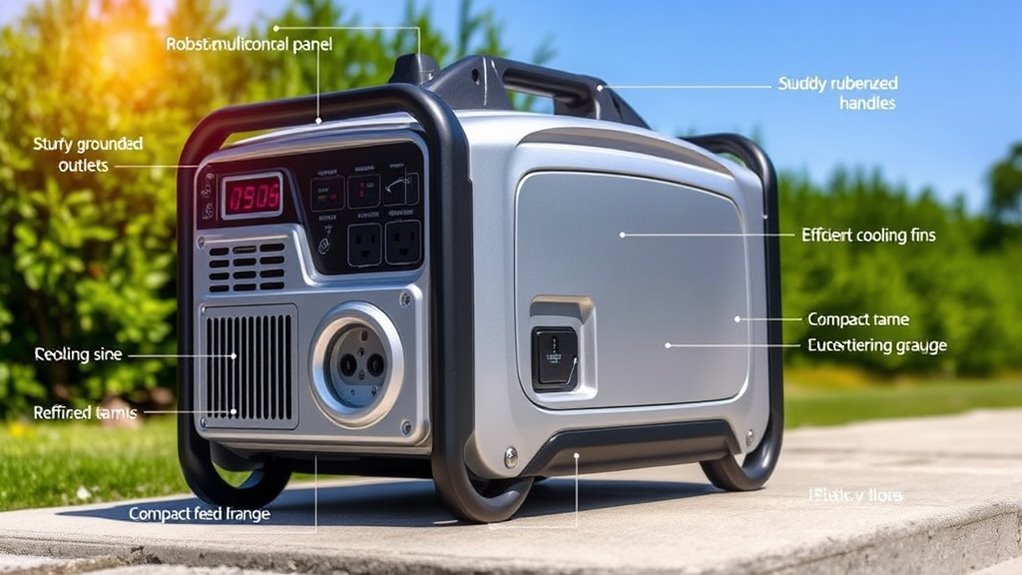
Reliability in portable generators hinges on several critical features that guarantee consistent performance under various conditions. First, a robust engine design with high-quality components ensures durability and stable power output. Second, an efficient alternator maintains steady voltage and frequency, preventing power fluctuations that could damage connected devices. Third, advanced voltage regulation systems, such as Automatic Voltage Regulation (AVR), compensate for load changes, ensuring consistent power delivery. Fourth, reliable fuel management features like low-oil shutoff protect the engine from damage and extend lifespan. Finally, a durable frame and corrosion-resistant materials enhance longevity, especially in outdoor or harsh environments. These features collectively guarantee the generator operates reliably, providing steady power when it’s most needed.
How Does Noise Level Impact Your Generator’s Usability?
While a portable generator provides essential power during outages or outdoor activities, its noise level substantially influences usability and comfort. Elevated noise levels can cause operational fatigue, reduce concentration, and increase the likelihood of noise-related disturbances in residential or communal settings. Noise emissions are typically measured in decibels (dB), with lower readings indicating quieter operation; generators exceeding 70 dB can interfere with normal conversations and sleeping arrangements. High noise levels may also violate local ordinances, limiting outdoor use. Additionally, prolonged exposure to loud generators risks hearing damage. Consequently, selecting models with sound attenuation features or lower decibel ratings is vital for maintaining usability, especially in environments demanding quiet operation. Ultimately, noise level directly affects the practicality and acceptability of portable generators in various settings.
Why Is Power Output a Critical Factor for Different Needs?
Choosing a portable generator with the appropriate power output hinges directly on the specific needs of the user. Accurate power assessment guarantees the generator can reliably support essential devices without overload. For basic applications, such as running LED lights or small electronics, a lower wattage (around 1000-2000W) suffices. Conversely, powering larger appliances like refrigerators, power tools, or multiple devices requires a higher output, often in the range of 3000-7000W. Understanding the starting and running wattage of each device prevents overloading and potential damage. Precise calculation of total load capacity guarantees stable operation and energy efficiency. Thus, selecting a generator with suitable power output is critical to meet operational demands, optimize runtime, and ensure system reliability across various scenarios.
What Safety Features Should You Look for in a Portable Generator?
Ensuring safety when operating a portable generator is paramount, as electrical failures or malfunctions can pose significant hazards. Key safety features include automatic low-oil shutdown, which prevents engine damage and reduces fire risk by shutting down the unit if oil levels drop too low. Ground-fault circuit interrupters (GFCIs) are essential for preventing electrical shock, especially in wet conditions, by disconnecting power instantly when a ground fault is detected. Overload protection is critical, as it safeguards both the generator and connected devices from damage by shutting down if power exceeds rated capacity. Additionally, circuit breakers provide manual control over power distribution, and sturdy enclosures minimize exposure to moving parts or hot surfaces. These features collectively enhance operational safety and mitigate potential risks.
How Important Are Ease of Use and Portability?
Ease of use and portability directly influence how effectively and safely a portable generator can be integrated into various settings. These features determine the speed and accuracy of setup, operation, and maintenance, minimizing user error and reducing safety risks. A generator with intuitive controls, clear labeling, and straightforward startup procedures enhances operational efficiency. Portability, characterized by lightweight design, ergonomic handles, and compact form factors, facilitates transportation and placement in diverse environments, such as job sites or emergency scenarios. In critical applications, these factors ensure minimal downtime and ideal performance. Thus, prioritizing ease of use and portability not only improves user experience but also enhances safety, reliability, and overall functionality of the generator in real-world conditions.
Which Connectivity Options Make Maintenance and Monitoring Easier?
Connectivity options such as Wi-Fi, Bluetooth, and cellular networks considerably streamline maintenance and monitoring by providing real-time data access and remote control capabilities. These wireless protocols enable direct communication with the generator’s control system, allowing technicians to receive detailed operational metrics such as voltage, current, temperature, and fuel levels instantly. Wi-Fi connectivity facilitates centralized monitoring via web portals or dedicated apps, which can aggregate multiple units for fleet management. Bluetooth offers short-range, secure access for quick diagnostics and configuration adjustments. Cellular modules extend remote monitoring beyond local networks, ensuring continuous oversight in remote locations. These connectivity features reduce downtime, simplify troubleshooting, and enhance operational efficiency by enabling proactive maintenance and immediate response to system alerts.
How Can You Ensure Your Generator Is Energy Efficient and Cost-Effective?
To maximize energy efficiency and control operating costs, it is vital to optimize your generator’s performance through proper maintenance, load management, and selection of appropriate components. Regularly inspect and replace filters, lubricate moving parts, and verify fuel system integrity to guarantee optimal operation. Load management involves balancing the power demand with the generator’s rated capacity, avoiding overloads that cause inefficiency or damage. Choosing high-quality, energy-efficient components—such as inverter technology and low-resistance wiring—reduces energy loss. Implementing smart monitoring systems helps track performance metrics, enabling timely adjustments. Additionally, running the generator at its ideal load point improves fuel consumption and reduces emissions. These practices collectively ensure your generator operates efficiently and cost-effectively over its lifespan.
Frequently Asked Questions
How Long Do Portable Generators Typically Last With Regular Use?
Portable generators typically last 1,000 to 3,000 hours with regular use, depending on maintenance, load, and quality. Proper upkeep, such as oil changes and cleaning, markedly extends their lifespan, ensuring reliable performance over years.
Are There Environmental Considerations When Choosing a Portable Generator?
Coincidentally, environmental considerations are vital; we prioritize low emissions, fuel efficiency, and noise levels when selecting a portable generator. These factors minimize pollution, reduce carbon footprint, and guarantee compliance with local regulations, supporting eco-friendly operation and sustainability.
What Maintenance Routines Are Essential for Prolonging Generator Lifespan?
We regularly change the oil, clean or replace air filters, inspect spark plugs, and run the generator under load to prevent carbon buildup, ensuring peak performance and extending its operational lifespan through consistent, preventative maintenance routines.
Can Portable Generators Run on Alternative Fuel Sources?
Yes, portable generators can run on alternative fuels like propane, natural gas, or solar power with compatible conversion kits or specialized models. We recommend verifying fuel compatibility and installation procedures to guarantee safe, efficient operation.
How Do Warranty and Customer Support Influence Generator Purchase Decisions?
Like a trusty knight’s shield, warranty and customer support bolster our confidence in a generator purchase, ensuring reliable post-sale service and peace of mind. These factors considerably influence our decision-making, prioritizing durability and responsive assistance.
Conclusion
Choosing a portable generator is like assembling a finely tuned orchestra—each feature must harmonize for peak performance. Prioritizing reliable components, noise control, safety, and portability guarantees your power source performs flawlessly under pressure. By focusing on these critical elements, we can navigate the complex landscape of options with confidence, turning a simple device into a trusted partner that reliably fuels our adventures and work. In the symphony of power, precision is our guiding note.