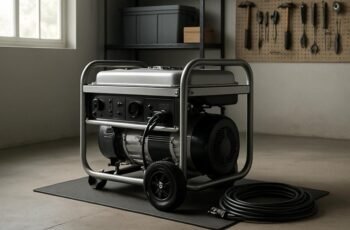
In a recent field test, we traced a jittery startup to a marginal spark between the plug and coil, then methodically ruled out fuel and air paths. We’ll approach your portable generator with the same disciplined, safety-first mindset—checking ignition components, verifying resistances, and confirming carburetion and ventilation before testing lines. If you want a reliable, ready-for-action unit, we’ll guide you through the proven steps and precautions that keep emergencies powered and crews safe.
Key Takeaways
- Diagnose ignition, fuel, and air pathways first to address jittery starts, rough idle, and no-spark symptoms.
- Follow safety-first steps: isolate power, use lockout-tagout, and inspect for cracks, leaks, and proper grounding.
- Systematically test fuel, air, and spark: verify lines, filters, timing, coil resistance, and compression synchronization.
- Use verified parts from authorized distributors with clear warranties, and ensure tools meet SAE standards and safety certifications.
- Emphasize preventive care: routine inspections, cleanable components, correct oil levels, and proper long-term storage procedures.
Diagnosing Common Generator Problems: Jittery Starts, Rough Idle, and No-Spark Symptoms
When a portable generator exhibits jittery starts, rough idle, or no-spark symptoms, the problem typically sits at the ignition, fuel, or air pathways, and a structured diagnostic approach helps isolate the root cause. We approach diagnostic troubleshooting with methodical steps, verifying ignition coil integrity, spark plug gaps, and wire conductivity first. Next, we assess fuel delivery: carburetor cleanliness, float level, and fuel line pressure, ensuring no obstructed passages impede flow. Air pathways receive scrutiny for vacuum leaks, filter cleanliness, and throttle linkage alignment. We document each observation and compare it to spec benchmarks, eliminating guesswork. If symptoms persist, we recheck electrical grounding and kill-switch safety circuits. Our priority remains safe, precise isolation of jittery starts and rough idle causes before implementing corrective actions.
Safety-First Maintenance Checklist: Basic Servicing You Can Do Yourself
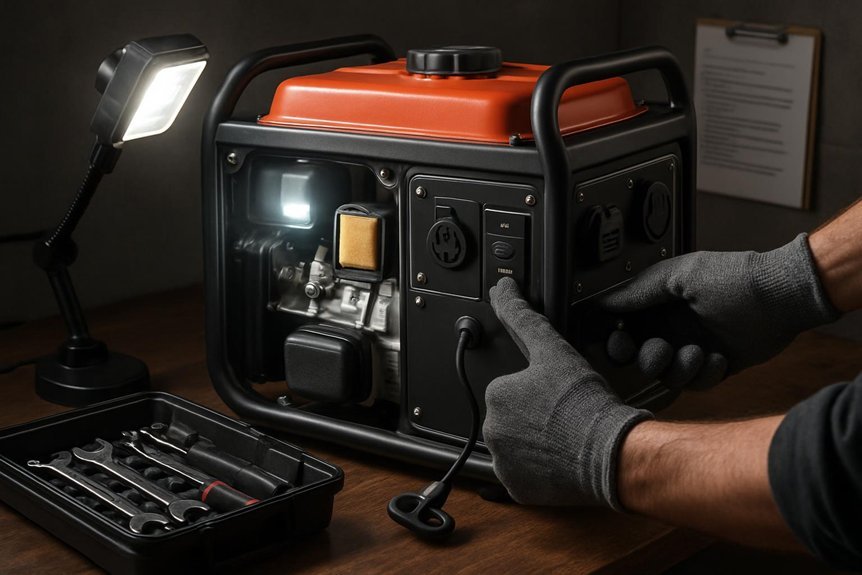
Have you considered how a simple, proactive routine can prevent major generator failures before they happen? We approach safety-first maintenance with a clear, repeatable checklist that minimizes risk while maximizing reliability. Begin with safety gear: gloves, eye protection, and a dielectric mat, then verify the unit’s electrical isolation before any inspection. Disconnect power sources, test for residual voltage, and lockout-tagout as needed. Inspect exterior housing for cracks, corrosion, and fuel leaks; clean surfaces to improve cooling airflow. Check oil level, air filter condition, and spark plug cleanliness, replacing parts per manufacturer specs. Perform a controlled battery test and verify grounding continuity. Document each step, note anomalies, and avoid bypassing procedures. Adhere strictly to steps; the routine reduces unplanned downtime and protects both technician and equipment.
Fuel, Air, and Spark: Systematic Troubleshooting for Performance Issues
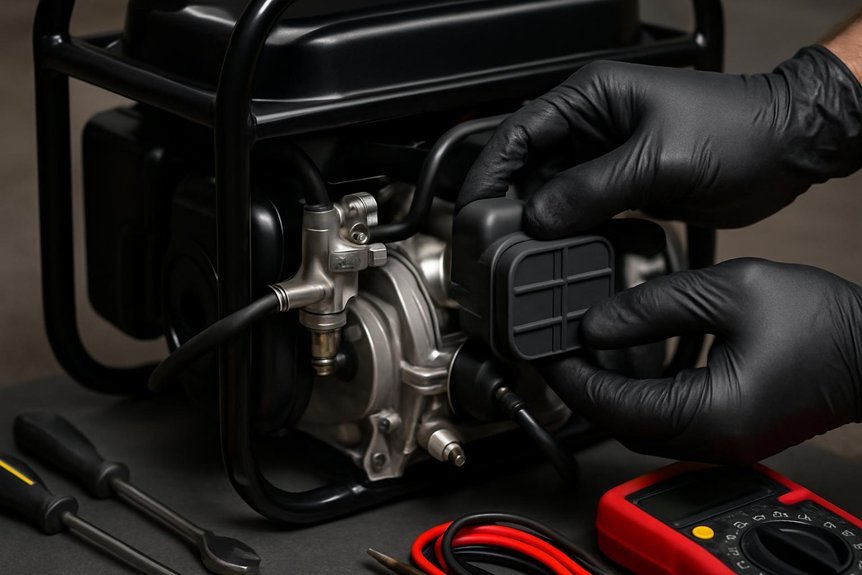
We pick up from our safety-first routine and zero in on the three primary performance drivers: fuel, air, and spark. We approach each subsystem with methodical checks, documenting findings as we go. For the fuel system, we verify line integrity, filter cleanliness, and correct pressure, then assess for leaks or varnish deposits that impede flow. We test the carburetion or fuel-injection pathway, adjusting idle and load metering only within spec. For air, we inspect the air filter, intake seals, and manifold for obstructions or leaks, confirming unobstructed airflow. For spark, we verify coil resistance, plug condition, and correct ignition timing, ensuring synchronization with the compression cycle. Our goal is reproducible performance gains without compromising safety or warranty.
Parts, Tools, and Trusted Service: Finding Reputable Repairs and Replacements
Where should you start when sourcing parts, tools, and trusted service for portable generators? We begin with defining exact part numbers, model compatibility, and return policies before purchasing. We verify authorized distributors to ensure genuine components and avoid counterfeit risk. Our process emphasizes parts sourcing from reputable vendors with clear warranty options and documented lot tracing. We compare tool kits for correct specifications, SAE standards, and safety certifications, confirming compatibility with your generator’s engine and ignition system. For service, we select technicians with proven experience on your model, request written estimates, and confirm travel and labor terms. We document all warranties, keep receipts, and register components when applicable. This disciplined approach minimizes downtime, preserves performance, and protects safety during repairs and replacements.
Preventive Care and Best Practices: Keeping Your Portable Generator Ready for Anything
Are you prepared for the unexpected? In this section, we outline preventive care and best practices that keep your portable generator ready for anything. We approach maintenance as a repeatable, safety‑driven process: schedule routine inspections, document findings, and fix faults before they escalate. Use brand new techniques for cleaning air filters, spark plugs, and fuel systems, and verify oil levels with the manufacturer’s tolerances. During operation, monitor vibration, exhaust, and electrical output for anomalies, and avoid extensions that compromise grounding. For storage, follow long term storage procedures: drain or stabilize fuel, disconnect batteries, and protect from moisture and corrosion. Establish a simple pre‑start checklist and practice it regularly so readiness becomes second nature, not guesswork.
Frequently Asked Questions
How Do I Diagnose Intermittent Electrical Surges Safely?
We diagnose intermittent surges by logging waveform data, checking grounding, inspecting connections, and testing under load; we debunk diagnostic myths and follow safety protocols, documenting findings and stopping if anomalies exceed limits to protect you and equipment.
Can a Noisy Exhaust Indicate a Bigger Underlying Issue?
Yes, a noisy exhaust can signal a bigger issue. We’ll systematically inspect mounts, misfires, restriction, and exhaust leaks, ensure proper ventilation, and verify turbo or muffler integrity, following safety protocols before concluding a root cause.
What’s the Shelf-Life of Generator Oil After Opening?
Oil aging typically after opening is about 6–12 months for standard generator oil; monitor fuel stability and odors. We, however, prioritize safety, label dates, store sealed, and rotate stocks to maintain performance and reduce corrosion risk.
Are There Warning Signs of Counterfeit Replacement Parts?
Yes, warning signs exist: counterfeit labeling, mismatched part numbers, or suspicious packaging; verify parts sourcing via manufacturer catalogs and authorized distributors, inspect torque marks, and confirm serial compatibility before installation to ensure safe, reliable generator operation.
How Often Should I Rebuild the Carburetor for Longevity?
We recommend regular carburetor checks every 200–300 hours for reliability maintenance and fuel system longevity; we’ll monitor performance and schedule precise rebuilds, avoiding overhauls, optimizing safety, and ensuring consistent operation with proper parts and procedures.
Conclusion
We’ve walked through diagnosing, maintaining, and safeguarding your portable generator with precision and care. When we replaced a fouled spark plug and seen the engine roar to life, it was like swapping out a clogged airway for a clear, straight road—speed restored. In practice, follow the steps, verify each system, and document results. Safety is built into every phase: lockout, proper PPE, grounded tools, and steady testing. Ready for emergencies, we’ll keep power ready and safe.