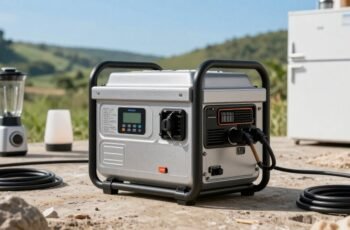
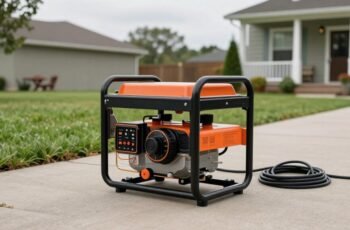
When choosing a portable generator for overnight use, we recognize the importance of balancing noise levels, power output, and portability to guarantee a restful sleep and reliable operation. Precise considerations like inverter efficiency, safety features, and fuel type directly impact performance and convenience in outdoor settings. To optimize your setup, it’s crucial to evaluate these technical aspects carefully, which can greatly influence your overnight experience—and the best options might surprise you.
Key Takeaways
- Choose generators with noise levels below 60 dB for quiet overnight operation and minimal disturbance.
- Opt for fuel-efficient models with inverter technology to maximize runtime and reduce fuel consumption.
- Ensure the generator has automatic safety features like low oil shutdown and overload protection for safe use overnight.
- Prioritize lightweight, compact designs with ergonomic handles for easy portability and setup at campsites.
- Consider battery-powered options for ultra-quiet operation and minimal maintenance during extended outdoor use.
What Features Make a Portable Generator Ideal for Overnight Use
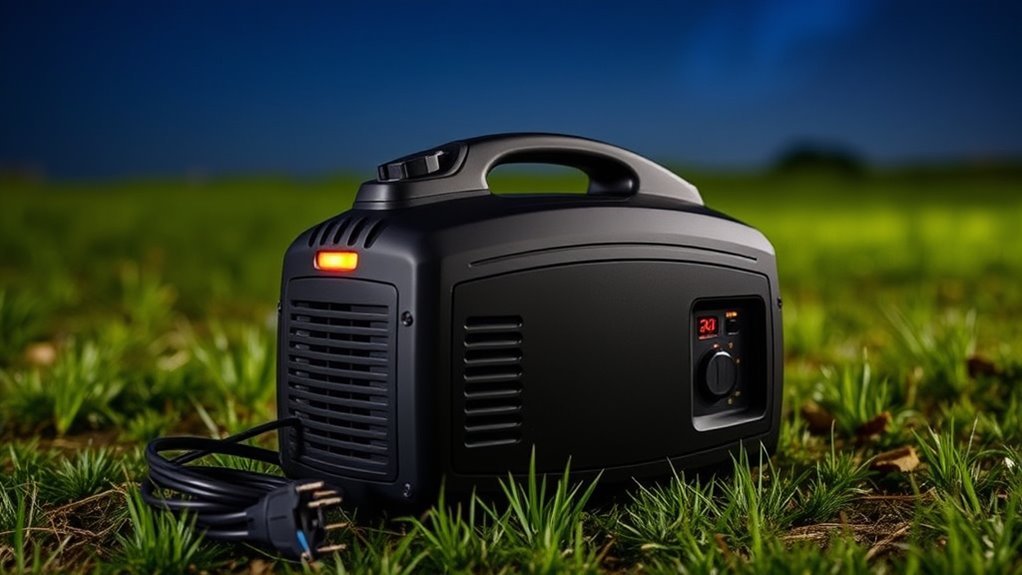
When selecting a portable generator for overnight use, it’s essential to prioritize features that guarantee reliable, quiet, and efficient operation. Key attributes include low noise levels—ideally under 60 decibels—to minimize disturbance. Fuel efficiency is critical, so look for models with economy modes or inverter technology, which optimize fuel consumption and stabilize power output. Portability features such as compact size, lightweight design, and ergonomic handles facilitate easy transport and placement in tight spaces. Automatic shutdown systems protect against low oil levels, ensuring safety during extended operation. Additionally, durable build quality and vibration isolation reduce wear and operational noise. Precise voltage regulation and clean power output are necessary to safeguard sensitive electronics during overnight power supply. These features collectively *assure* safe, quiet, and reliable overnight usage.
How to Choose a Lightweight and Compact Generator
Selecting a lightweight and compact generator requires careful attention to weight, size, and design features that enhance portability without compromising performance. Focus on the generator’s dry weight, making sure it’s manageable for single-person transport. Size dimensions also matter; smaller units fit easily into vehicles or carry over longer distances. Prioritize models with ergonomic handles and streamlined shapes for ease of handling.
| Feature | Importance |
|---|---|
| Weight | Minimizes fatigue during transport |
| Size | Fits into tight storage spaces |
| Handle Design | Eases lifting and maneuverability |
| Power-to-Weight Ratio | Ensures sufficient output without excess bulk |
The Importance of Noise Levels for Nighttime Camping
Minimizing noise levels from portable generators is essential for ensuring a restful night during camping trips. Elevated sound emissions can disrupt sleep patterns and disturb nearby wildlife, compromising the overall outdoor experience. Noise levels are measured in decibels (dB), with quieter models operating below 60 dB, comparable to ambient room noise. Effective noise reduction involves engine design, muffler quality, and insulation materials. Inverter generators typically produce less noise than conventional models due to their variable engine speed, maintaining power efficiency while minimizing sound output. When selecting a generator for overnight use, prioritize models specifically engineered for low noise emissions, ensuring compliance with campground regulations and preserving the tranquility of the natural environment. Accurate noise assessments are vital for maximum camping comfort and environmental respect.
Battery vs. Gas-Powered Generators: Which Is Better for Overnight Adventures?
When comparing battery and gas-powered generators for overnight use, noise levels directly impact comfort and sleep quality, with batteries offering markedly quieter operation. Fuel efficiency and runtime are also critical, as gas generators typically provide longer operation but require refueling, whereas batteries depend on capacity and recharge cycles. Evaluating these factors allows for an informed choice tailored to the specific demands of overnight adventures.
Noise Levels and Comfort
Battery-powered generators typically produce markedly less noise than their gas-powered counterparts, making them a more comfortable choice for overnight use in quiet environments. They operate through electric motors that generate minimal acoustic emissions, often below 60 decibels at a standard distance, which minimizes disturbance to surroundings. Conversely, gas-powered models rely on internal combustion engines, which produce noise levels ranging from 65 to over 75 decibels, depending on engine size and load. This elevated noise level can substantially impact sleep quality and overall comfort during overnight trips. Additionally, battery generators lack exhaust noise and vibrations associated with internal combustion, further enhancing their suitability for silent operation. Thus, when prioritizing acoustic comfort and quiet operation, battery-powered units offer a distinct advantage over traditional gas-powered models.
Fuel Efficiency and Runtime
Have you considered how fuel efficiency and runtime differ between battery and gas-powered generators for overnight use? Battery generators offer a high energy conversion efficiency, typically providing 8-12 hours of runtime on a full charge, depending on load. They operate silently and produce no emissions, making them ideal for extended use without refueling. Gas-powered generators, however, deliver longer runtimes—often 12-24 hours—by consuming fuel at a predictable rate, but they require refueling during extended use, which involves handling fuel safely and managing emissions. While gas units generally have higher wattage capacity, their efficiency is impacted by load levels. For overnight applications, battery units excel in ease of use and minimal maintenance, whereas gas generators favor longer continuous operation at higher power demands.
Top Quiet and Efficient Portable Generators Reviewed
Although noise levels are a critical factor for overnight use, efficiency and performance remain paramount when selecting a portable generator. The most effective models combine low decibel output with high energy conversion efficiency, ensuring minimal disturbance and ideal runtime. We focus on generators that feature advanced inverter technology, which stabilizes power output and reduces noise. Key specifications include sound levels under 60 dB, fuel consumption rates below 0.4 gallons per hour, and inverter systems that deliver clean, stable power suitable for sensitive electronics.
Efficient, quiet portable generators with advanced inverter tech ensure stable power and minimal noise for overnight use.
- Ultra-quiet operation at 55-60 dB
- High fuel efficiency with extended runtime
- Advanced inverter technology for stable output
Key Factors to Consider When Budgeting for an Overnight Generator
When budgeting for an overnight generator, it’s crucial to balance initial purchase costs with long-term operational expenses. We must consider the upfront price, which varies based on power output, engine quality, and brand reputation. Higher-capacity models typically cost more initially but offer better efficiency and longevity. Operational costs include fuel consumption, maintenance, and potential repair expenses, which can substantially impact total cost of ownership. It’s also prudent to evaluate warranty coverage and availability of parts, as these influence future expenses. Additionally, energy efficiency ratings affect fuel economy and runtime, directly impacting ongoing costs. By analyzing these factors, we guarantee the selected generator aligns with our budget constraints while meeting performance requirements for overnight use. This thorough approach optimizes both initial investment and operational sustainability.
Tips for Maintaining and Extending Your Generator’s Battery Life
Maintaining ideal battery health requires consistent charging, even when the generator is not in use, to prevent capacity loss. We also recommend keeping the battery clean and dry to avoid corrosion and environmental damage, which can impair performance. Additionally, avoiding deep discharges ensures the battery maintains its lifespan and reliable operation over time.
Regularly Charge the Battery
Regularly charging your generator’s battery is crucial to guarantee reliable performance during overnight use. Consistent maintenance prevents sulfation and deep discharge, which can notably reduce battery lifespan. We recommend monitoring voltage levels regularly and maintaining a charge above 80% when the generator is not in use.
To optimize battery health, consider these practices:
- Check electrolyte levels and top up with distilled water if applicable
- Use a smart charger to prevent overcharging
- Store the generator in a temperature-controlled environment to reduce thermal stress
Implementing these measures ensures your generator remains ready, minimizing the risk of failure during critical overnight operation. Proper charging routines are essential for maintaining peak battery capacity and extending overall service life.
Keep It Clean and Dry
Keeping your generator’s battery clean and dry directly impacts its longevity and reliable performance. Moisture and dirt accumulation can cause corrosion of terminals, leading to increased resistance and potential failure. Regularly inspect and wipe down the battery terminals with a dry, lint-free cloth to prevent corrosion buildup. Confirm the battery compartment remains sealed and free from moisture, as humidity can accelerate deterioration. Use dielectric grease on terminals to inhibit corrosion if recommended by the manufacturer. Store the generator in a dry, sheltered location when not in use, and avoid exposure to rain or excessive humidity. Proper ventilation around the battery prevents condensation buildup. Maintaining a clean, dry environment minimizes corrosion risks and preserves battery capacity, ensuring consistent power output during critical overnight operations.
Avoid Deep Discharges
To maximize your generator’s battery lifespan, it’s essential to prevent deep discharges, which can cause irreversible damage and reduce overall capacity. Deep discharges strain the battery’s chemical structure, leading to diminished performance and shorter service life. To avoid this, monitor battery voltage levels regularly and guarantee the charge is maintained above critical thresholds. Proper management involves:
- Keeping the battery charge above 20% to minimize stress.
- Using a smart charger or automatic shutoff when the battery reaches ideal levels.
- Avoiding prolonged storage in a fully discharged state, especially in extreme temperatures.
Implementing these practices helps maintain battery integrity, prolongs lifespan, and ensures reliable operation during overnight use. Regular maintenance and careful monitoring are key to preserving your generator’s power capacity over time.
Frequently Asked Questions About Portable Generators for Overnight Use
What are the key considerations when choosing a portable generator for overnight use? Primarily, we focus on fuel efficiency, noise levels, and runtime. Low noise output minimizes disturbance, especially during nighttime, while extended runtime reduces refueling frequency. Fuel type impacts operational convenience; propane and dual-fuel models offer flexibility and cleaner emissions. Power output must meet essential load demands without overcapacity, guaranteeing efficiency. Portability features like weight, handle design, and compactness are vital for easy setup and mobility. Safety components, such as automatic shutoff during low oil or overload conditions, enhance reliability. We also evaluate durability against weather exposure, especially if outdoor placement is necessary. These factors collectively guarantee a generator provides reliable, quiet, and safe operation throughout overnight periods.
Frequently Asked Questions
How Long Can a Portable Generator Run Continuously Overnight?
We find that most portable generators can run continuously overnight for approximately 8 to 12 hours, depending on fuel capacity and load. Proper maintenance and fuel management guarantee safe, reliable operation during extended use periods.
Are Solar-Powered Generators Suitable for Extended Overnight Use?
Solar-powered generators are highly suitable for extended overnight use, offering sustainable, quiet, and efficient energy with nearly unlimited capacity, provided they receive sufficient sunlight during the day, making them reliable and environmentally friendly for continuous power needs.
What Safety Precautions Should I Take With Overnight Generators?
We recommend ensuring proper ventilation, keeping generators outdoors, avoiding carbon monoxide buildup, regularly inspecting for leaks or damage, and using appropriate extension cords. Always follow manufacturer instructions and have a carbon monoxide detector nearby for safety during overnight operation.
Can I Connect Multiple Generators for Longer Power Supply?
Connecting multiple generators isn’t advisable without proper transfer switches; doing so can create dangerous back-feed risks. We recommend consulting a qualified electrician to guarantee a safe, synchronized power setup that maintains system integrity and personnel safety.
How Does Fuel Consumption Affect Overnight Operation?
Fuel consumption directly impacts overnight operation duration; higher efficiency leads to longer runtimes, while increased fuel use shortens it. We optimize fuel efficiency by selecting generators with low consumption rates and maintaining proper load management.
Conclusion
In conclusion, selecting the right portable generator for overnight use hinges on understanding noise levels, power needs, and portability. As we’ve seen, the right balance of efficiency, safety features, and durability ensures a reliable experience. Coincidentally, many of the top models also offer quiet operation and extended runtimes, making them versatile for various outdoor scenarios. With careful consideration, we can all enjoy peaceful nights and dependable power, regardless of where our adventures take us.