Studies show that over 80% of power outages last less than 24 hours, yet many households aren’t prepared to keep essential appliances running smoothly during these periods. Selecting the right portable generator involves evaluating power quality, capacity, and portability — factors critical for safeguarding refrigerators and freezers. Understanding these technical aspects guarantees you choose a model that meets your needs efficiently, but with so many options available, knowing where to start can be complex.
Key Takeaways
- Choose a generator with at least 2,000W surge capacity to handle refrigerator and freezer startup surges safely.
- Opt for models with clean sine wave output and low THD for sensitive appliance protection.
- Prioritize lightweight, portable units with ergonomic handles and wheels for ease of transportation.
- Ensure the generator provides reliable runtime and fuel efficiency for continuous power during outages.
- Select generators with safety features like overload protection, proper grounding, and quiet operation below 60 dB.
What Features Should You Look for in a Portable Generator for Refrigerators?
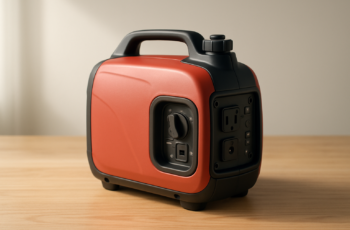
When selecting a portable generator for refrigerators, it’s vital to prioritize features that guarantee reliable and stable power delivery. Look for generators with a clean sine wave output, which ensures consistent voltage and minimizes the risk of damaging sensitive components. A sufficient starting wattage is essential to handle the initial surge when the compressor kicks in; typically, this requires 2-3 times the running wattage. Additionally, a low Total Harmonic Distortion (THD) rating indicates cleaner power, ideal for appliances like refrigerators. Portability features such as lightweight design, ergonomic handles, and sturdy wheels facilitate easy transport. Finally, integrated safety features like overload protection, circuit breakers, and automatic shutoff enhance operational reliability and protect both the generator and connected appliances during power fluctuations.
How Much Power Do Essential Appliances Need During a Power Outage?
Understanding the power requirements of essential appliances is critical for selecting an appropriately sized generator. We consider both their typical operating wattage and surge power needs during startup, guaranteeing continuous power capacity meets demand. Accurate assessment of these factors helps prevent overloads and ensures reliable operation during outages.
Typical Appliance Power Needs
Essential appliances vary widely in their power requirements, which directly impacts the size and capacity of portable generators needed during outages. Refrigerators typically draw between 100 to 800 watts, with an initial surge of up to 2,000 watts during compressor startup. Freezers have similar power profiles, generally consuming 300 to 700 watts, with surges around 1,500 watts. Smaller essential devices, like medical equipment or communication gear, demand markedly less—often under 200 watts. Larger appliances, such as sump pumps or microwaves, can require 600 to 1,500 watts or more. Understanding these power needs is critical for selecting a generator capable of providing consistent, reliable power without exceeding its capacity. Accurate load assessment ensures that essential appliances operate safely and effectively during power outages.
Surge Power Requirements
Many appliances draw more power during startup than their steady-state operation, a phenomenon known as surge power. This initial inrush can profoundly impact generator sizing, as your unit must accommodate this temporary spike. Typical surge power for refrigerators ranges from 2 to 3 times their running wattage, often between 600W and 2400W. For freezers, surge demands are similar but slightly lower, depending on compressor size. Vital appliances like medical devices or sump pumps may have even higher starting requirements. When selecting a generator, it’s important to take into account these surge loads to guarantee reliable operation.
- Adequate capacity to handle initial startup surges
- Precise understanding of appliance surge ratings
- Avoiding underpowered generator performance issues
Continuous vs. Startup Power
During a power outage, appliances draw different amounts of power depending on whether they are in steady operation or starting up, making it critical to distinguish between continuous and startup power requirements. Continuous power, or running wattage, is the steady-state energy needed to operate an appliance. Startup power, or surge wattage, is considerably higher and occurs momentarily when the appliance begins operation, such as compressor start-up in refrigerators or freezers. Essential appliances often have a startup power requirement 2-3 times their continuous power. Accurately evaluating both values ensures the generator can handle initial surges without overload. Misjudging startup power risks equipment shutdowns or generator overloads. Consequently, understanding these differences allows for selecting a generator that reliably meets both steady and transient power demands during outages.
Top Portable Generators for Powering Refrigerators and Freezers
When selecting portable generators for refrigerators and freezers, we evaluate power capacity and runtime to guarantee continuous operation during outages. We also consider portability and weight to facilitate easy positioning, along with noise levels and efficiency to minimize disturbance and optimize fuel consumption. Analyzing these technical factors helps identify models that deliver reliable, energy-efficient performance tailored to essential appliance needs.
Power Capacity and Runtime
Selecting a portable generator that meets the power demands of refrigerators and freezers requires careful consideration of both capacity and runtime. Proper capacity guarantees the generator can handle initial startup surges and continuous operation, while sufficient runtime guarantees sustained power during outages. Key factors include:
- Rated wattage: Must exceed the combined starting and running wattage of your appliances.
- Surge wattage: Ensures the generator can handle brief power spikes when appliances turn on.
- Fuel capacity and consumption: Larger tanks extend runtime, but efficiency varies by model.
A balanced assessment of these parameters allows for reliable operation without overestimating capacity, which can lead to unnecessary costs. Precise matching of generator specs to appliance requirements optimizes both performance and duration during critical times.
Portability and Weight
Given the importance of ease of transport in emergency or outdoor scenarios, evaluating the portability and weight of portable generators is essential for powering refrigerators and freezers effectively. Lighter units enhance mobility, enabling quick deployment and minimal effort during setup. Heavier models may offer increased power but compromise portability, making them less practical for frequent relocation. When considering these factors, consider the overall weight, handle design, and form factor to ensure ergonomic handling. Our analysis indicates that compact, lightweight generators—typically under 50 pounds—balance power needs with ease of movement. The following table illustrates key specifications for popular models:
| Model | Weight (lbs) | Handle & Portability Features |
|---|---|---|
| Model A | 45 | Foldable handle, compact design |
| Model B | 55 | Ergonomic grip, sturdy frame |
| Model C | 38 | Lightweight, carry-friendly |
| Model D | 60 | Heavy-duty wheels, vertical orientation |
| Model E | 48 | Slim profile, easy to carry |
Noise Levels and Efficiency
While portable generators must be sufficiently efficient to run refrigerators and freezers reliably, their noise levels are equally critical to take into account, especially in residential or outdoor environments. Excessive noise can cause disturbance and compromise comfort, so selecting models with lower decibel ratings is advantageous. Efficiency measures how well a generator converts fuel into consistent power, guaranteeing prolonged operation without frequent refueling. High efficiency reduces operational costs and environmental impact. Key considerations include:
- Decibel Ratings: Opt for generators with noise levels below 60 dB for quieter operation.
- Fuel Efficiency: Look for models with high fuel economy to maximize runtime during power outages.
- Power Output Stability: Ensure the generator provides stable, clean power (low Total Harmonic Distortion) to protect sensitive appliances like refrigerators and freezers.
Comparing Gas, Solar, and Battery-Powered Generators for Off-Grid Use
When evaluating power options for off-grid use, it’s essential to compare the technical specifications, operational costs, and environmental impacts of gas, solar, and battery-powered generators. Gas generators typically deliver high power output and quick refueling but emit greenhouse gases and require ongoing fuel costs. Solar generators rely on photovoltaic panels, offering clean energy with minimal environmental impact; however, they depend on sunlight availability and have limited power capacity. Battery-powered units provide silent, emission-free operation with low maintenance, but their runtime is constrained by battery capacity and can be expensive upfront. Each option presents trade-offs: gas generators excel in high-demand scenarios, solar offers sustainability, and batteries favor quiet, low-maintenance use. Choosing the right depends on your specific off-grid energy needs and environmental priorities.
Tips for Safe and Efficient Use of Your Portable Generator
To guarantee safe and efficient operation of your portable generator, it’s vital to follow proper setup, maintenance, and usage protocols. Proper grounding minimizes electrical hazards, while adequate ventilation prevents overheating and carbon monoxide buildup. Regular maintenance, including oil checks and filter replacements, ensures optimal performance and longevity. Additionally, correct load management avoids overloads that can damage the unit or appliances.
- Always operate the generator outdoors in a well-ventilated area.
- Use heavy-duty, outdoor-rated extension cords with appropriate wattage capacity.
- Avoid refueling when the generator is hot or running to prevent spills and fire hazards.
Adhering to these guidelines enhances safety and maximizes operational efficiency, ensuring reliable power when needed most.
How to Choose the Best Portable Generator Based on Your Budget and Needs
Selecting the right portable generator requires careful assessment of your specific power needs and budget constraints. First, determine the total wattage of essential appliances like refrigerators and freezers, then consider potential future needs.
| Budget Range | Suitable Generator Features |
|---|---|
| Low | Compact, lightweight models, basic wattage capacity |
| Moderate | Higher wattage, longer runtime, noise reduction features |
| High | Heavy-duty, inverter technology, advanced safety features |
When evaluating options, prioritize generator capacity matching your total load, and consider fuel efficiency, noise levels, and portability within your budget. Precise analysis guarantees peak performance without unnecessary expenditure.
Frequently Asked Questions
How Long Can a Portable Generator Run Continuously?
We find that portable generators typically run continuously for 8 to 12 hours, depending on their fuel capacity and load. Proper maintenance and fuel management are vital to maximize runtime and guarantee reliable operation during extended use periods.
What Maintenance Is Required for Portable Generators?
Maintaining a portable generator is like tuning a finely tuned engine; we regularly check and change the oil, clean air filters, inspect spark plugs, and guarantee proper fuel storage, keeping it reliable and efficient during critical times.
Are There Noise Level Considerations for Residential Use?
Yes, noise levels matter for residential use; lower decibel ratings (around 50-60 dB) minimize disturbance. We recommend choosing inverter generators, which operate more quietly and efficiently, ensuring compliance with local noise regulations and maintaining neighborly harmony.
Can a Generator Power Multiple Appliances Simultaneously?
Yes, a generator can power multiple appliances simultaneously if its wattage capacity exceeds the combined starting and running wattage of all devices. We recommend calculating total power demands carefully and ensuring the generator’s surge capacity supports startup loads efficiently.
What Are the Best Storage Practices for Portable Generators?
We treat our portable generators like precious tools, storing them in a dry, ventilated space away from dirt and moisture, regularly inspecting for leaks or corrosion, and following manufacturer guidelines to guarantee safety and peak performance over time.
Conclusion
In balancing power and portability, we find that the ideal generator isn’t just about capacity but also about reliability and safety. While a robust inverter offers clean, stable electricity, ease of transport guarantees readiness in emergencies. The choice between fuel types or power sources reflects our specific needs—whether off-grid or backup. Ultimately, selecting the right generator demands a precise analysis of technical specs, safety features, and budget—because every watt counts when protecting your essential appliances.