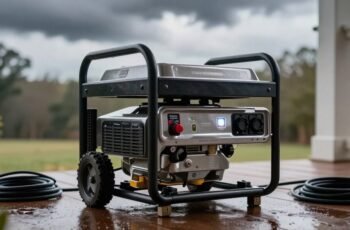
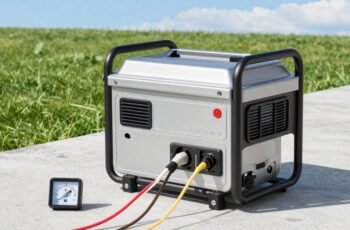
When considering how much to spend on a portable power generator, we recognize that the right investment depends on your specific needs and usage patterns. Balancing cost, features, and reliability is vital to avoid overspending or underpowering your setup. As we explore the factors influencing costs, it becomes clear that understanding your power demands is the first step toward making an informed decision—one that guarantees you get the value you need without unnecessary expense.
Key Takeaways
- Determine your intended use and power needs to establish a suitable budget range.
- Consider long-term costs like fuel, maintenance, and repairs, not just initial purchase price.
- Higher-quality generators with better reliability and features typically cost more but save money over time.
- For light or occasional use, $300-$600 may suffice; for frequent or critical applications, budget $600-$1,200+.
- Investing in a reliable, efficient model ensures performance and reduces long-term expenses.
How Do You Determine Your Power Needs and Set a Budget?
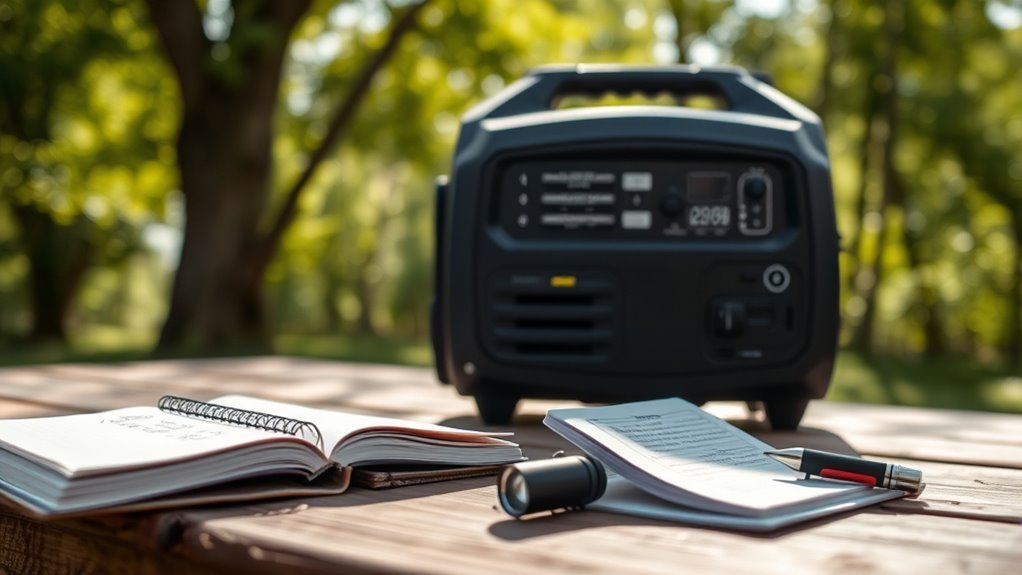
Determining your power needs is the crucial first step in selecting a portable generator that fits your budget. We recommend listing all essential devices you plan to operate, noting their wattage requirements—both starting and running. This process guarantees accurate power calculations, preventing over- or underestimating capacity. Consider future needs or potential additions, as this can influence size and cost. Establishing a clear power requirement helps narrow options, avoiding unnecessary expenses on excessive capacity. Equally important is setting a realistic budget aligned with your actual needs, factoring in ongoing fuel and maintenance costs. By carefully analyzing your power consumption and financial limits, you create a focused framework that guides you toward a generator capable of fulfilling your essential demands efficiently and cost-effectively.
What Features Influence the Cost of Portable Generators?
The features included in a portable generator considerably influence its overall cost, as each adds to the complexity, capability, and convenience of the unit. Higher-quality components, advanced safety features, and additional outlets typically increase the price. Key features to contemplate include wattage capacity, noise reduction technology, fuel efficiency, and portability enhancements like wheels and handles. Additional functionalities, such as remote start or inverter technology, also elevate costs but offer significant benefits in usability and performance.
| Feature | Impact on Cost |
|---|---|
| Wattage capacity | Higher capacity raises price |
| Noise reduction technology | Adds to manufacturing complexity |
| Fuel efficiency | More efficient units cost more |
| Portability features | Wheels, handles increase price |
| Additional outlets or inverters | Improve usability, add expense |
How Much Should You Expect to Spend Based on Your Usage?
Understanding your specific power needs is essential when budgeting for a portable generator, as the amount you should spend varies considerably based on intended usage. For light, occasional use, such as camping or small appliances, budget models often suffice, typically costing $300-$600. For frequent or backup home use, investing in mid-range models with higher wattage and durability, around $600-$1,200, is advisable. Heavy-duty applications, like powering entire homes or commercial equipment, require high-capacity generators, which can cost $2,000 or more.
- Occasional camping or recreational use
- Emergency backup for essential appliances
- Running small household devices regularly
- Powering entire home during outages
- Commercial or industrial applications
Are Budget Generators Reliable Enough for Emergency Backup?
While budget generators can be tempting due to their lower upfront costs, their reliability during emergencies remains a critical concern. These models often use simpler components and lower-quality parts, which can lead to frequent breakdowns or inconsistent power output when you need it most. In emergency scenarios, dependability is paramount, and budget units may not withstand prolonged use or extreme conditions. Additionally, their shorter lifespan and limited maintenance options can increase the risk of failure when backup power is essential. While they may suffice for occasional use or small appliances, their performance as a primary emergency backup system is often compromised. Consequently, it’s important to carefully evaluate whether the cost savings justify potential reliability issues during critical moments.
When Is It Worth Investing in a High-End Portable Generator?
Investing in a high-end portable generator becomes justifiable when you require dependable, long-term power solutions for critical situations. These units are essential when your operations depend on consistent, high-quality electricity, such as for medical devices, business continuity, or remote work sites. They often feature superior fuel efficiency, advanced safety features, and quieter operation, making them suitable for frequent or prolonged use. Additionally, high-end units tend to have better durability and warranty coverage, reducing long-term maintenance costs. Consider a high-end generator if you:
- Depend on uninterrupted power for medical or sensitive equipment
- Need a reliable backup for business operations
- Regularly operate in remote or off-grid locations
- Require quieter operation for residential or commercial settings
- Expect frequent use with demanding power needs
These factors justify investing in a premium model for peace of mind and operational stability.
How Can You Save Money Without Sacrificing Power Quality?
To save money without compromising power quality, we should focus on essential features that meet our specific needs rather than overpay for extras. Comparing models based on price and performance helps identify options that balance affordability with reliable output. By making informed choices, we can optimize our investment and guarantee consistent power delivery.
Prioritize Essential Features
Focusing on essential features when selecting a portable power generator allows us to balance cost savings with maintaining high power quality. By prioritizing core functionalities, we avoid paying for unnecessary extras that inflate the price without adding value. Key features to regard include:
- Pure sine wave output for sensitive electronics
- Adequate wattage capacity for intended devices
- Fuel efficiency to lower operating costs
- Reliable starting mechanisms for ease of use
- Portability features like weight and handle design
Concentrating on these fundamentals ensures we get a generator that meets our power needs without overspending. This approach helps us optimize performance and durability without compromising on quality, ultimately leading to smarter purchasing decisions.
Compare Price and Performance
While it might seem tempting to choose the lowest-priced generator, we can often find models that strike a balance between cost and performance by carefully comparing their features and specifications. It’s vital to evaluate power output, runtime, and fuel efficiency alongside price, ensuring the generator meets your specific needs. Cheaper options may lack durability or advanced safety features, so examining build quality and warranty coverage is essential. We recommend creating a comparison chart to analyze key metrics and identify models that offer the best value. By focusing on performance-to-price ratios, we can avoid sacrificing power quality for cost savings. This approach helps us make informed decisions, selecting a generator that provides reliable power without overspending.
What Are Common Mistakes to Avoid When Budgeting for a Generator?
One common mistake is overestimating your power needs, which can lead to unnecessary expenses. Additionally, many overlook the long-term costs associated with maintenance and fuel, undervaluing the true investment. Avoiding these pitfalls ensures a more accurate budget and better value over the generator’s lifespan.
Overestimating Power Needs
Have you ever overestimated your power needs when budgeting for a portable generator? This common mistake can lead to unnecessary expense and overinvestment. Overestimating often results from a desire for excess capacity, but it can inflate costs without added benefit. To avoid this, consider the following:
- Including only essential appliances in your calculations
- Ignoring the startup wattage of devices
- Failing to account for surge requirements
- Overestimating the power of appliances based on peak consumption
- Overbuying capacity for future needs that may never materialize
Ignoring Long-Term Costs
When budgeting for a portable generator, neglecting long-term costs can lead to overlooked expenses that strain your budget over time. Many buyers focus solely on initial purchase price, ignoring ongoing costs like fuel, maintenance, and potential repairs. Fuel consumption varies markedly based on load and generator efficiency, impacting operating expenses. Regular maintenance, such as oil changes and filter replacements, is essential for longevity but often underestimated in initial budgeting. Additionally, spare parts and repair costs can accumulate, especially for older or heavily used units. Failing to account for these ongoing expenses can result in unexpected financial burdens, undermining the initial savings. To make a sound investment, it’s vital to consider both upfront costs and the long-term financial commitment involved in owning and operating a reliable portable generator.
Frequently Asked Questions
What Are the Long-Term Costs of Owning a Portable Generator?
The long-term costs of owning a portable generator include fuel expenses, regular maintenance, potential repairs, and replacement parts. We recommend budgeting for these ongoing expenses to guarantee reliable operation and avoid unexpected financial burdens over time.
How Does Fuel Efficiency Impact Overall Generator Expenses?
Fuel efficiency acts as the silent hero, dramatically reducing operating costs over time. It’s a crucial factor in our decision-making, helping us balance initial investment with ongoing expenses, ensuring smarter, more sustainable power solutions.
Are There Seasonal Discounts or Promotions on Portable Generators?
We find that seasonal discounts and promotions often occur during late summer and early fall, making it an ideal time to purchase portable generators. Monitoring retailer sales and timing your buy can yield significant savings for informed consumers.
How Often Should I Maintain My Generator to Ensure Reliability?
We recommend maintaining our generators at least every three to six months, depending on usage, to guarantee reliability. Regular inspections, oil changes, and testing help prevent unexpected failures and prolong the equipment’s lifespan effectively.
Can Portable Generators Increase Home Insurance Premiums?
Portable generators typically don’t directly increase home insurance premiums, but if they cause accidental damage or safety issues, insurers might reassess your policy. We recommend consulting your provider for specific policy implications regarding portable generator usage.
Conclusion
In sum, choosing the right portable generator is like finding the perfect gear for an expedition—you want reliable, efficient, and suited to your journey’s demands. By carefully evaluating your needs and understanding the features that matter, we can avoid overspending or underpreparing. Thoughtful budgeting ensures your power source supports your goals without unnecessary expense. Ultimately, a well-chosen generator becomes your steadfast partner, ensuring you’re ready to face any challenge head-on.