When selecting a portable generator, prioritizing safety features is crucial to guarantee reliable and secure operation. We recognize that essential elements like automatic shutdown systems, overload protection, and proper grounding can prevent accidents and equipment damage. Identifying these features, along with necessary certifications and efficient performance, requires careful evaluation. To make an informed decision and operate safely, it’s important to comprehend what safeguards should be in place before making a purchase.
Key Takeaways
- Prioritize generators with automatic shutdown, overload protection, and low oil shutoff for enhanced safety during operation.
- Ensure the generator has proper grounding, GFCIs, and safety labels to prevent electrical shocks and guide correct usage.
- Choose models with relevant safety certifications like UL, CSA, or EPA compliance for reliability and environmental safety.
- Operate in well-ventilated, dry outdoor areas, maintaining proper clearance and avoiding damp conditions to prevent hazards.
- Regular maintenance, correct fuel handling, and adherence to manufacturer instructions are essential for safe, long-term use.
How to Identify Essential Safety Features in Portable Generators
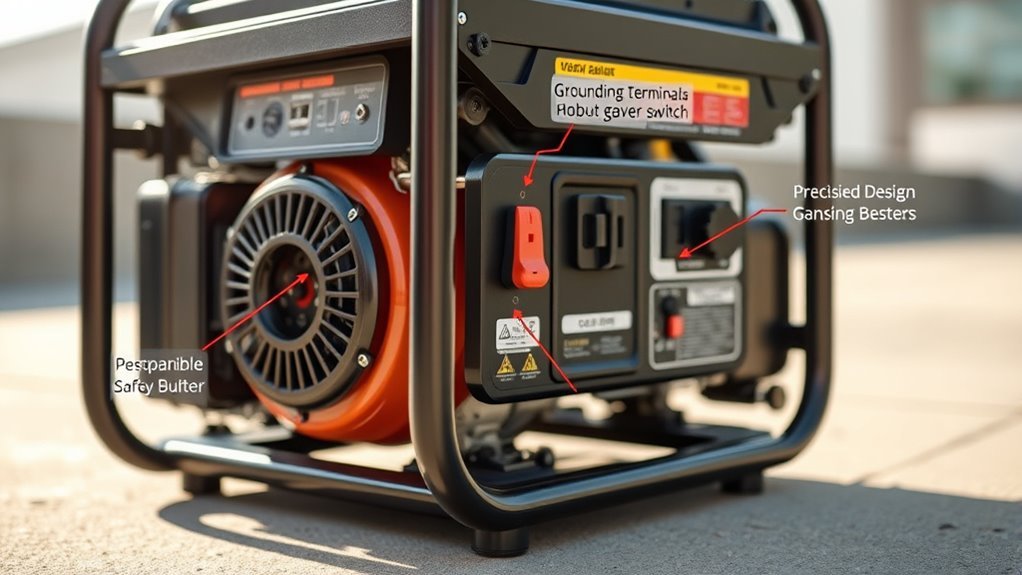
When selecting a portable generator, understanding how to identify essential safety features is critical for guaranteeing safe operation and preventing potential hazards. We focus on key components such as automatic shutdown systems that activate during low oil pressure or overload conditions, preventing engine damage and fire risks. Ground Fault Circuit Interrupters (GFCIs) are indispensable, as they protect users from electrical shocks by immediately cutting power upon detecting imbalances. Additionally, robust circuit breakers prevent overcurrent situations that could cause component failure or fires. Proper grounding mechanisms ensure electrical stability, reducing shock risks. Safety labels and clear instructions provide essential information for correct operation and maintenance. Recognizing these features helps guarantee the generator operates safely within designed parameters, minimizing hazards during use.
Understanding Power Output and Fuel Efficiency for Safe Use
Understanding power output ratings, fuel consumption rates, and runtime is essential to guarantee safe and efficient generator operation. Accurate knowledge of these specifications allows us to match the generator’s capacity with our power needs while minimizing fuel use. This clarity helps prevent overloads and ensures continuous, reliable power during critical times.
Power Output Ratings
Power output ratings are essential for selecting a portable generator that safely meets your energy demands. These ratings specify the maximum power the generator can produce continuously (rated output) and peak power during startup (surge capacity). Understanding these figures guarantees compatibility with your appliances and avoids overloads.
| Power Type | Description | Typical Use Case |
|---|---|---|
| Rated Output | Continuous power | Running essential appliances |
| Surge Capacity | Short-term peak | Starting motors or compressors |
| Power Factor | Efficiency of power use | Calculating real power needs |
Choosing a generator with appropriate rated and surge capacities ensures efficient, safe operation, preventing equipment damage and reducing safety risks. Accurate assessment of these ratings guarantees reliable performance aligned with your energy requirements.
Fuel Consumption Rates
Since fuel consumption directly affects both operational costs and safety, it’s essential to evaluate a portable generator’s fuel efficiency relative to its power output. Fuel consumption rates are typically measured in gallons per hour (GPH) or liters per hour (LPH) at specific load levels. Higher efficiency means less fuel is used to produce a given amount of electricity, reducing refueling frequency and minimizing safety risks associated with fuel handling. It’s important to examine the generator’s fuel burn rate at both rated and partial loads, as efficiency varies with load. A generator with optimized fuel consumption ensures reliable performance while conserving fuel, which prevents overloading the engine and reduces the risk of unsafe operational conditions. Precise assessment of these rates helps ensure safe, cost-effective, and efficient use.
Runtime and Efficiency
Evaluating a generator’s runtime and efficiency involves analyzing how long it can operate at various load levels while maintaining ideal fuel use. This assessment guarantees safe, reliable power during outages without unnecessary fuel consumption. Higher efficiency models deliver more power per unit of fuel, reducing operating costs and hazards. Understanding the generator’s power output at different loads helps optimize safety and performance.
| Load Level | Approximate Runtime |
|---|---|
| 25% Load | 8-10 hours |
| 50% Load | 6-8 hours |
| 75% Load | 4-6 hours |
| 100% Load | 3-4 hours |
| Idle | 10-12 hours |
Choosing a generator with balanced runtime and efficiency ensures consistent, safe, and cost-effective operation.
Key Safety Certifications and Standards to Look For
When selecting a portable generator, identifying key safety certifications and standards is essential to guarantee reliable and compliant operation. Certifications guarantee the generator meets rigorous safety, emissions, and performance benchmarks.
- UL (Underwriters Laboratories) Certification: Ensures electrical safety and fire hazard mitigation.
- CSA (Canadian Standards Association) Certification: Confirms compliance with Canadian safety and performance standards.
- EPA Compliance: Validates emissions standards, reducing environmental impact.
- CE Marking: Indicates conformity with European safety and environmental directives.
These certifications verify that the generator adheres to strict safety protocols, reduces risk of electrical faults, and ensures regulatory compliance. Always verify these labels on the product or packaging before purchase to ensure safety and reliability.
Recognizing Built-In Safety Mechanisms and Emergency Features
Automatic shutoff systems are essential for preventing overloads and fuel spills, ensuring safe operation under abnormal conditions. Emergency stop features provide immediate power disconnection, enabling quick response during critical situations. Recognizing these built-in safety mechanisms allows users to select generators that prioritize safety and compliance.
Automatic Shutoff Systems
Automatic shutoff systems are essential safety features built into many portable generators, designed to prevent damage and reduce hazards during operation. These systems detect critical conditions and initiate shutdown procedures to protect both the generator and user. Key features include:
- Overload Protection – Detects excessive power draw, preventing motor damage and electrical faults.
- Low Oil Shutdown – Monitors oil levels and automatically halts operation if lubrication is insufficient, avoiding engine failure.
- Overheat Shutoff – Senses temperature spikes and triggers shutdown to prevent thermal damage.
- Fuel Leak Detection – Identifies leaks that could cause fire hazards, shutting down the generator to mitigate risk.
These features guarantee safe operation, minimize damage, and extend the lifespan of your generator.
Emergency Stop Features
Most portable generators are equipped with built-in emergency stop features that enable rapid shutdown in critical situations. These safety mechanisms are designed to immediately disconnect power, preventing electrical hazards or damage during faults or emergencies. Typically, emergency stop systems include accessible push-button controls or switch levers positioned for quick operation. Activation of these features overrides normal startup procedures, isolating the generator’s electrical output and halting engine operation. Some models incorporate safety interlocks that automatically trigger the stop function if abnormal conditions arise, such as overheating or overload. It’s essential to verify that emergency stop controls are clearly marked, easily reachable, and tested regularly. Proper implementation of these features guarantees quick response times, minimizing potential dangers during unforeseen events.
Tips for Safe Operation and Maintenance of Your Portable Generator
To guarantee safe operation and reliable performance, we must follow strict guidelines for maintaining our portable generators. Proper maintenance ensures efficiency and reduces risk.
- Regularly inspect and change the oil according to manufacturer specifications to prevent engine damage.
- Keep ventilation clear of debris to avoid overheating and ensure proper airflow.
- Test safety features such as circuit breakers and grounding before each use to confirm functionality.
- Store fuel in approved containers, away from heat sources, and avoid overfilling to prevent leaks and fire hazards.
Adhering to these maintenance routines minimizes operational risks and prolongs the generator’s lifespan. Consistent checks and timely servicing are essential for safe, dependable power delivery during emergency or routine use.
Common Safety Mistakes to Avoid When Using a Generator
While proper maintenance keeps your generator running safely and efficiently, many users still make avoidable mistakes during operation that can compromise safety. One common error is running the generator indoors or in enclosed spaces, risking carbon monoxide buildup, which can lead to poisoning. Additionally, connecting the generator directly to household circuits without a transfer switch creates a backfeed hazard, endangering utility workers and damaging appliances. Overloading the generator beyond its rated capacity causes overheating and potential failure. Failing to ground the unit properly increases the risk of electrical shock. Ultimately, neglecting to inspect cords and connections before use can lead to short circuits or sparks. Avoiding these mistakes is essential to ensure safe, reliable operation and prevent accidents or damage.
Frequently Asked Questions
How Often Should I Perform Safety Inspections on My Portable Generator?
We recommend inspecting your portable generator before each use and conducting an extensive safety check every 50-60 hours of operation or at least annually, ensuring all safety features, electrical connections, and fuel systems are functioning correctly.
What Are the Best Storage Practices to Ensure Safety?
We store portable generators in a dry, well-ventilated area, away from flammable materials, and on a stable surface. Regularly inspect for corrosion or leaks, as studies show improper storage increases safety risks by 40%.
Can I Use a Generator Safely Indoors?
You shouldn’t use a generator indoors because it produces dangerous carbon monoxide fumes. Always operate generators outdoors in well-ventilated areas, far from windows and vents, to guarantee safety and prevent harmful gas buildup.
How Do I Troubleshoot Safety Issues During Operation?
We monitor for unusual smells, sounds, or smoke—signs our generator’s warning signals. We check grounding and ventilation regularly, shut down immediately if issues arise, and consult the manual to correct safety concerns efficiently and effectively.
What Personal Protective Equipment (PPE) Is Recommended When Operating?
We recommend wearing insulated gloves, eye protection like safety goggles, ear protection such as earplugs or muffs, and a mask if fumes are present. These PPE items safeguard against electrical shocks, debris, noise, and harmful fumes during generator operation.
Conclusion
By selecting a generator with robust safety features, we’re building a fortress of protection around our power needs. These features act as vigilant guards, shielding us from electrical hazards and engine failures. Prioritizing certifications and proper operation practices guarantees our safety remains a steadfast lighthouse guiding us through any power outage. In the end, a well-chosen generator becomes a symbol of preparedness—an unwavering beacon that keeps our home and family secure amid the storm.