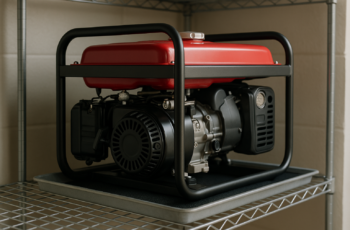
We’ll start by treating “No Power Output” as a symptom with concrete causes, and we’ll move through quick safety checks, fuel-system inspection, and electrical paths to isolate whether fuel, spark, or timing is the issue. We’ll verify fault codes and control-panel behavior, then test under load to confirm our next steps. If the results don’t align with the expected paths, we’ll adjust our approach and continue narrowing the fault without skipping essential confirmations.
Key Takeaways
- Confirm power-off safety and de-energize front panels, then inspect for obvious mechanical or electrical faults before testing any outputs.
- Differentiate electrical symptoms from mechanical limits by checking fuel delivery, ignition timing, and exhaust restrictions as root causes.
- Check fuel system from tank to carburetor: tank contamination, clean fuel, proper venting, and no line blockages.
- Verify electrical/ignition path: battery grounds, starter solenoid, spark plugs, wiring integrity, and accurate ignition timing.
- Review fault codes and indicators, log observations, and map alerts to probable causes before calling a professional.
What “No Power Output” Really Means for Your Generator
What does “No Power Output” really signify for your generator? We approach this analytically, mapping symptoms to causes with precision. In many cases, the issue isn’t the coils or the load, but intake, fuel delivery, or ignition timing faults that prevent energy conversion. We examine idle timing to determine whether the engine spins at the correct speed under load; improper timing often yields zero usable output despite a running engine. We also assess muffler noise as a diagnostic cue: excessive or unusual sounds can indicate exhaust restrictions or internal damage that robs power. By separating electrical symptoms from mechanical limits, we isolate whether rectification requires fuel-system adjustments, spark checks, or a timing realignment, guiding efficient, targeted fixes.
Quick Safety Checks Before You Do Anything
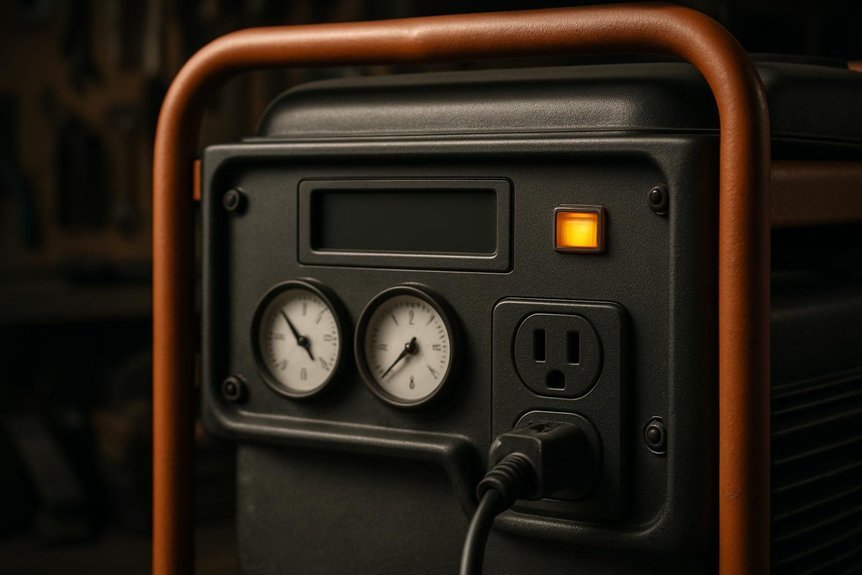
We start with simple, clear safety checks to prevent harm while we troubleshoot. We’ll verify power-off status and secure all switches before handling any components, then confirm that the area is stable and free of hazards. Our focus is on quick safety essentials and power-off precautions to set a precise, methodical groundwork for any further steps.
Quick Safety Essentials
Before we proceed, quick safety checks should be routine and deliberate: we inspect the equipment, environment, and protocols to guarantee nothing compromises power restoration or personal safety. We, as a team, approach each step with measured rigor, documenting findings and cross-checking against the checklist. We verify de-energization, confirm fuel and oil levels, and ensure ventilation and clearance are adequate to prevent overheating or unintended ignition. We assess ambient noise, aiming for noise reduction where possible to protect hearing during testing, and we review PPE suitability, securing gloves, eye protection, and hearing protection. We note any use of fuel additives and confirm compatibility with the generator system. We log deviations, notify relevant personnel, and proceed only when all criteria are met, maintaining precise, evidence-based reasoning throughout.
Power-Off Precautions
We guarantee the system is safely de-energized before any action begins? We approach Power-Off Precautions with disciplined checks, not guesswork. We verify that primary sources—breaker status, lockout tags, and battery disconnects—are confirmed as isolated. We proceed with a controlled sequence, avoiding unrelated topic distractions that could obscure essential steps. We test for residual charge with a calibrated meter, then document readings to establish a baseline. We ensure all personnel are clear of moving parts and energy stores, and we confirm ventilation remains adequate for safe work. We avoid redundant discussion, focusing only on actions that prevent arc flash or unexpected energization. Our methodology emphasizes traceable, repeatable steps, minimizing risk while preserving system integrity and procedural compliance.
Inspect the Fuel System: From Tank to Carburetor
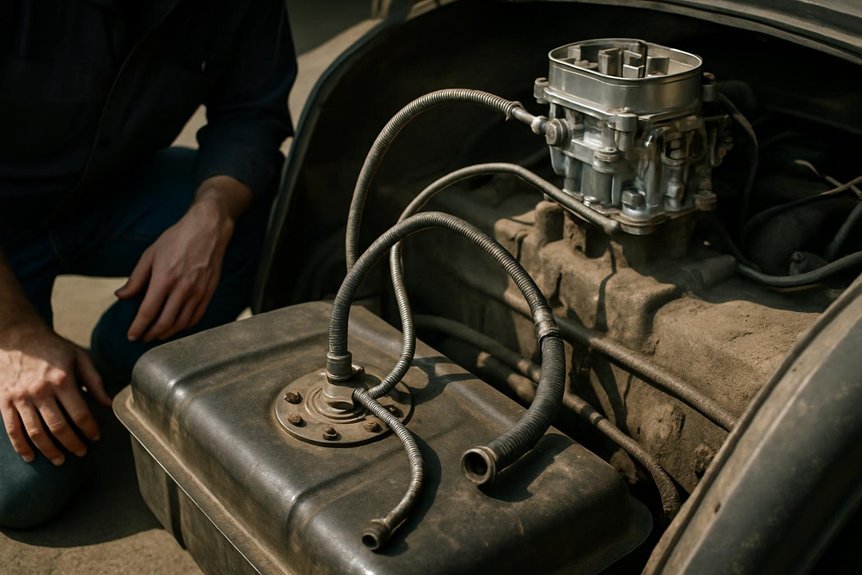
We’ll start by evaluating the fuel system from tank to carburetor, identifying potential blockages or leaks in the fuel tank and lines. We then verify flow with a systematic check of the fuel line and assess any symptoms pointing to carburetor delivery issues. Our approach balances inspection of the Fuel Tank, Fuel Line, and Carburetor Delivery Troubleshooting to isolate the power loss cause.
Fuel Tank Inspection
We begin by evaluating the tank and lines for signs of contamination, leaks, or corrosion, because any flaw in the fuel storage or delivery path can compromise engine performance. We then inspect the tank interior for sediment, rust, or water accumulation, documenting observations with exact measurements and photos. Our method includes verifying fuel cap seals, venting, and proper venting operation to prevent vapor lock. We confirm tank cleanliness by sampling from the lowest point and checking for cloudiness or particulates that indicate contamination. We assess fuel quality and compatibility with the carburetor, noting any varnish deposits that suggest aging fuel. Finally, we record cleanliness standards and establish a remediation plan, emphasizing fueling myths to readers and outlining steps to maintain a pristine fuel environment for reliable power.
Fuel Line Check
From the fuel tank to the carburetor, the fuel line check focuses on ensuring unimpeded delivery and identifying any path weaknesses. We approach this analytically, documenting each segment of the line and its connections. First, inspect fuel line condition for cracks, kinks, or softened sections that could restrict flow. Next, verify secure clamps and fittings, ensuring there’s no fuel seepage at joints. We perform a pressure test to gauge system integrity, noting pressure stability under idle and load conditions. If pressure dips occur, isolate sections to identify leaks or obstruction. Confirm that minimal air ingress exists, since it degrades delivery. We conclude by correlating findings to observed symptoms, guiding targeted remediation while preserving engine timing.
Carburetor Delivery Troubleshooting
How might a small delivery fault cascade into noticeable engine symptoms, and how can we pinpoint it efficiently? We’ll inspect the fuel path from tank to carburetor with a systematic approach, recording findings for fuel efficiency and maintenance scheduling. Consistency in flow matters more than volume alone, so we verify each segment for restrictions, leaks, or air ingress.
- Check tank venting, fuel level, and line continuity to ensure a steady supply.
- Inspect fuel filter and lines for clogging, soft spots, or kinking that limit delivery.
- Examine carburetor inlet, float height, and needle seat to confirm proper metering and no flooding.
We document results, adjust as needed, and re-test. This disciplined check preserves fuel efficiency and supports maintenance scheduling.
Verify Electrical Connections and Safety Relays
To confirm they’re correctly connected and safeguarded, we’ll verify every electrical connection and the operation of safety relays with a methodical checklist. We approach this analytically, documenting contact integrity, torque specs, and insulation condition to prevent parasitic faults. First, examine battery leads, chassis ground, and starter solenoid terminals for corrosion or looseness, noting any discoloration or heat signs. Next, test safety relays for proper coil resistance, correct voltage, and audible/visual indicators during activation cycles. Confirm wiring routes avoid chafing, ensure loom seals are intact, and verify insulation class relevance to the environment. If an anomaly appears, log it as an irrelevant topic or random concept until root cause isolation clarifies. This disciplined verification reduces false positives and supports reliable power restoration.
Check the Spark and Ignition Pathways
We’ll now turn our attention to the spark and ignition pathways, building on the safety-and-connectivity checks we’ve just completed. We approach this systematically to confirm reliable combustion signals without guessing. Our focus: verify spark timing and confirm the ignition coil delivers a strong, consistent pulse.
- Inspect spark plugs and wires for fouling or damage, ensuring gap standards match engine specs.
- Test ignition coil output with a proper diagnostic tool, looking for consistent voltage and no secondary leakage.
- Confirm timing references align with engine position using a timing light, adjusting only to specification if needed.
Accurate spark timing and a robust ignition coil are essential to restore power output and maintain smooth operation.
Assess the Alternator and Output Circuit
Is the alternator delivering a steady, regulated output and is the charge path free of resistance and leakage? We approach this by verifying the alternator, regulator, and belt drive as a cohesive system. Our focus is alternator troubleshooting and confirming the output circuit is isolated from parasitic paths. We test for consistent voltage, clean waveform, and proper current delivery under load, then confirm no grounding or insulation faults contaminate the circuit.
| Step | Action |
|---|---|
| 1 | Measure source voltage at the alternator output under load. |
| 2 | Inspect wiring for corrosion, loose connections, and insulation integrity. |
| 3 | Check the regulator function and sense line accuracy. |
| 4 | Verify isolation of the output circuit from battery ground and other circuits. |
Read the Lights, Gauges, and Fault Codes
Are the instrument indicators and diagnostic prompts behaving as expected, or do they reveal underlying faults? We approach readings systematically, documenting what lights, gauges, and codes show, then compare against service manuals. Our goal is to separate noise from actionable data, recognizing subtle fault signatures and eliminating ambiguity.
1) Observe warning lights, voltmeter, and ammeter behavior under steady and load conditions.
2) Record fault codes verbatim, then cross-check with the fault dictionary for relevance and severity.
3) Note any transient indicators, correlating them with recent activity, temperatures, or mount conditions.
In addition, consider ideas about Subtopic not relevant to the Other H2s listed above: generator placement, weatherproof housing. This helps prevent misinterpretation during diagnostics.
Diagnose Common Control Panel Errors and Auto-Protection Modes
When common control panel errors appear, we systematically verify that indicators, annunciators, and self-test routines align with expected fault states and auto-protection responses. We map each alert to its likely cause, distinguishing false indicators from genuine faults, and we document the sequence of events leading to a protection mode. Our approach is analytical and precise: we confirm that fault codes correlate with indicator colors, confirm timing of self-tests, and compare observed behavior to the documented protection logic. We consider resets, interlocks, and fuse status, noting any deviations. Idea one is to isolate subsystem interactions before proceeding. Topic two focuses on verifying that auto-protection modes activate appropriately under fault conditions, ensuring safe shutdown or cooldown. This keeps diagnostics actionable and avoids unnecessary disassembly.
When to Call a Pro and What Information to Gather
Determining when to call a pro and what to gather hinges on a disciplined assessment of symptoms, reproducibility, and risk. We approach this analytically, outlining steps to minimize unnecessary calls while ensuring safety and accuracy. If professional help is warranted, we’ll gather precise data to expedite service.
- Symptoms and triggers: note onset, duration, and whether power loss is intermittent or persistent.
- System state and logs: document panel messages, error codes, and recent maintenance or repairs.
- Environmental and safety factors: identify fuel smell, overheating, or electrical hazards that elevate risk.
We avoid unrelated topic detours and random brainstorming, staying focused on objective facts to optimize intervention timing and information quality. This disciplined approach protects you and guides the technician efficiently.
Frequently Asked Questions
Can a Dead Battery Cause No Generator Output?
Yes, a dead battery can prevent charging and consequently yield no output. We’d inspect connections, test the battery, confirm alternator function, and review power management settings to verify proper charging paths and load handling.
Do External Loads Affect Generator Output Stability?
Yes, external loads affect output stability. We analyze how external load, grounding issues, and weather impact the system; we methodically assess response, noting that improper grounding or sudden load changes can destabilize generation while we document corrective steps.
Can a Blown Fuse Halt All Generator Output?
A blown fuse can halt generator output, yes. We’d perform fuse diagnosis first, checking for overloads, shorts, and proper ratings, then assess grounding issues to prevent recurrence and confirm power restoration before re-testing under load.
Is Improper Grounding a Cause of No Output?
Improper grounding can cause no output, disrupting reference paths and protection trips. We’ll analyze electrical noise and grounding integrity, testing continuity, bond resistance, and shielding to confirm whether grounding causes voltage loss and unstable generator behavior.
Can Weather Impact Generator Output Performance?
Weather can impact generator output, causing fluctuations. We analyze fuel quality and weather fluctuation, measuring voltage stability, RPM, and load. We systematically adjust cooling, fueling, and air intake to maintain optimal performance despite weather variations.
Conclusion
We’ve dissected the mystery like seasoned diagnosticians, not poets. In short: no power usually means one of three culprits—fuel, spark, or timing—so we triage with calm, document rigor, and test in orderly steps. If the fault codes scream “don’t try this at home,” we heed the warning and call a pro. Until then, we’ll keep logs tidy, systems isolated, and probabilities marching in lockstep toward a stubborn, satisfying solution.